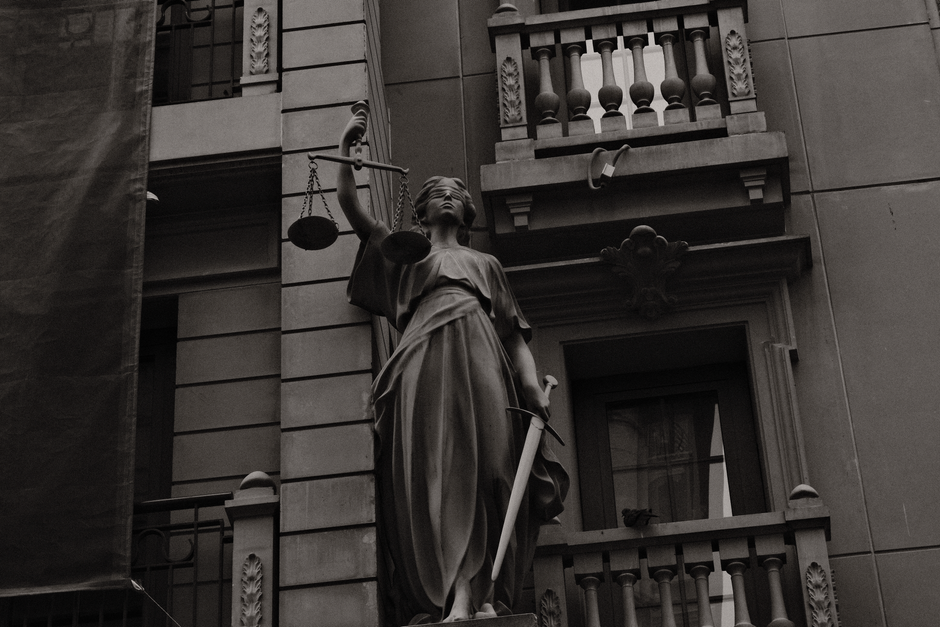
The law operates on a binary foundation: there are persons—entities capable of holding rights and bearing duties—and there are objects—things that are owned, controlled, and utilized. Artificial Intelligence sits uncomfortably between these two poles. As AI systems transition from deterministic tools to autonomous agents capable of generating creative works, executing contracts, and making consequential decisions, the existing legal framework is fraying. For leaders, this is not merely a theoretical debate about silicon rights; it is a critical strategy issue that dictates liability, asset protection, and the boundaries of intellectual property.
Current jurisprudence largely treats AI as a sophisticated iteration of a hammer. If a hammer breaks a window, the human holding it is liable. However, when an AI system hallucinates a defamatory statement or infringes on a patent without direct human instruction, the “tool” analogy collapses. We are moving toward a period where the legal status of AI will require a fundamental reassessment of agency and accountability.
The Attribution Gap in Decision-Making
Effective decision-making requires a clear line of responsibility. When an executive delegates a task to a subordinate, the lines of accountability are codified by employment law and corporate governance. When an executive delegates a task to an autonomous AI, that line vanishes. This is the attribution gap.
If an AI-driven trading algorithm initiates a series of market moves that trigger a regulatory investigation, the lack of “legal personhood” for the software means the burden of proof inevitably lands on the human operator or the firm. This creates a dangerous paradox: organizations are incentivized to deploy AI to increase operational excellence, yet the legal status of these systems makes the firm uniquely vulnerable to the AI’s unpredictability. To mitigate this, leaders must treat AI output not as a finished product, but as an input that requires a rigorous human-in-the-loop verification layer.
The Intellectual Property Impasse
The U.S. Copyright Office has been consistent: works created entirely by machines without human creative input cannot be copyrighted. This position creates a massive strategic risk for companies investing heavily in generative AI. If your competitive advantage is built on AI-generated code, marketing copy, or design, your inability to secure intellectual property rights means your “assets” may effectively be public domain from the moment of creation.
High-performance teams must recognize that the legal status of AI-generated content is currently a void. Until courts or legislatures establish a new category of “machine-assisted” or “machine-authored” intellectual property, firms should assume that their AI-generated outputs offer zero defensive protection against competitors. The strategy, therefore, is to ensure that human creative input remains the primary driver of any IP worth defending.
Operational Implications for Liability
We are entering an era of algorithmic liability. When an autonomous system causes harm, the legal system will likely move toward a “strict liability” model for the owners or deployers of the technology. This is similar to how we treat dangerous animals or hazardous industrial equipment. You are responsible for the damage caused by the asset, regardless of whether you intended the outcome.
For those focused on execution, this necessitates a shift in risk management:
Audit Trails: Every significant AI decision must be logged. If you cannot explain the “why” behind an AI decision, you cannot defend it in court.
Contractual Indemnity: When procuring third-party AI models, standard service agreements are insufficient. You must demand specific indemnification clauses that cover AI-induced errors or IP infringement.
Governance Frameworks: Treat AI deployment as a capital project with inherent risk, not a software update.
The Future of Corporate Agency
Could AI eventually achieve a form of “electronic personhood”? The concept exists in various forms—such as the legal personhood granted to corporations. A corporation is a collection of contracts and human actors that the law treats as a single entity to facilitate trade. It is not a stretch to imagine a future where an autonomous AI entity is granted a similar status to allow it to hold capital, enter into contracts, and carry its own insurance policy.
However, until such a framework exists, leaders must operate with the assumption that AI is an extension of their own legal liability. The law is a lagging indicator; it reflects the world as it was, not as it is becoming. Your leadership depends on your ability to anticipate these shifts before they manifest in a courtroom. By treating AI as a human-directed extension of your operations rather than an independent actor, you maintain control while the legal landscape catches up to the reality of the technology.