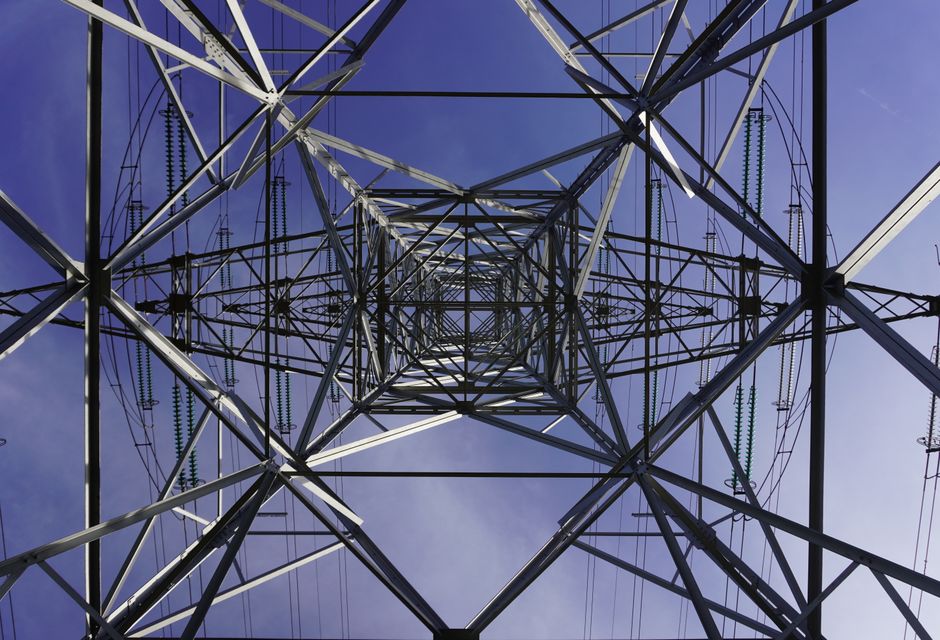
Modern industrial civilization operates on a fundamental, yet dangerously fragile, assumption: that power is a commodity available on demand. We treat the energy grid as an infinite reservoir, rarely considering the complex physics required to maintain the 60Hz frequency that powers our economies. When the grid fluctuates, the entire architecture of leadership and operational continuity collapses. For the executive, grid stabilization is not merely an engineering concern; it is the ultimate case study in systemic risk and the necessity of high-performance infrastructure.
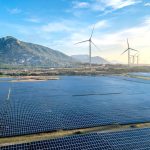
The transition toward intermittent renewable energy sources—solar and wind—has introduced a level of volatility that legacy baseload systems were never designed to handle. As we move away from the mechanical inertia of massive spinning turbines in coal and gas plants, we lose the inherent stability that previously buffered the grid against sudden spikes in demand or supply drops. This shift demands a radical rethink of how we view strategy at the intersection of public utility and private reliance.
The Physics of Decision-Making Under Pressure
Grid stabilization relies on the delicate balance between active power and reactive power. When these fall out of sync, the result is not just a brownout, but potential catastrophic hardware failure. In organizational terms, this is identical to the balance between innovation and core operations. If an organization pushes too hard on “active” growth without maintaining the “reactive” buffer of cash reserves, talent redundancy, and operational slack, the system experiences a frequency collapse.
Stabilizing the grid in an era of decentralized, intermittent energy requires three specific levers:
Synthetic Inertia: Implementing power electronics that mimic the rotating mass of traditional turbines. This is the technical equivalent of building operational excellence into the very fabric of your business processes.
Demand-Side Management: Incentivizing large-scale users to throttle consumption during peak stress. This requires the same disciplined decision-making required to kill failing projects to preserve capital for core initiatives.
Energy Storage Integration: Deploying utility-scale battery arrays to provide sub-second frequency response. This represents the ultimate form of risk mitigation: buying time when the system is under stress.
The AI Frontier in Grid Orchestration
Human operators can no longer manage the complexities of a modern, multi-directional grid. The velocity of data from millions of smart meters and distributed energy resources exceeds human cognitive capacity. Consequently, the grid is becoming the primary testbed for autonomous control systems. By integrating AI into grid management, utilities can predict demand surges and adjust load distribution in milliseconds.
This transition toward algorithmic orchestration mirrors the shift we see in high-performance corporate environments. Executives are moving away from manual oversight toward designing self-correcting systems. When you build an organization that can “self-stabilize” through automated reporting, real-time data loops, and algorithmic resource allocation, you are essentially building a private energy grid. You are removing the human latency that leads to systemic failure.
Operational Implications for the Modern Leader
The grid is a mirror. It shows us exactly what happens when you prioritize short-term efficiency over systemic resilience. Many leaders focus exclusively on output—the “megawatts” of quarterly revenue—while neglecting the “frequency stability” of their culture and operational foundations. If your internal communication channels, talent retention programs, and decision-making frameworks are not designed to handle volatility, your organization will suffer a blackout when the external environment becomes turbulent.
To achieve high-performance stability, stop treating infrastructure as a background task. Treat it as a competitive advantage. The entities that survive the coming decades will be those that have invested in the “synthetic inertia” of robust, redundant, and automated systems. They understand that when the grid of the market becomes unstable, only those with built-in reserves and adaptive, AI-driven control mechanisms will remain online.