Governance frameworks establish the legal and ethical boundaries for AI operational deployment.
— by
Steven Haynes
Building Trust in the Machine: Why AI Governance Frameworks are Non-Negotiable
Introduction
Artificial Intelligence is no longer an experimental toy; it is the engine driving enterprise decision-making, customer interaction, and operational efficiency. However, with this rapid integration comes a volatile mix of legal liability, reputational risk, and ethical ambiguity. Organizations that deploy AI without guardrails are effectively driving a high-speed vehicle with no brakes and no map.
Governance frameworks are the architectural blueprints that define how AI systems are built, monitored, and retired. They provide the necessary legal and ethical boundaries to ensure that as your organization innovates, it does not inadvertently dismantle its own integrity or breach regulatory compliance. This article moves beyond the abstract theory of “responsible AI” to provide a practical roadmap for establishing governance that actually works.
Key Concepts
At its core, AI governance is the intersection of accountability, transparency, and risk mitigation. It is not merely a technical task; it is a cross-functional discipline involving legal, data science, and business leadership teams.
Accountability refers to the clear assignment of responsibility. When an AI model produces a biased hiring recommendation or a hallucinated financial forecast, there must be a human or a process in place to address it. You cannot hold an algorithm accountable; you must hold the operators accountable.
Transparency, or “explainability,” requires that AI models do not function as black boxes. Stakeholders, regulators, and end-users must be able to understand, at a high level, how an input leads to a specific output. If you cannot explain the logic behind a decision, you cannot defend it in a court of law or before a customer.
Risk Mitigation involves the continuous auditing of data pipelines. This includes detecting data drift—where the performance of a model degrades over time because the real-world data it encounters no longer resembles the training data—and ensuring that personal identifiable information (PII) is handled in accordance with frameworks like GDPR or the EU AI Act.
Step-by-Step Guide: Implementing Your Governance Framework
Establishing governance requires a structured, top-down approach that permeates the entire software development lifecycle (SDLC).
Conduct an AI Risk Assessment: Catalog every AI project currently in production. Categorize them by risk level (e.g., low-risk: internal chatbot; high-risk: automated loan approval). Assign a risk score based on potential financial, legal, and human impact.
Establish an AI Governance Council: This group must be cross-functional. Include representatives from legal (to interpret policy), IT/Data Science (to enforce technical standards), and Ethics/Compliance (to act as the moral compass).
Define Ethical Principles and Standards: Create a living document that defines what your organization stands for. Are you prioritizing inclusivity in your datasets? Are you strictly limiting the use of facial recognition? These policies must be documented to guide developers.
Implement an “AI Inventory”: You cannot govern what you cannot see. Maintain a central registry of all models, documenting the training data sources, the intended use case, the limitations, and the human oversight mechanism in place.
Integrate Automated Guardrails: Governance should not be a manual bottleneck. Utilize MLOps (Machine Learning Operations) tools that automatically flag drift, check for bias in training datasets, and log decision-making trails for audit purposes.
Continuous Monitoring and Periodic Audit: Governance is not a “set it and forget it” process. Schedule quarterly audits to review model performance against ethical KPIs and update policies as technology and legislation evolve.
Examples and Case Studies
Consider the contrast between organizations that lack governance and those that embrace it. In the financial services sector, a bank implementing an automated loan underwriting tool without a governance framework faces catastrophic risk. If the model inadvertently discriminates based on zip code or demographic proxies, the bank faces massive regulatory fines and irreparable brand damage. A robust governance framework would have required a “bias audit” before deployment, flagging these proxies during the model validation phase.
“An AI system is only as reliable as the governance framework that oversees its lifecycle. If you treat AI as a technical problem rather than an organizational risk, you are setting yourself up for failure.”
On the flip side, consider healthcare providers using AI for diagnostic assistance. By implementing a strict “Human-in-the-Loop” (HITL) governance policy, they ensure that the AI never makes the final clinical decision. The governance framework mandates that the AI serves as a support tool for the doctor, who remains the primary accountable party. This clear ethical and legal boundary protects both the patient and the provider.
Common Mistakes
Treating Governance as a “Check-the-Box” Exercise: Many companies create a policy document and then fail to enforce it. Governance must be integrated into the actual code-deployment pipeline, not just kept as a PDF on a shared drive.
Ignoring Data Lineage: If you do not know where your data comes from, you cannot guarantee its quality or ethical standing. Blindly feeding “scraped” internet data into a production model is a liability nightmare.
Lack of Stakeholder Diversity: If your AI governance board is composed solely of engineers, you will inevitably have blind spots regarding social impact and user experience. Diversity in the governance room leads to better risk identification.
Neglecting Exit Strategies: What happens when a model fails or is found to be biased? Organizations often lack a “kill switch” policy—the ability to swiftly pull a model from production without causing a complete business outage.
Advanced Tips for Maturing Your Governance
To move from basic compliance to operational excellence, consider these advanced strategies:
Red Teaming for AI: Just as cybersecurity teams perform penetration testing, implement “adversarial testing” for your models. Task a team with intentionally trying to break the model—feeding it toxic prompts, biased inputs, or edge cases—to uncover vulnerabilities before hackers or bad actors do.
Explainability Standards: Invest in tools that provide “Local Interpretable Model-agnostic Explanations” (LIME) or SHAP values. These help teams articulate exactly which features (e.g., credit history, age, income) contributed most heavily to a specific decision, which is vital for compliance with consumer protection laws.
Policy-as-Code: Advanced organizations are now embedding their governance rules directly into their CI/CD pipelines. If a model fails to meet the pre-defined bias threshold during the build process, the system automatically prevents the code from moving to the production environment.
Conclusion
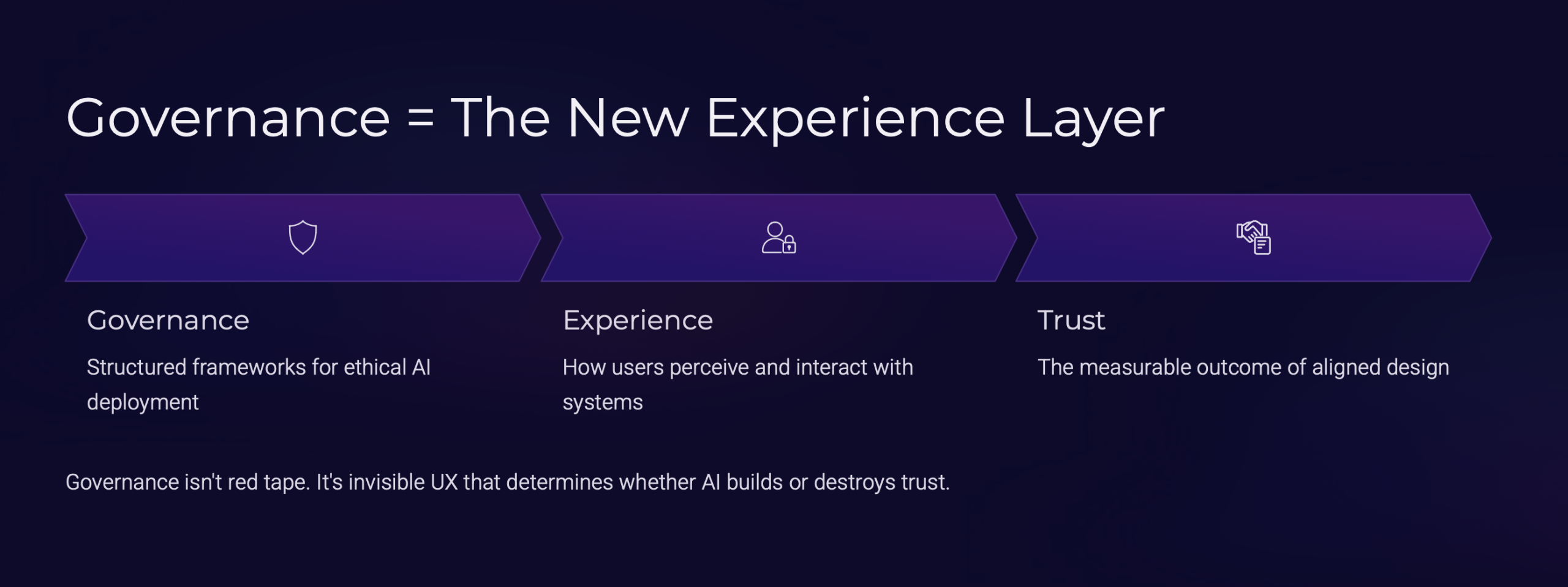
Governance frameworks are the bedrock of sustainable AI deployment. They do not exist to stifle innovation; rather, they provide the safety and clarity required to scale AI safely and effectively. By implementing clear oversight, maintaining rigorous documentation, and fostering a culture of accountability, organizations can leverage the immense power of artificial intelligence while minimizing the risks that threaten their legal and ethical standing.
The transition from a “wild west” approach to a governed AI environment is challenging, but it is the hallmark of a mature, responsible organization. As regulations like the EU AI Act become the global standard, those who have built robust frameworks will find themselves at a distinct competitive advantage—one built on the trust of their customers and the security of their operations.


Leave a Reply