
Defining the Boundaries: Why AI Autonomy Requires Strict Governance in Religious and Social Spaces
Introduction
The integration of Artificial Intelligence into our social fabric is no longer a futuristic concept; it is an immediate reality. From AI-driven pastoral care chatbots to algorithmic curation in community forums, technology is increasingly mediating how we worship, socialize, and form moral judgments. Yet, as these systems gain the ability to make autonomous decisions—ranging from moderating sensitive theological discussions to managing charitable resource allocation—a critical tension emerges. Without clearly defined governance, AI autonomy risks eroding the human agency and sanctity that define religious and social institutions.
Governance documents are not merely administrative formalities; they are the constitution of our digital and physical co-existence with machines. Establishing firm boundaries is essential to ensure that AI serves as a tool for empowerment rather than a mechanism for invisible, unaccountable influence.
Key Concepts
To understand the necessity of governance, we must first define the parameters of AI autonomy in these specific contexts.
AI Autonomy refers to the capacity of a system to execute tasks, make decisions, or generate content without real-time human intervention. In social spaces, this might look like an automated moderation bot removing “blasphemous” or “divisive” content based on a proprietary algorithm.
Governance Documents are the frameworks—bylaws, terms of service, and ethical manifestos—that dictate the “rules of engagement” for AI. These documents must address three core pillars: Accountability (who is responsible when an AI makes a harmful error?), Transparency (how does the system arrive at its output?), and Human-in-the-Loop (HITL) Requirements (what decisions must always remain in human hands?).
In religious and social spaces, the stakes are uniquely high because these environments rely on trust, empathy, and shared values—qualities that algorithms fundamentally lack. Governance ensures that the AI’s decision-making process aligns with the community’s mission statement rather than the developer’s optimization goals.
Step-by-Step Guide: Drafting AI Governance Policies
Organizations looking to integrate or refine their AI usage should follow this structured approach to ensure autonomy is properly scoped.
- Audit the AI’s Role: Identify every touchpoint where an AI system influences community interaction. Is it summarizing scripture? Moderating debates? Managing membership data? Define the scope of each role.
- Categorize Decision-Making Tiers: Assign every task an autonomy level.
- Level 1: Administrative (Low Risk) – AI performs routine tasks under strict oversight (e.g., scheduling, event reminders).
- Level 2: Curatorial (Medium Risk) – AI suggests content or filters information (e.g., recommending devotional readings).
- Level 3: Judgmental (High Risk) – AI makes decisions regarding morality, discipline, or resource access. These should require a mandatory human override.
- Draft “Red Lines”: Explicitly state what the AI is forbidden from doing. For example: “The AI shall never issue theological rulings or provide absolute spiritual counseling without a disclaimer and an option to speak to a human leader.”
- Establish Review Cycles: Governance is not “set it and forget it.” Schedule quarterly reviews to assess if the AI has drifted from its intended constraints.
- Include Human Escalation Pathways: Every governance document must provide a clear, accessible path for users to challenge an AI-driven decision. If a user is banned from a social group by a bot, they must have a right to human mediation.
Examples and Real-World Applications
Consider a large religious congregation adopting an AI chatbot to offer “spiritual support.” Without governance, the AI might hallucinate or provide advice that contradicts the church’s core teachings. With clear governance, the policy would specify that the AI is purely a “navigation tool” to point users to pre-vetted theological resources, rather than a generative agent authorized to provide original moral advice.
In a secular social context, such as an online community platform dedicated to charitable work, governance might dictate how AI allocates funds. An automated system could inadvertently develop a bias against specific demographics while trying to maximize “efficiency.” A robust governance document would mandate that the AI’s “efficiency” metric be subordinated to the organization’s “equity” metric, requiring periodic manual audits of the distribution process to ensure fairness.
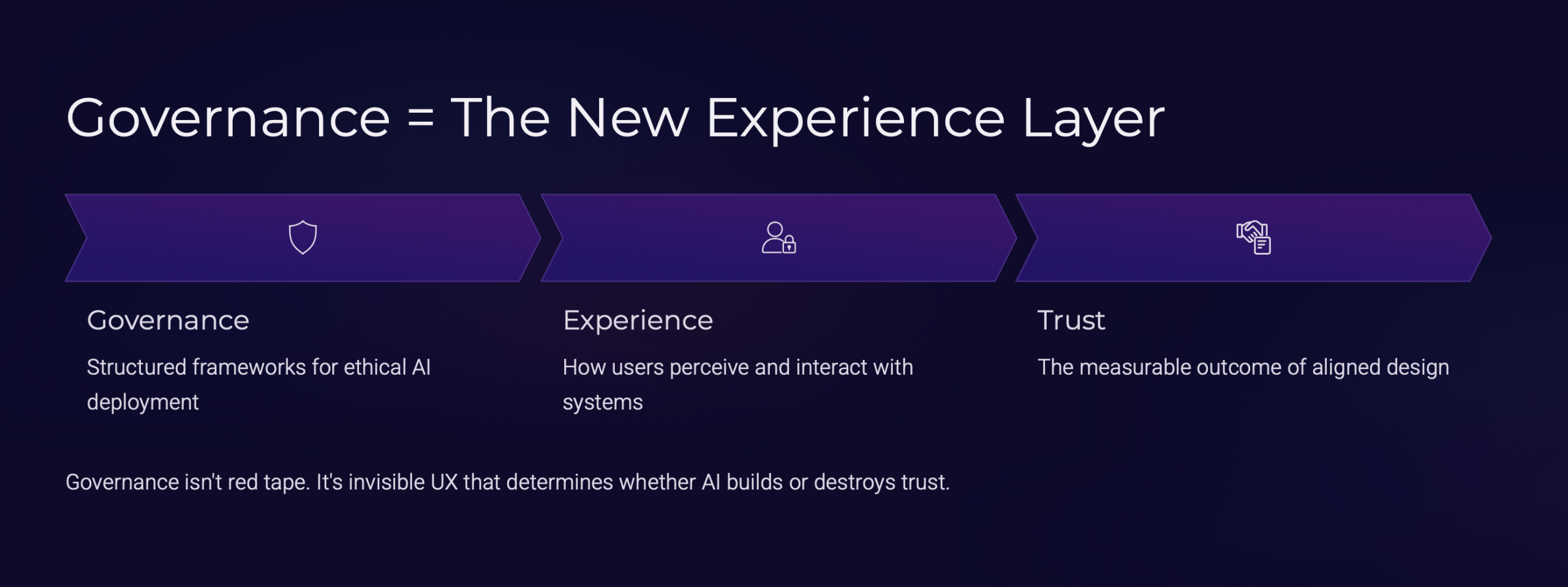
Governance is the bridge between technological capability and human intent. Without it, the tool governs us, rather than us governing the tool.
Common Mistakes
- Confusing Accuracy with Alignment: Many organizations assume that if an AI is accurate (e.g., it correctly quotes scripture), it is aligned with the community. Accuracy does not equal moral or social appropriateness.
- Delegating “Soft” Decision-Making: Many leaders delegate moderation to AI, assuming it is low-risk. However, how we curate conversation determines the culture of the community. Outsourcing culture-building to an algorithm is a significant governance failure.
- Static Governance: Treating an AI policy as a one-time legal document. AI systems evolve; policies must be agile and iterative.
- Ignoring Algorithmic Bias: Assuming the AI is neutral. Governance documents must explicitly address how the organization plans to test for and mitigate biases inherent in large language models.
Advanced Tips
To move beyond basic compliance, consider these advanced strategies for AI governance:
Implement “Explainability” Requirements: Mandate that any AI system used must provide a “rationale” for its decisions. If the AI cannot explain why it flagged a post or why it recommended a specific action, it should not be deployed in a high-stakes social or religious environment.
Create an Ethics Committee: Assemble a diverse panel—including theologians, ethicists, and technical experts—to act as the stewards of the governance document. They should have the authority to veto AI deployments that threaten the community’s core mission.
Use “Sandboxing”: Before letting an AI interact with the broader community, deploy it in a controlled, private environment. Evaluate its “autonomy drift” over time to see how the model behaves when it thinks no one is watching.
Public Transparency Logs: Maintain a public-facing log of changes made to the AI’s parameters. If the organization updates the AI’s moderation guidelines, the community should be notified. This builds trust, which is the currency of any social or religious institution.
Conclusion
AI offers immense potential to streamline the administrative and reach-expanding efforts of religious and social organizations. However, the convenience offered by automation should never come at the expense of human agency or theological integrity. By clearly defining the scope of AI autonomy through robust, living governance documents, we ensure that these systems remain our instruments—not our masters.
The goal is to foster a symbiotic relationship where technology handles the complexity of scale while humans maintain the critical responsibility of judgment and empathy. Organizations that take the time to build these guardrails today will be the ones that thrive in an increasingly digitized future, maintaining their core identity while leveraging the power of innovation.






Leave a Reply