How Generative AI is Accelerating Global Cultural Homogenization
— by
Steven Haynes
The Great Flattening: How Generative Media is Accelerating Cultural Homogenization
Introduction
For decades, globalization was characterized by the spread of Western brands—a process often called “McDonaldization.” Today, we are witnessing a more profound, invisible shift. The rise of generative media platforms is not just exporting products; it is standardizing the very building blocks of human expression. From the syntax of our prose to the color palettes of our digital art, generative AI models are acting as a global filter, smoothing out the jagged edges of cultural idiosyncrasy.
As these platforms become the default tools for creative production, we are entering an era of “algorithmic monoculture.” While this offers unprecedented efficiency, it threatens to erode the linguistic nuances and aesthetic traditions that define distinct human experiences. Understanding this shift is essential for professionals, creators, and consumers who want to preserve the diversity of human thought in a machine-curated world.
Key Concepts
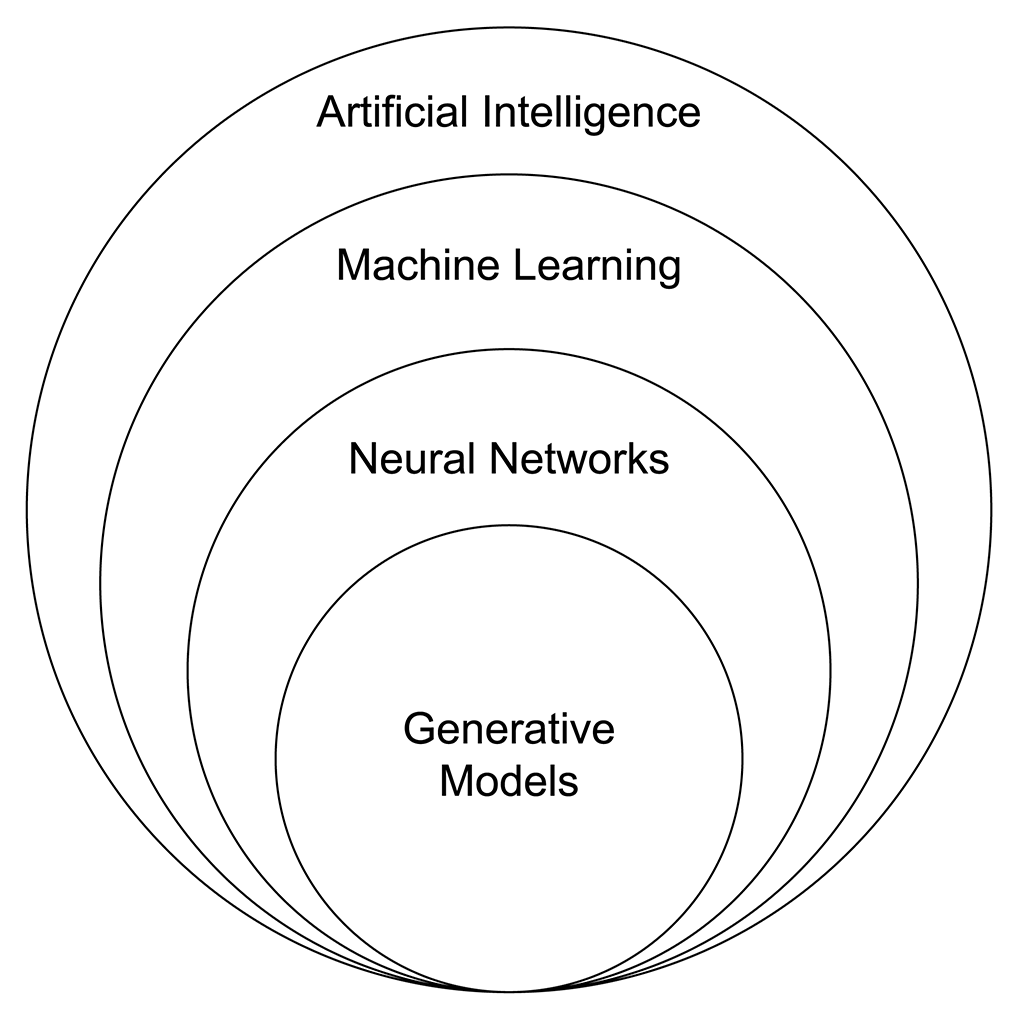
To understand the acceleration of cultural homogenization, we must first look at the mechanics of generative models. These systems, whether they produce text (LLMs) or imagery (Diffusion models), function by identifying statistical patterns within massive datasets. They are, by definition, engines of the “average.”
Statistical Centralization: Generative models are trained on internet-scale data. Because the vast majority of this data is produced in English and reflects Western-centric digital norms, the models inherently favor these patterns. When a user in Tokyo or Nairobi prompts an AI, the output is filtered through a probabilistic model rooted in Silicon Valley’s training data.
Linguistic Flattening: Language is not just a tool for communication; it is a repository of history and perspective. Generative AI tends to favor “standard” registers of language. It strips away regional dialects, local idioms, and the rhythmic quirks that make human speech unique. Over time, as we rely on AI to draft emails, reports, and creative content, the breadth of our vocabulary shrinks toward the “most likely” word choice.
Aesthetic Convergence: Visual generative platforms have developed a distinct “AI look.” Whether it is the hyper-polished lighting of Midjourney or the clean, modular layout suggestions of design tools, these platforms nudge users toward a standardized aesthetic. This creates a feedback loop: AI generates content that looks “correct” based on previous successes, and humans consume it, reinforcing the algorithm’s bias toward that specific style.
Step-by-Step Guide: Maintaining Cultural Distinctiveness
If you are a creator or business leader, you do not have to succumb to the “average.” Here is how to use generative tools without losing your cultural edge.
Curate Your Own Datasets: Instead of relying solely on broad, pre-trained models, leverage Fine-Tuning or Retrieval-Augmented Generation (RAG). Feed the model proprietary data that reflects your specific cultural context, local history, or unique brand voice.
Prioritize Prompt Engineering for Nuance: Do not use generic prompts. If you want a specific cultural aesthetic, explicitly name the art movements, historical periods, or regional influences you want to incorporate. Avoid vague terms like “professional” or “modern,” as these trigger the AI’s default homogenized settings.
Implement a “Human-in-the-Loop” Audit: Never publish raw AI output. Treat generative content as a first draft. Review it specifically for “cultural flattening”—look for overly neutral phrasing, generic metaphors, or aesthetic choices that ignore local context.
Diversify Your Inputs: Actively feed the AI examples of non-Western, non-mainstream, or experimental cultural artifacts. By introducing high-quality “edge cases” into your prompt interactions, you force the model to deviate from its statistical average.
Value the “Non-Optimal”: Recognize that perfection is often the enemy of culture. A slight linguistic awkwardness or an unconventional artistic choice can be the mark of authentic human expression. Allow for these “imperfections” in your final output.
Examples and Case Studies
The Corporate Communications Void: Many global corporations now use standardized LLMs to generate customer support emails and marketing copy. The result is a “brand voice” that sounds identical across industries. A bank in Brazil and a retail chain in Japan now communicate with customers using the exact same tone, syntax, and rhetorical structure—a sterile, overly polite, and ultimately culture-less voice.
The “Instagram-ification” of Architecture: In architectural design, AI tools are being used to generate concepts that optimize for “virality.” Because these models are trained on images that have performed well on social media platforms, they favor specific textures, lighting, and geometric patterns. This has led to a global phenomenon where cafes, hotels, and public spaces in disparate parts of the world are beginning to look like clones of one another, prioritizing “Instagram-ready” aesthetics over local architectural heritage.
Common Mistakes
Over-reliance on Default Settings: Accepting the first output from a generative tool is the fastest way to contribute to homogenization. The default is always the path of least resistance for the algorithm.
Ignoring Local Semantics: Assuming that a prompt which works in English will produce the same cultural resonance in another language. Generative models translate, but they do not always capture the cultural “subtext.”
Sacrificing Complexity for Readability: Many users use AI to “simplify” their writing. While clarity is good, excessive simplification erases the intellectual and cultural depth that makes language rich and meaningful.
Mistaking Popularity for Quality: AI models are trained on what is popular. Popularity is not a proxy for cultural value or aesthetic excellence. By chasing the “most likely” outcome, you are merely chasing the status quo.
Advanced Tips
To resist the drift toward homogenization, you must adopt a stance of active counter-programming. This involves treating generative AI as a collaborator that needs to be constantly challenged.
The most powerful way to counter algorithmic homogenization is to treat generative media as a starting point, not a destination. Use AI to generate the ‘average,’ and then consciously deviate from it.
Challenge the Model’s Bias: When prompting, ask the AI to “incorporate elements of [obscure regional art style]” or “write using the cadence of [specific dialect].” By forcing the model to merge disparate concepts, you create something that is not just a regurgitation of the mainstream.
The “Human-First” Workflow: Start your creative process with a human concept, a local story, or a specific cultural insight. Use the AI to execute the technical heavy lifting, but keep the core creative DNA human. The more you rely on AI to dictate the concept rather than just the execution, the more homogenized your output will become.
Conclusion
Generative media platforms are powerful tools that offer the promise of democratization, allowing anyone to create high-quality content in seconds. However, this convenience comes at a cost: the gradual erosion of the distinct, messy, and beautiful variety that defines human culture. If we allow these platforms to dictate our linguistic and aesthetic norms, we risk drifting into a bland, standardized future where everything looks, sounds, and feels the same.
The solution is not to reject these tools, but to master them with intent. By curating our own datasets, demanding nuance in our prompts, and valuing the distinctiveness of local context, we can use generative AI to celebrate, rather than erase, the richness of human diversity. The future of culture will be determined by those who refuse to accept the “average” and instead insist on the unique.





Leave a Reply