The Geometry of Mystery: Fractals as a Structural Blueprint for Esoteric Systems
Introduction
For centuries, seekers of hidden knowledge have relied on hierarchical models to explain the cosmos. From the Hermetic principle of “As above, so below” to the Tree of Life in Kabbalah, the underlying assumption is that the macrocosm and the microcosm share a common architecture. Yet, describing these systems as mere “ladders” or “tiers” often fails to capture the dynamic, infinite complexity of esoteric experience.
Fractal geometry offers a superior lens. By understanding that esoteric systems are recursive—meaning they repeat patterns across multiple scales—we can move beyond static, linear thinking. This perspective provides a practical framework for mapping consciousness, organizing philosophical study, and understanding how a singular truth can manifest in infinite, diverse forms. Whether you are a student of metaphysics, a systems thinker, or an architect of personal development, fractals provide the mathematical language to translate abstract mysteries into structured, actionable insights.
Key Concepts
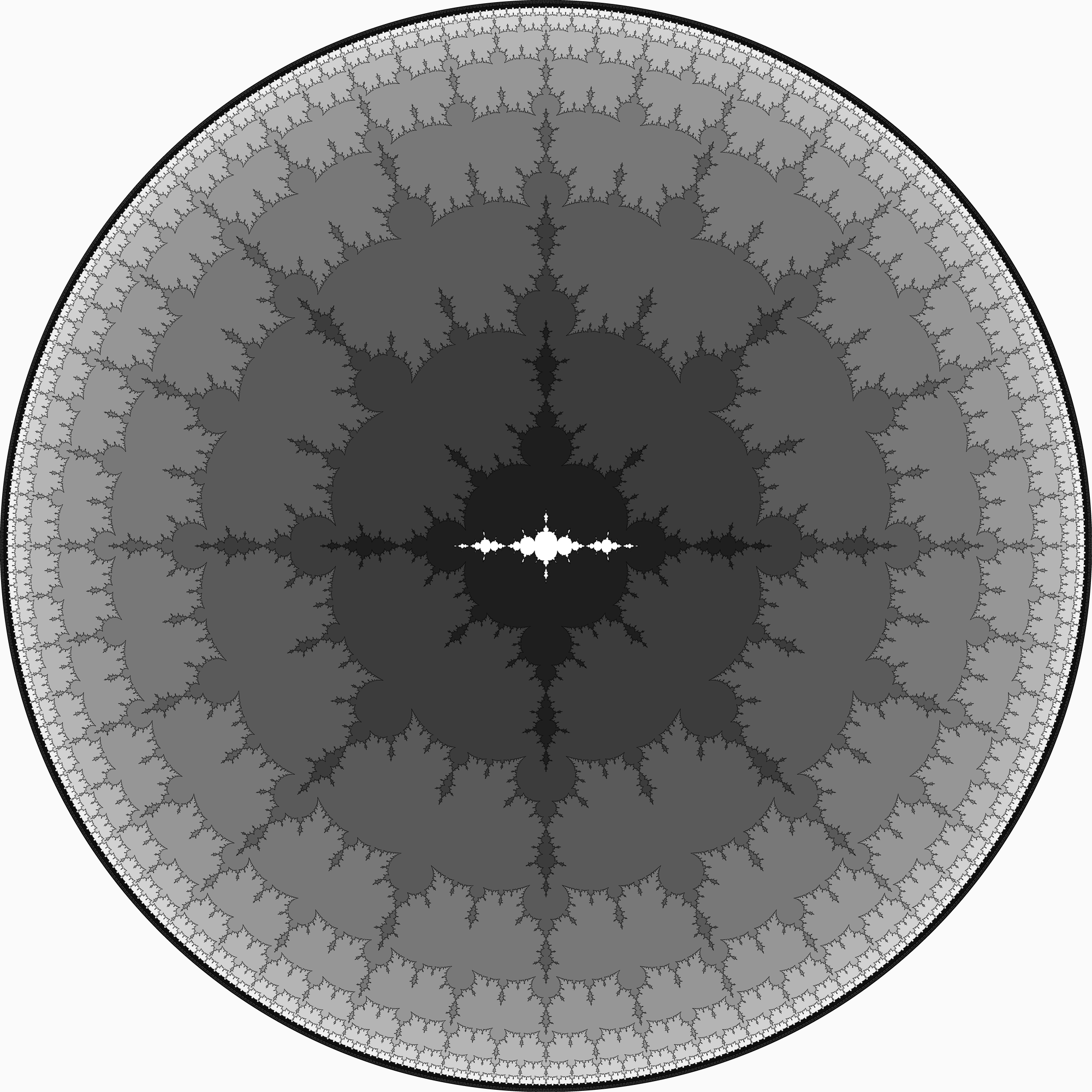
At its core, a fractal is a geometric shape that appears similar at all scales. If you zoom into a fractal, you see a repetition of the same pattern that defines the whole. This is known as self-similarity. In the context of esoteric systems, this suggests that the fundamental “laws” governing the universe are not merely located at the “top” (the Divine or the Absolute) but are embedded within the “bottom” (the individual human experience).
Iterative Processes are the engines of fractal growth. In mathematics, this means applying the same formula repeatedly to the output of the previous stage. In esoteric practice, this equates to the repetition of ritual, meditative inquiry, or ethical discipline. Each “iteration” refines the previous one, building complexity upon a simple foundation.
Non-Linear Scaling is perhaps the most vital takeaway. In traditional hierarchical models, we assume that moving “up” the ladder requires a linear progression of power or enlightenment. In a fractal system, however, the degree of complexity is not a result of “distance” from the source, but a result of the density of iteration. You do not need to “reach” the top to embody the whole; you only need to optimize the recursion of the pattern you are currently living.
Step-by-Step Guide: Mapping Hierarchical Systems
Identify the Seed Pattern: Every esoteric system begins with a primary axiom or symbol (e.g., the Monad, the Point, the Seed of Life). Identify the foundational principle that defines your system of study. What is the irreducible “formula” at its center?
Define the Iterative Rule: Determine how this axiom unfolds. Is it through binary division? Trinary expansion? A specific sequence of elemental interaction? Write down the rules of transformation that the system uses to grow from the seed into a structure.
Map the Levels of Recursion: Apply your rule across different scales. For instance, if you are studying a mystery tradition, observe how the same archetype manifests in the celestial (macro), the societal (meso), and the psychological (micro) planes.
Observe the “Noise”: In physical fractals, chaos often introduces slight variations. Identify where your system’s practical application deviates from the ideal model. These deviations are not failures; they are the “entropy” that allows for unique, individual expression within the system.
Refine the Feedback Loop: Use your understanding of the fractal structure to inform your daily practice. If you find your progress stalled at a specific scale, look to the layer above (the broader purpose) and the layer below (the immediate, granular habits) to see where the iteration is broken.
Examples and Case Studies
The Kabbalistic Tree of Life: The Tree is the quintessential fractal map. Each of the ten Sefirot (emanations) contains a miniature representation of the entire Tree within itself. A practitioner does not study “the top” (Kether) as a distant object, but rather as an influence that permeates the “bottom” (Malkuth). By zooming into the fractal nature of the Tree, a student understands that they are not climbing toward the Divine; they are uncovering the Divine architecture already recursive within their own daily existence.
Astrological Natal Charts: In astrology, the birth chart is a fractal of the cosmic state at the moment of birth. However, this fractal continues to unfold through planetary transits. When we analyze a “secondary progression,” we are observing the iteration of the initial natal fractal into a new cycle. The structure remains, but the complexity deepens. This allows an individual to see their life not as a series of random events, but as a consistent, unfolding geometric progression.
Common Mistakes
The “Linear Trap”: Assuming that spiritual growth is a straight line. Many students become frustrated when they return to “old” problems. Remember that in a fractal, you will encounter the same patterns at different scales; this is proof of growth, not stagnation.
Confusing the Map for the Territory: Fractals are models, not reality itself. Avoid becoming so obsessed with the symmetry of your chosen system that you ignore lived experience. If the model says the pattern should look one way, but your life says another, prioritize the empirical data of your life.
Neglecting the Seed: Many practitioners skip the foundation to reach “advanced” levels. Without a solid, simple “seed” (core practice or ethics), the complex fractal of your life will lack coherence and collapse into confusion.
Advanced Tips
To truly master the use of fractal models, shift your focus from content to structure. When analyzing a text or a system, ask yourself, “How does this small detail replicate the logic of the entire system?” This shift turns you from a passive consumer of esoteric knowledge into an active architect of your own cognitive landscape.
The most powerful practitioners do not look for new, complex systems; they look for the recursive patterns within the systems they already possess. Complexity is not depth; iteration is depth.
Consider the role of fractal dimension. In mathematics, fractals can have a non-integer dimension, meaning they fill space more efficiently than a standard line or plane. In your personal development, this suggests that by increasing the “density” of your consciousness—paying more attention to the minute details of your current level—you can achieve a greater sense of “holiness” or connection than someone trying to skip ahead to a theoretical higher level.
Conclusion
Fractal geometry transforms the way we perceive hierarchical systems, shifting them from rigid, oppressive ladders into dynamic, living structures. By understanding that we are, at every moment, participating in the unfolding of a universal pattern, we lose the anxiety of “getting there” and gain the appreciation of “being here.”
The beauty of the fractal model is its promise: the complexity you seek in the universe is already encoded in the simplicity of your current practice. Through the disciplined application of iteration—whether through meditation, study, or creative action—you are essentially zooming into the heart of the system. In doing so, you don’t just observe the map; you embody the geometry of the whole.
Start today by identifying the smallest, most repetitive habit in your life. Recognize it as the seed, refine its quality, and watch how that single, intentional iteration begins to reorganize the complexity of your higher-order structures.