From Augury to Algorithms: The Evolution of Financial Divination
Introduction
For millennia, humans have attempted to peer into the chaos of the future to secure wealth. Ancient Roman augurs examined the flight patterns of birds, while Babylonian priests scrutinized the entrails of sacrificial animals to forecast grain prices and market stability. Today, the vestal virgins and entrail-readers have been replaced by quantitative analysts and server farms in New Jersey. However, the psychological impulse remains identical: the quest to find patterns in noise to gain an informational edge.
High-frequency trading (HFT) is often viewed as the pinnacle of cold, mathematical logic. Yet, when stripped of its technical complexity, it functions as a modern form of financial divination—a ritualized attempt to interpret the “signals” of the market before they manifest into reality. Understanding this intersection helps investors move beyond mere speculation and into the realm of structured probabilistic forecasting.
Key Concepts
The Nature of Divination: Historically, divination was the practice of interpreting “signs” to reduce uncertainty. In the financial context, this is equivalent to predictive modeling. Whether you are using tea leaves or a Monte Carlo simulation, you are attempting to map current variables onto future outcomes.
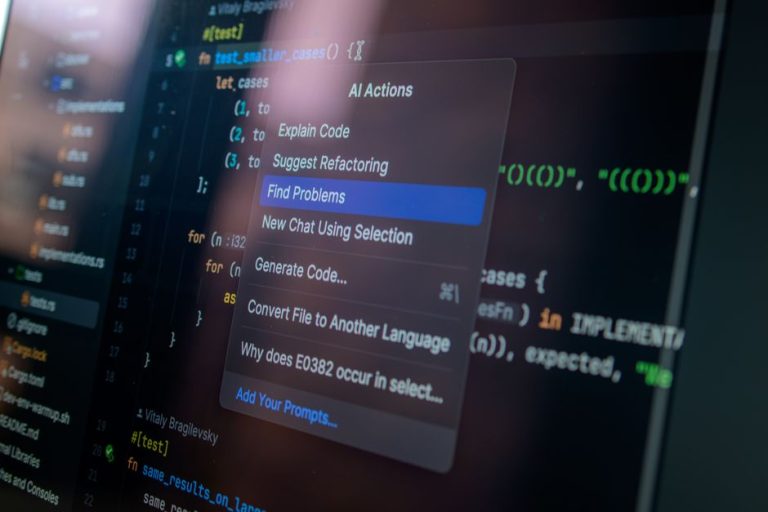
High-Frequency Trading (HFT): HFT is the use of sophisticated algorithms to transact a large number of orders in fractions of a second. By exploiting micro-inefficiencies in liquidity and pricing, HFT platforms essentially “read” the market’s pulse at a speed invisible to human traders.
Pattern Recognition vs. Causality: The danger in both ancient divination and modern HFT is the confusion of correlation with causation. Algorithms often discover “ghost patterns”—spurious correlations in data that appear predictive but lack any underlying economic logic. Recognizing this distinction is the hallmark of a sophisticated market participant.
Step-by-Step Guide to Applying Algorithmic Logic
Identify the Signal Source: Every divination practice requires a focal point. In HFT, this is your data feed. Whether you are tracking volume spikes, order book imbalances, or news sentiment, ensure your “entrails”—your data—are clean, granular, and timely.
Define the Hypothesis: Before deploying an algorithm, define exactly what “truth” you are trying to divine. Is the market currently showing mean reversion or momentum? A trading strategy without a hypothesis is no different than rolling dice.
Backtesting for Predictive Power: Run your hypothesis against historical datasets to see if your “divination” would have held up in past cycles. If your model fails to predict the past, it will certainly fail to predict the future.
Execution and Feedback Loops: Deploy your model with strict risk parameters. Just as ancient seers adjusted their interpretations based on the shifting flight of birds, HFT algorithms use machine learning to adjust parameters based on live trade results.
Risk Mitigation: Because all divination systems have a “margin of error,” implement hard stops. When the algorithm’s signals break down—often due to exogenous shocks—human oversight must intervene to prevent catastrophic failure.
Examples and Case Studies
The Flash Crash of 2010: This serves as the ultimate cautionary tale of modern divination. On May 6, 2010, the Dow Jones Industrial Average dropped nearly 1,000 points in minutes. The cause? A chain reaction of automated algorithms reacting to one another’s sell signals. It was a “run on the market” caused by machines interpreting other machines’ movements—a digital feedback loop of panic that traditional divination would call a “cursed omen.”
Trend Following in Commodity Trading: CTAs (Commodity Trading Advisors) utilize systematic strategies to follow price trends. They act much like ancient observers watching the tides. By adhering to strict trend-following models, these funds do not try to “predict” the price of oil; they simply wait for the signal of a trend to establish itself and then act in harmony with the momentum. This is the most practical application of algorithmic divination: stop trying to force a future and start reacting to the present with systematic discipline.
Common Mistakes
Overfitting Data: This is the digital equivalent of seeing faces in clouds. If you tune your model too perfectly to past data, it will lose all predictive utility for future, unseen market conditions.
Ignoring “Black Swans”: Algorithms rely on the assumption that the future will behave like the past. When a truly novel event occurs, the model’s “divination” powers vanish.
Latency Arbitrage Addiction: Many traders obsess over shaving microseconds off their execution time. While speed matters, a high-speed execution of a fundamentally flawed strategy is merely a faster way to lose money.
Disregarding Human Sentiment: Even the most advanced algorithms exist within a market driven by human fear and greed. Ignoring the qualitative “mood” of the market in favor of pure quantitative data often leads to being on the wrong side of a liquidity squeeze.
Advanced Tips
To truly master the intersection of these two worlds, adopt the mindset of an adversarial forecaster. If you are building an automated system, don’t just look for what confirms your thesis; look for what invalidates it.
Incorporate “Sentiment Analysis” into your quantitative models. By using Natural Language Processing (NLP) to scrape news feeds and social media, you can quantify the “augury” of the masses. If the quantitative price data suggests a rally, but the NLP-driven sentiment suggests extreme fear, you have identified a divergence. In the history of financial divination, such divergences are often the most reliable predictors of a market reversal.
Finally, utilize Monte Carlo simulations to stress-test your strategy. If you can survive 10,000 different iterations of market chaos, you have moved beyond “divination” and into the realm of robust risk management.
Conclusion
The transition from the ancient practice of reading birds to the modern practice of reading data streams is not as radical as it seems. Both represent a fundamental human desire to master the unknown through the observation of patterns. However, modern traders have an advantage that their ancestors lacked: the ability to test their hypotheses with mathematical rigor.
The lesson for today’s adult investor is clear: embrace the algorithms, but maintain the humility of the augur. Use your models to cut through the noise, but always remember that the market is a chaotic, living system. By combining the speed of the machine with the strategic oversight of the human, you can navigate the modern financial landscape with both precision and wisdom.




1 thought on “Examine the intersection of high-frequency trading algorithms and the historicalpractice of financial divination.”