Contents
* Introduction: The inevitable shift from physical credentials to digital, biometric-based identity verification.
* Key Concepts: Defining biometric modalities (facial recognition, iris scanning, fingerprinting) and the concept of “Digital Identity Wallets.”
* Step-by-Step Guide: How the transition from physical to biometric border control works in practice.
* Real-World Applications: Success stories from airports like Dubai International and Singapore Changi.
* Common Mistakes: Privacy misconceptions, security vulnerabilities, and the “all or nothing” fallacy.
* Advanced Tips: Understanding decentralization and self-sovereign identity (SSI).
* Conclusion: The future of frictionless travel.
***
The End of the Passport: How Biometric Identity Will Replace Physical Credentials
Introduction
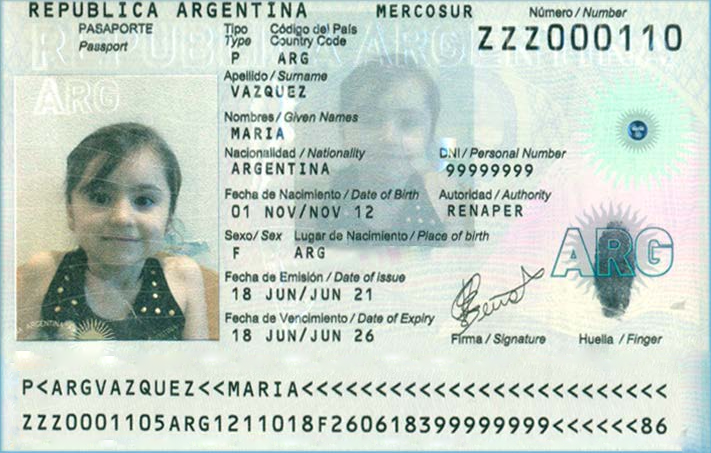
For decades, the passport has been the gold standard of identity. It is a physical booklet, embossed with gold, stamped by ink, and held together by tradition. Yet, in an increasingly digital, high-velocity world, the physical passport is a bottleneck. It is susceptible to forgery, prone to loss, and requires manual processing that creates the very friction global travel seeks to eliminate.
We are currently witnessing a paradigm shift. Biometric-based identity verification—using your face, iris, or gait as your “key”—is moving from the realm of science fiction into the core infrastructure of global travel. This is not merely an upgrade to the passport; it is a fundamental replacement of the document itself with your own biology. Understanding this transition is essential for any professional navigating the future of global mobility.
Key Concepts
To understand the transition, we must look at the technology underpinning it. Biometric identity verification replaces the “possession” factor (the physical card) with the “inherent” factor (you).
Biometric Modalities: These are the unique physical characteristics used for verification. Facial recognition is currently the most scalable, utilizing high-resolution cameras to map nodal points on your face. Iris recognition offers higher entropy and accuracy, while fingerprinting remains a staple for criminal and high-security databases.
The Digital Identity Wallet: This is the software bridge. Instead of carrying a passport, your identity is stored in an encrypted, decentralized digital wallet on your smartphone. When you approach a biometric kiosk, the system matches your live biometric scan against the verifiable, cryptographically signed credentials stored in your wallet.
Verifiable Credentials (VCs): Unlike a static photo of your passport, a VC is a digital record that can be proven authentic without revealing unnecessary information. For example, a system can verify you are over 18 without disclosing your exact date of birth or home address.
Step-by-Step Guide
Transitioning to a biometric-first identification process involves a shift in both infrastructure and user behavior. Here is how the process functions in a modern, automated border control environment:
- Initial Enrollment: You perform a one-time registration where your biometric data is captured alongside your verified government ID. This data is hashed and encrypted, ensuring the government does not store a raw image of your face, but rather a mathematical template.
- Credential Issuance: A digital “token” or verifiable credential is issued to your secure mobile device. This acts as your digital passport.
- The “Walk-Through” Experience: As you arrive at an airport or border checkpoint, high-speed cameras capture your biometric signature as you walk. You do not need to stop, present a document, or interact with an agent.
- Backend Verification: The system performs a “1:N” match. It compares your live scan against the secured database of authorized travelers.
- Authorization: Once the match is confirmed, the system signals the gate or immigration checkpoint to open. The entire interaction takes less than three seconds.
Examples and Case Studies
The future is already being tested in major transit hubs across the globe.
The Dubai International Airport (DXB) “Smart Tunnel”: Dubai has pioneered the “Biometric Path.” Travelers can walk through a tunnel where cameras identify them in seconds. The system, which integrates flight data and immigration status, has effectively removed the need for physical interaction at passport control for registered users.
Singapore Changi Airport: Singapore has committed to a fully biometric immigration process. By moving toward a “token-less” travel experience, Changi has drastically reduced processing times, allowing passengers to move from curb to gate with nothing but their face as their credential.
The EU Digital Identity Framework: The European Union is currently developing a framework that will allow citizens to prove their identity across all member states using a digital wallet. This is the blueprint for moving beyond the passport, enabling citizens to live, work, and travel across borders without physical documentation.
Common Mistakes
As we transition to these systems, both policymakers and users often fall into specific traps:
- The Privacy Fallacy: Many fear that biometrics are inherently more invasive than paper. In reality, modern systems use “privacy-by-design,” where biometric templates are deleted or encrypted immediately after verification, whereas a lost physical passport reveals your full history to anyone who finds it.
- Over-Reliance on Centralization: A common mistake is storing all biometric data in a single, massive government database. This creates a “honeypot” for hackers. The move toward decentralized identity, where you hold your own data, is the only secure path forward.
- The “All or Nothing” Approach: Implementing biometric systems without a fallback mechanism for those with temporary biometric changes (e.g., medical conditions or injury) can cause systemic failure. Robust identity systems must always have a secondary, secondary-factor authentication method.
Advanced Tips
If you want to stay ahead of this technological shift, focus on these three areas:
Embrace Self-Sovereign Identity (SSI): SSI allows you to control your identity data. Instead of a third party “owning” your passport record, you store it on your device and share only what is necessary. Research apps and platforms that utilize W3C standards for decentralized identifiers (DIDs).
Monitor Global Standards: The International Civil Aviation Organization (ICAO) sets the standards for digital travel credentials. Keeping an eye on ICAO’s “Digital Travel Credential” (DTC) roadmap will tell you exactly when your country is likely to pivot away from physical booklets.
Advocate for Interoperability: The biggest hurdle to a passport-free world is the lack of communication between different nations’ systems. Support initiatives that advocate for standardized API protocols, which allow a biometric verification done in London to be recognized in Tokyo without re-enrollment.
Conclusion
The physical passport has served humanity well, but it is an artifact of the 20th century. We are moving toward a world where identity is not something you carry, but something you are.
This transition promises a future of frictionless travel, enhanced security, and greater personal agency. While challenges regarding data privacy and infrastructure standardization remain, the trajectory is clear. The biometric-based identity verification system is not just a replacement for the passport; it is an evolution of how we define our place in a globalized society. By understanding these systems now, you position yourself at the forefront of the next great shift in human mobility.
Further Reading