Education as Self-Actualization: A Guide to Lifelong Growth
— by
Steven Haynes
The Shift: Education as a Journey of Self-Actualization
Introduction
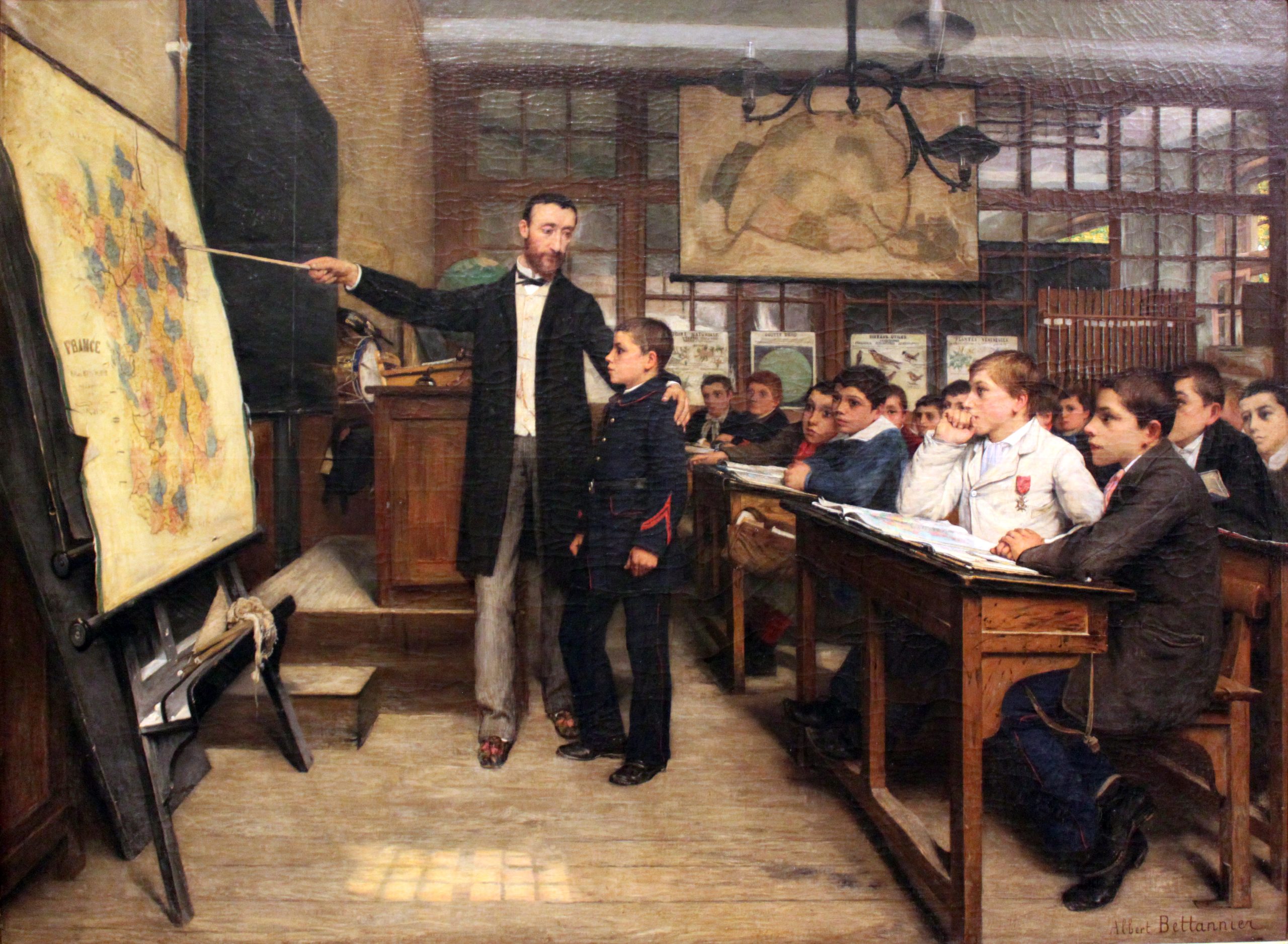
For most of the 20th century, the education system functioned primarily as a vocational pipeline. You went to school to learn a trade, earn a degree, and secure a predictable career path. The goal was stability; the measure of success was employment. However, we are currently witnessing a profound paradigm shift. Education is evolving from a rigid, factory-model assembly line into an organic instrument for self-actualization and lifelong discovery.
This transition matters because the professional landscape is changing faster than ever before. In an era of artificial intelligence and rapid automation, “knowing things” is no longer a competitive advantage—the ability to learn, unlearn, and reinvent oneself is. Moving toward a model of self-actualization isn’t just a philosophical preference; it is a survival strategy for the modern adult.
Key Concepts
To understand this evolution, we must distinguish between vocational training and self-actualization. Vocational training focuses on external outcomes: “What job will this get me?” Self-actualization focuses on internal alignment: “How does this knowledge expand my capacity to contribute and understand the world?”
At the heart of this shift is the concept of Autodidacticism—the practice of self-directed learning. When education becomes a tool for self-actualization, the learner shifts from a passive recipient of a curriculum to an active curator of their own development. This involves three core pillars:
Agency: Taking full responsibility for your knowledge gaps and growth areas.
Interdisciplinary Synthesis: Connecting disparate fields—like psychology and coding, or philosophy and finance—to create unique value.
Intrinsic Motivation: Pursuing mastery not for a credential, but for the satisfaction of competence and the ability to solve complex problems.
Step-by-Step Guide: Designing Your Personal Curriculum
Transitioning from a “student” mindset to a “self-actualizing” mindset requires a structured approach to learning. Follow these steps to take control of your intellectual development.
Conduct a Competency Audit: Evaluate your current skill set against your long-term goals. Identify not just professional skills, but the intellectual “blind spots” that prevent you from thinking more clearly or creatively.
Define Your “Why”: Move beyond professional utility. Ask yourself what subjects ignite your curiosity. When you align learning with your natural interests, the cognitive load feels lighter and retention increases significantly.
Curate Your Inputs: Stop consuming generic content. Seek out primary sources, long-form literature, and mentorship from people who are five to ten years ahead of you. Quality of input dictates the quality of output.
Apply the Feynman Technique: To truly master a concept, attempt to explain it to someone else in simple terms. If you cannot explain it simply, you do not understand it well enough. This turns passive reading into active knowledge.
Build a “Learning Portfolio”: Instead of relying on degrees, document your projects. Whether it is a body of writing, a coded application, or a case study, create tangible evidence of your ability to learn and apply new frameworks.
Examples and Case Studies
Consider the career of a modern software engineer who decides to study behavioral economics. Initially, their vocational skill was writing code. By integrating behavioral science, they transition into a role as a Product Designer. They aren’t just writing code anymore; they are architecting user experiences that influence decision-making. Their education became an instrument for self-actualization, allowing them to provide a level of value that a “code-only” professional could not.
Another example is the “Generalist-Specialist.” Take a creative director who spends years studying architecture, photography, and history. They use these diverse inputs to inform their marketing strategy. By treating their education as a process of continuous discovery rather than a terminal point, they become irreplaceable. Their “vocational pipeline” was merely the starting point; their “self-actualization” journey is what defines their career peak.
Common Mistakes
The Credential Trap: Many adults fall into the habit of collecting certificates and degrees as a substitute for actual competence. A certificate proves you attended; a project proves you can execute.
Ignoring the “Unlearning” Process: Education is not just adding new information; it is the iterative process of discarding outdated mental models. If you cling to old ways of thinking, you cannot evolve.
Lack of Application: Reading ten books on a topic without applying the lessons is merely entertainment. Learning must be coupled with action to transition from theory to intuition.
Over-Specialization: Becoming too narrow in your focus makes you vulnerable to technological disruption. The most resilient individuals are those who maintain a “T-shaped” profile: deep expertise in one area, with broad knowledge across many others.
Advanced Tips
To truly leverage education as an instrument for growth, you must move beyond the syllabus. Start by engaging in high-stakes practice. This means putting your knowledge to the test in real-world environments—start the side project, pitch the idea, or offer to solve a problem for a business for free. The feedback loop provided by reality is the most efficient teacher you will ever have.
Furthermore, cultivate a “Mental Model” library. Instead of memorizing facts, focus on understanding the underlying principles that govern reality—such as the Pareto Principle (the 80/20 rule), First Principles Thinking, or Inversion. These frameworks act as intellectual levers, allowing you to synthesize information faster and make better decisions in any domain.
The illiterate of the 21st century will not be those who cannot read and write, but those who cannot learn, unlearn, and relearn. – Alvin Toffler
Conclusion
The transition from education as a vocational pipeline to education as a journey of self-actualization represents a fundamental shift in human potential. By moving away from the industrial-era expectation of “degrees as destinations,” you open the door to a lifetime of compounding intellectual value.
Remember, the goal is not to reach a final state of “educated,” but to cultivate a state of “educable.” When you treat your curiosity as a compass and your knowledge as a tool for creation, you stop being a cog in a machine and start becoming the architect of your own future. Start small, stay consistent, and always prioritize the application of your knowledge over the mere accumulation of credentials.





Leave a Reply