Dynamic policy enforcement allows for real-time adjustments to safety parameters in production.
— by
Steven Haynes
Contents
1. Introduction: The shift from static governance to dynamic policy enforcement in production environments.
2. Key Concepts: Defining “Policy as Code” (PaC) and the mechanics of real-time adjustment.
3. Step-by-Step Guide: Implementing a dynamic enforcement loop (Decoupling, Evaluation, Enforcement).
4. Real-World Applications: Cloud security, API rate limiting, and regulatory compliance (GDPR/PCI).
5. Common Mistakes: Hardcoding rules, latency bottlenecks, and lack of “dry-run” auditing.
6. Advanced Tips: Using OPA (Open Policy Agent) and sidecar architectures for global consistency.
7. Conclusion: The path forward for scalable, secure infrastructure.
***
Dynamic Policy Enforcement: Real-Time Governance in Production
Introduction
For years, infrastructure security and governance were treated as “gatekeeping” activities. Developers would push code, and security teams would manually review configurations or update static firewall rules. In a world of continuous deployment and microservices, this legacy approach is not just a bottleneck—it is a critical point of failure. If your safety parameters take hours or days to update, you are effectively operating with an expired shield.
Dynamic policy enforcement transforms security from a static checkpoint into a living, breathing part of your infrastructure. By treating policies as version-controlled code that updates in real-time, organizations can pivot their safety posture instantly, whether to mitigate a zero-day exploit or adjust rate limits during an unexpected traffic spike.
Key Concepts
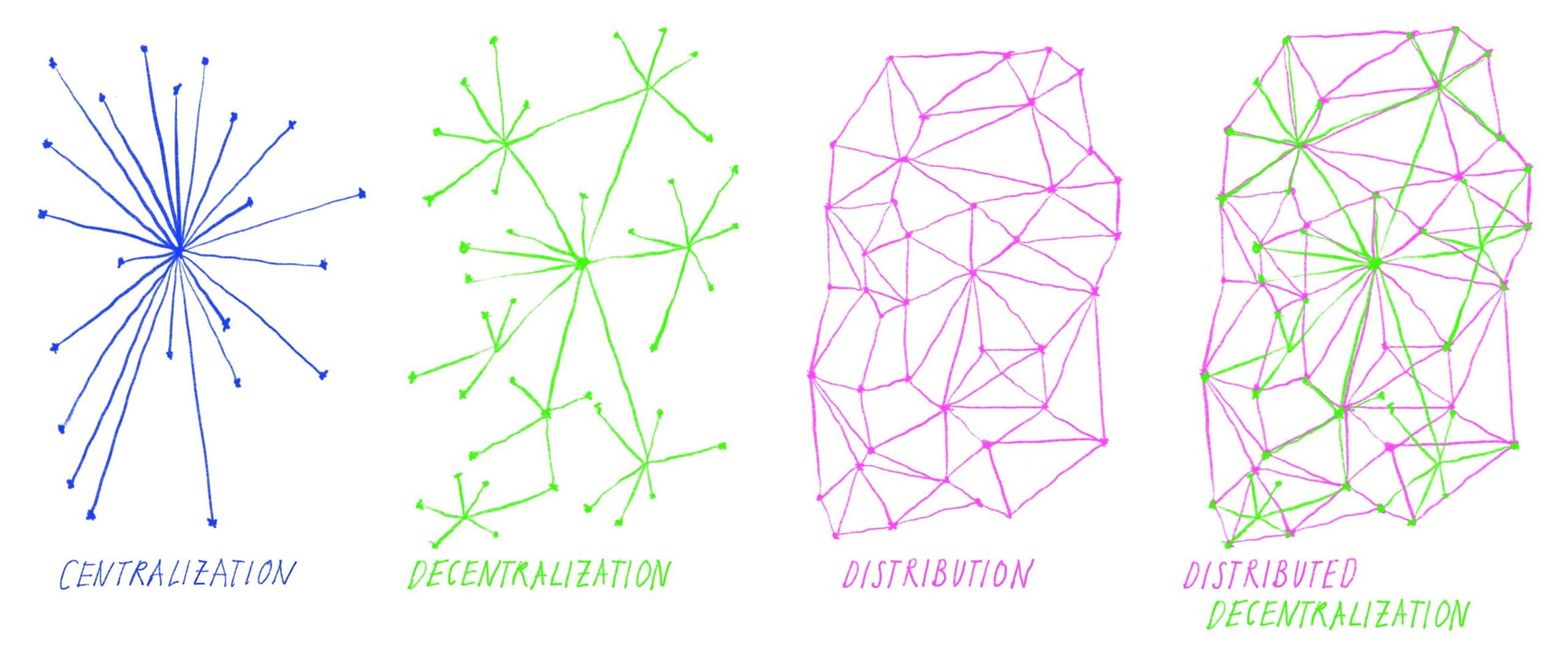
At its core, dynamic policy enforcement relies on the separation of policy decision-making from policy enforcement. Instead of hardcoding logic deep within application services, policies are centralized, externalized, and pushed to enforcement points as needed.
This is often achieved through the Policy as Code (PaC) paradigm. By defining rules in a declarative language (such as Rego for OPA), you treat security logic exactly like your application code. This allows for:
Version Control: Every policy change is tracked in Git, ensuring auditability.
Automation: Policies can be deployed via CI/CD pipelines, removing manual intervention.
Real-time Synchronization: Enforcement points (like sidecars, API gateways, or service meshes) pull or receive the latest policy updates without needing to restart the underlying applications.
This decoupling ensures that security parameters can be changed globally—or targeted to specific segments—without impacting the availability or performance of the production environment.
Step-by-Step Guide
Transitioning to dynamic enforcement requires a structured approach. Follow these steps to implement a robust policy loop.
Audit and Abstract: Identify your existing “hardcoded” rules. If you have API keys, IP whitelists, or access roles buried in code, extract them. These are your policy candidates.
Select an Engine: Adopt a centralized policy engine. Tools like Open Policy Agent (OPA) or custom Envoy-based filters allow you to externalize logic from your application code.
Define Your Schema: Use a machine-readable format (JSON or YAML) to define your policies. Ensure your schema is expressive enough to handle complex logic, such as “Allow traffic only if user is in Group A and request originates from region B.”
Implement the Decoupled Architecture: Deploy an enforcement agent (e.g., a sidecar container) alongside your service. The service asks the agent: “Can this user perform this action?” The agent responds based on the latest policy data it has cached.
Continuous Distribution: Set up a control plane to push updates to these agents. When a policy changes in your repository, the control plane broadcasts the update, and agents apply it immediately without service downtime.
Monitoring and Observability: You must be able to see the decisions being made. Log all “Deny” events to a centralized dashboard to identify potential misconfigurations before they lead to widespread outages.
Real-World Applications
Dynamic policy enforcement is not theoretical; it is currently the backbone of high-scale production systems. Consider these practical scenarios:
Cloud Security Scaling: A global retailer faces a spike in DDoS attempts. Instead of manually updating individual firewall rules across 500 nodes, the security team updates a single policy in Git. The policy engine pushes the “Block suspicious ASN” rule to all enforcement points globally within seconds, neutralizing the threat before it hits the application tier.
Another common application is API Rate Limiting. In a multi-tenant environment, you might need to clamp down on a specific user abusing your services. By dynamically updating the “limit” attribute associated with an API key ID, the policy enforcement point begins rejecting the offender’s requests instantly, protecting your underlying database from depletion.
Finally, for Compliance (PCI-DSS/GDPR), dynamic enforcement allows for location-based data access. If a regulatory mandate changes, you can instantly modify your policy to deny data access requests from specific jurisdictions without patching the underlying code in every microservice.
Common Mistakes
Even with the right tools, companies often fall into traps that compromise their reliability:
The “All-or-Nothing” Deployment: Pushing a global policy change without testing it in a “shadow” or “audit-only” mode first. Always test policies against production traffic logs before moving to active enforcement.
Latency Bottlenecks: Forgetting that every policy decision adds network overhead. Ensure your policy enforcement points (sidecars) operate locally to the service to keep decision-time in the low-millisecond range.
Lack of Versioning: Treating policies as ephemeral settings rather than versioned code. If a policy change causes an outage, you must be able to roll back to the previous version instantly.
Ignoring “Fail-Closed” vs. “Fail-Open”: If your policy engine goes down, what happens? If it fails open, you are vulnerable. If it fails closed, you might create a self-inflicted DDoS. Decide your failure mode and build circuit breakers accordingly.
Advanced Tips
To take your dynamic policy enforcement to the next level, move beyond simple “Allow/Deny” logic.
Use Context-Aware Policies: Integrate your policy engine with external data sources. For example, query a database of known malicious IP addresses or a real-time system health indicator. Your policies should be able to say, “Allow access only if the database latency is below 200ms.”
Implement “Policy-as-Tests”: Just as you write unit tests for your code, write unit tests for your policies. Use frameworks like OPA’s built-in testing suite to verify that a new policy doesn’t accidentally block authorized users while trying to block a malicious actor.
Centralized Observability: Map your policy decisions to user IDs and request paths. By visualizing decision data, you can spot patterns—like a high volume of denied requests from a specific geographical location—which can signal a growing threat or a configuration error in your authorization logic.
Conclusion
Dynamic policy enforcement is no longer a luxury for tech giants; it is a necessity for any modern, agile organization. By externalizing your security and operational logic into code, you remove the friction of manual updates and gain the ability to react to production incidents in real-time.
Start small: externalize a single set of rules, such as API rate limits or feature flagging. Once you establish the CI/CD loop for those, expand your scope to more complex access controls and security parameters. The goal is to build an environment that is not just secure, but resilient enough to adapt to the unknown. In the modern cloud-native era, the most robust infrastructure isn’t the one that never changes—it’s the one that changes intelligently.







Leave a Reply