
The Intersection of Data Sovereignty and Religious Privacy in the Age of AI
Introduction
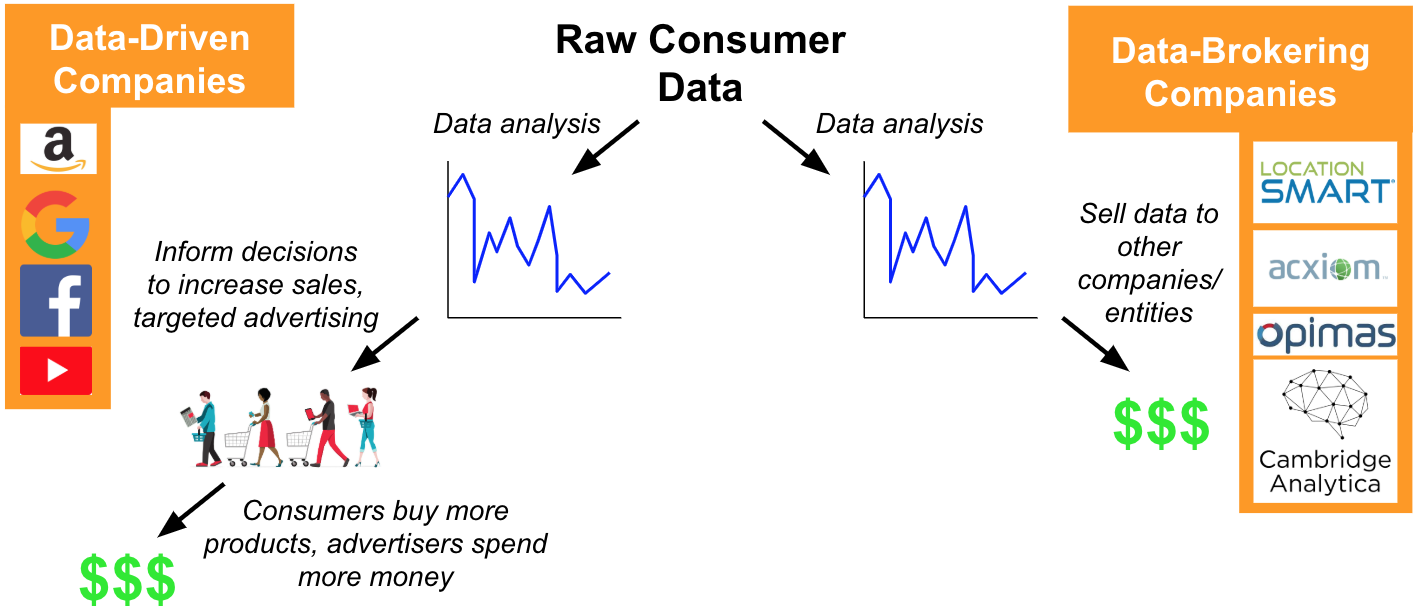
The rapid proliferation of Large Language Models (LLMs) has sparked a global conversation about data governance. While data sovereignty laws—designed to keep data within specific geographic or legal jurisdictions—are maturing, a critical blind spot remains: the protection of the digital identities and intellectual property of religious communities. As AI models scrape the collective human consciousness to generate responses, they often ingest sensitive liturgical, theological, and community-specific data without consent or respect for cultural boundaries.
This is not merely an issue of copyright; it is a profound matter of privacy and human dignity. Religious communities, often smaller in scale but immense in cultural depth, are facing the reality that their sacred knowledge is being digitized, commodified, and potentially misrepresented by opaque algorithms. To ensure the ethical development of artificial intelligence, data sovereignty laws must evolve to recognize and protect the specific privacy rights of religious groups.
Key Concepts
Data Sovereignty: This is the principle that data is subject to the laws and governance structures of the nation or region where it is collected or stored. While primarily a political and economic concept, it is increasingly being challenged by the borderless nature of global AI training sets.
Collective Privacy Rights: Traditional privacy laws, like the GDPR, are largely individualistic. They focus on an individual’s right to be forgotten or to control their personal data. However, religious communities often view their data (liturgies, communal rituals, esoteric texts) as communal assets rather than individual property. Protecting these requires a shift toward recognizing collective privacy rights.
Algorithmic Extraction: This occurs when AI training pipelines ingest specialized data from religious communities without authorization. The resulting models may use this data to mimic religious leaders or distort sacred teachings, often without attribution or accountability.
Step-by-Step Guide: Implementing Ethical AI Governance for Religious Data
- Audit and Classify Sacred Data: Organizations must distinguish between public-domain religious materials and “privileged” community knowledge. Not all data is equal; liturgical texts may be public, but internal governance documents, community member databases, and pastoral counseling records require strict isolation.
- Establish Data Trusts: Instead of leaving data at the mercy of open-web scraping, communities should create data trusts. These legal entities act as custodians of community data, setting clear terms for how AI developers can access and use that information.
- Enforce Opt-In Mechanisms: Regulators should mandate that AI developers provide explicit “opt-in” protocols for datasets categorized as culturally or religiously significant. This shifts the burden of proof from the community (who must “opt-out”) to the tech giant (who must “ask”).
- Verify AI Outputs: Communities should leverage automated verification tools to monitor AI outputs for hallucinations or misrepresentations regarding their beliefs. This feedback loop can serve as a metric for model alignment and safety.
- Negotiate Licensing Agreements: Move beyond the “Fair Use” argument. Large-scale commercial AI models should negotiate formal data licensing agreements with religious institutions to ensure that the value generated by these models flows back into the preservation of the culture being mined.
Examples and Case Studies
The Digitization of Indigenous and Minority Liturgies: Smaller, less digitized religious communities are particularly vulnerable. When a tech company scrapes an online repository of minority religious texts to train a model, they are essentially extracting cultural heritage. Without data sovereignty, the community has no legal standing to prevent their sacred concepts from being synthesized into generic or incorrect chatbot personas.
Pastoral Counseling and Chatbots: Many AI startups are developing mental health chatbots that incorporate “pastoral care” modules. If these models are trained on real, sensitive conversations between clergy and congregants without adequate anonymization or consent, the fundamental sanctity of the “seal of confession” is effectively compromised by machine learning.
Common Mistakes
- Assuming “Public” Means “Free to Use”: Just because a religious text is posted on a website does not mean the community has waived their right to control how that content is used for generative AI training. Legal access does not equate to ethical usage.
- Ignoring Metadata Sovereignty: Even if the text of a ritual is public, the metadata associated with it—such as the time, context, or demographics of its usage—is often highly sensitive. Failing to secure this metadata allows AI to predict or manipulate behavioral patterns within the community.
- Relying Solely on “De-identification”: In the context of religious data, de-identification is rarely sufficient. Because religious knowledge is so niche and context-specific, AI can often re-identify the community or specific individuals involved through pattern matching, rendering traditional privacy measures obsolete.
Advanced Tips
Implement Federated Learning: For communities that want to contribute to research without giving up their data, federated learning is a superior approach. It allows AI models to be trained on the community’s local servers. The model learns from the data, but the raw, sensitive information never leaves the custody of the religious institution.
Advocate for “Community-in-the-Loop” Oversight: As laws like the EU AI Act begin to standardize regulation, religious organizations should lobby for seats on the governing boards that oversee AI ethics committees. Having a theological perspective represented during the training phase can prevent the accidental embedding of biases that might marginalize or offend religious groups.
Blockchain for Provenance: Religious organizations can use decentralized ledgers (blockchain) to document the provenance of their digital archives. This allows them to track exactly where their data is being used and provides an immutable record for legal challenges if their intellectual property is misused in AI training sets.
Conclusion
Data sovereignty is no longer just a technical or political matter; it is a human rights imperative. When we allow AI models to indiscriminately scrape the foundational knowledge of religious communities, we risk eroding the cultural sovereignty of those groups. By moving toward a framework that recognizes collective privacy, establishing data trusts, and requiring explicit consent for the use of specialized knowledge, we can build an AI ecosystem that respects the depth and diversity of human faith.
True innovation in the age of AI will be measured not by how much data we can ingest, but by the level of respect and ethical rigor we afford the communities from which that data is drawn.
Policy makers, technologists, and religious leaders must work in tandem to ensure that the laws of the future protect not just the individual’s digital footprint, but the collective spirit of the communities that make up our global society.


Leave a Reply