1. Introduction: Define Cooperative Optimal Transport (COT) and its shift from traditional centralized control to decentralized, swarm-based intelligence.
2. Key Concepts: Explain the transition from the Monge-Kantorovich problem to multi-agent distribution matching.
3. Step-by-Step Guide: Implementing a COT framework for multi-robot task allocation.
4. Examples/Case Studies: Warehouse automation and drone swarm coverage.
5. Common Mistakes: Overfitting to static environments and ignoring communication bandwidth.
6. Advanced Tips: Entropy regularization and asynchronous updates.
7. Conclusion: The future of resilient, scalable robotics.
***
Cooperative Optimal Transport: The New Frontier in Multi-Robot Coordination
Introduction
For decades, the field of robotics struggled with a fundamental trade-off: centralize control to ensure efficiency, or decentralize it to ensure resilience. Centralized systems suffer from single points of failure and computational bottlenecks, while decentralized systems often struggle to reach a global consensus. Cooperative Optimal Transport (COT) theory has emerged as the mathematical bridge between these two worlds.
By treating robotic tasks as distributions of probability, COT allows a swarm of robots to reallocate themselves to optimize a global objective—such as coverage, task completion, or energy efficiency—without requiring a master controller. This article explores how you can leverage COT to build more scalable, intelligent, and robust robotic systems.
Key Concepts
At its core, Optimal Transport (OT) is the study of how to move “mass” from one distribution to another with minimal cost. In robotics, “mass” is represented by the robots themselves, and the “target distribution” represents the tasks or locations that need to be occupied.
Cooperative Optimal Transport extends this by allowing agents to negotiate the transport plan collectively. Instead of a single solver calculating the path for every robot, agents use local information and peer-to-peer communication to converge toward a global optimal configuration. Key components include:
Cost Matrix: A representation of the energy or time required for each robot to travel to a specific task.
Wasserstein Distance: The metric used to quantify the “distance” between the current robotic distribution and the target configuration.
Entropy Regularization: A mathematical “smoothing” technique that makes the optimization problem computationally feasible for real-time robotic hardware.
Step-by-Step Guide: Implementing a COT Framework
Implementing COT in a robotic swarm requires moving from static optimization to dynamic, iterative processes. Follow these steps to build a decentralized allocation system:
Define the Distributions: Represent your fleet of robots as a set of coordinates P and your target tasks as a set of coordinates Q.
Initialize the Cost Function: Calculate the Euclidean distance between every robot and every task. This creates your initial cost matrix.
Execute the Sinkhorn Iteration: This is the engine of modern OT. Use the Sinkhorn-Knopp algorithm to iteratively normalize the rows and columns of your cost matrix. This pushes the robots toward an optimal assignment that minimizes total distance.
Local Communication: Allow robots to share their local assignment weights with neighbors. This ensures that if one robot drops out or a new task appears, the distribution re-balances automatically.
Execution and Feedback: Robots move toward their assigned coordinates, updating their positions in real-time, which triggers a recalculation of the transport plan.
Examples and Case Studies
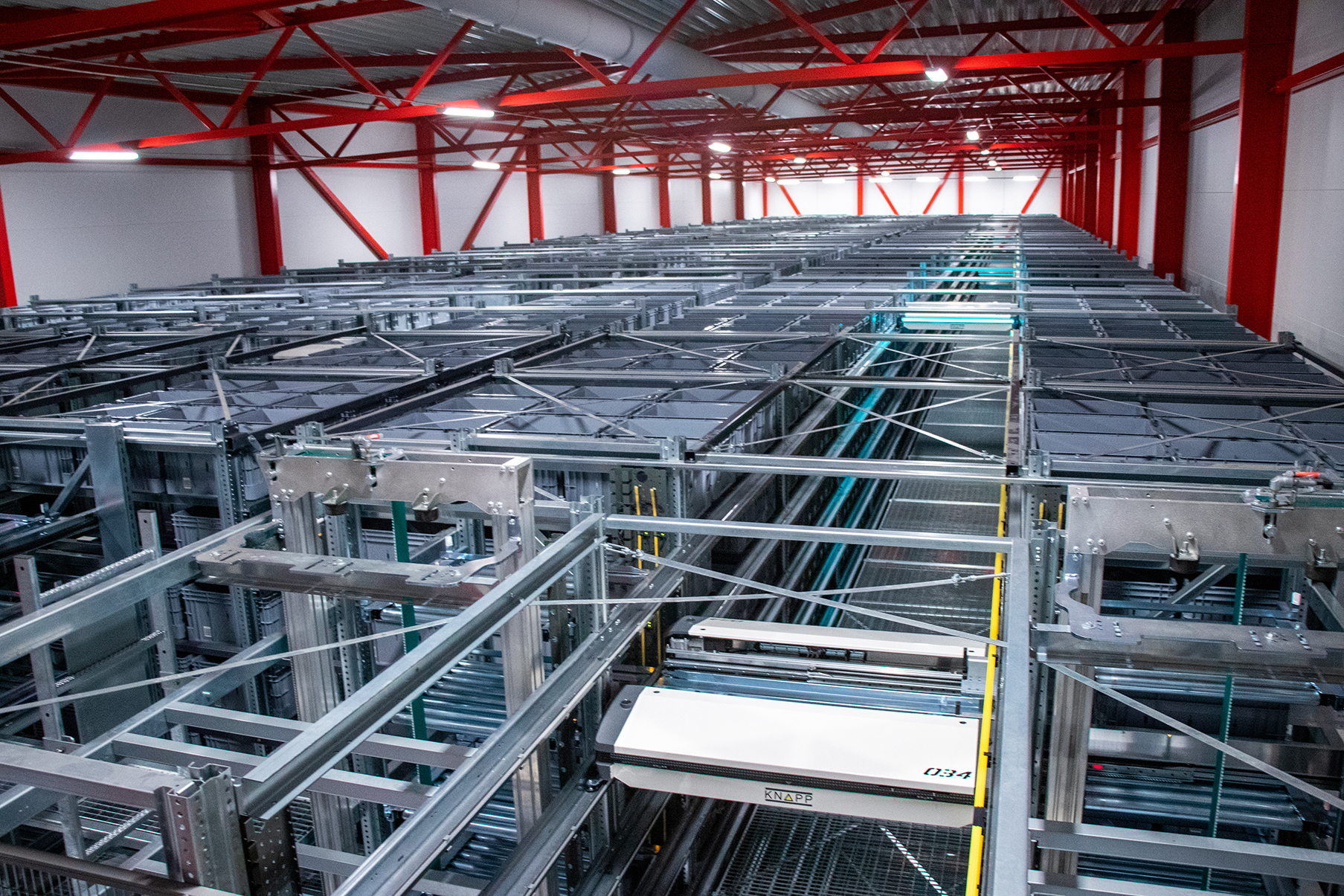
Automated Warehouse Logistics: In modern fulfillment centers, robots must constantly transition between picking, charging, and sorting zones. Using COT, a fleet can dynamically redistribute itself based on incoming order spikes. If a specific aisle experiences a surge in demand, the “target distribution” shifts, and the robots naturally gravitate toward that area without a central dispatcher.
Drone Swarm Environmental Monitoring: When deploying drones to monitor a forest fire or a chemical spill, the “target” is the area of interest. COT allows the swarm to spread out in a way that maximizes coverage density. As the fire moves, the target distribution updates, and the swarm “flows” to maintain optimal observation coverage, effectively treating the drones as a fluid.
Common Mistakes
Ignoring Communication Latency: Many implementations assume instantaneous data sharing. In reality, bandwidth constraints can cause robots to operate on outdated transport plans, leading to collisions. Always include a “staleness” factor in your cost matrix.
Over-Optimization: Trying to reach the absolute global optimum is often unnecessary and computationally expensive. Small deviations (sub-optimality) are often acceptable in robotics and significantly improve system responsiveness.
Static Task Assumptions: Treating tasks as fixed points in time is a mistake. In dynamic environments, your target distribution must be treated as a moving target, requiring continuous, asynchronous re-optimization.
Advanced Tips
To take your implementation to the next level, consider Unbalanced Optimal Transport. Standard OT requires the total number of robots to match the number of tasks exactly. In the real world, this rarely happens. Unbalanced OT introduces “slack variables” that allow robots to ignore tasks that are too costly or allow tasks to be partially covered by multiple agents.
Additionally, focus on Asynchronous Updates. In a decentralized swarm, not all robots have the same processing speed. By allowing robots to update their local transport plan based on their own internal clock rather than waiting for a global synchronization pulse, you drastically increase the fault tolerance of the entire system.
“The power of Cooperative Optimal Transport lies not in the precision of the final map, but in the fluidity with which a swarm adapts to an unpredictable environment.”
Conclusion
Cooperative Optimal Transport represents a paradigm shift for roboticists. By moving away from rigid, centralized command structures and toward fluid, distribution-based coordination, we can build swarms that are not only more efficient but inherently more resilient to failure.
Whether you are managing a fleet of warehouse robots or a swarm of aerial drones, the ability to view your system as a dynamic distribution of agents will unlock new levels of performance. Start by implementing the Sinkhorn iteration, respect the limitations of your communication network, and embrace the decentralized nature of the swarm. The future of robotics is not in the control of the individual, but in the emergent intelligence of the collective.