
Uncategorized
-

Objective analysis often ignores the subjective reality that defines the sacred for the participant.
Contents 1. Introduction: Define the tension between the “observer’s view” (objective) and the “participant’s view” (subjective/sacred). Why ignoring the latter leads to failure in leadership, therapy, and community building. 2. Key Concepts: Distinguishing between “etic” (outsider) and “emic” (insider) perspectives. Defining the “sacred” not as religious, but as that which a person holds as inviolable…
-

Ethical data stewardship demands that the community has agency over how their rituals are modeled.
Outline Introduction: Defining data stewardship as a human rights issue, not just a technical one. Key Concepts: Defining “Ritual Modeling” and the shift from data extraction to data sovereignty. Step-by-Step Guide: Implementing community-led data governance frameworks. Examples: Case studies in indigenous data sovereignty and digital ethnography. Common Mistakes: The perils of performative consultation and algorithmic…
-
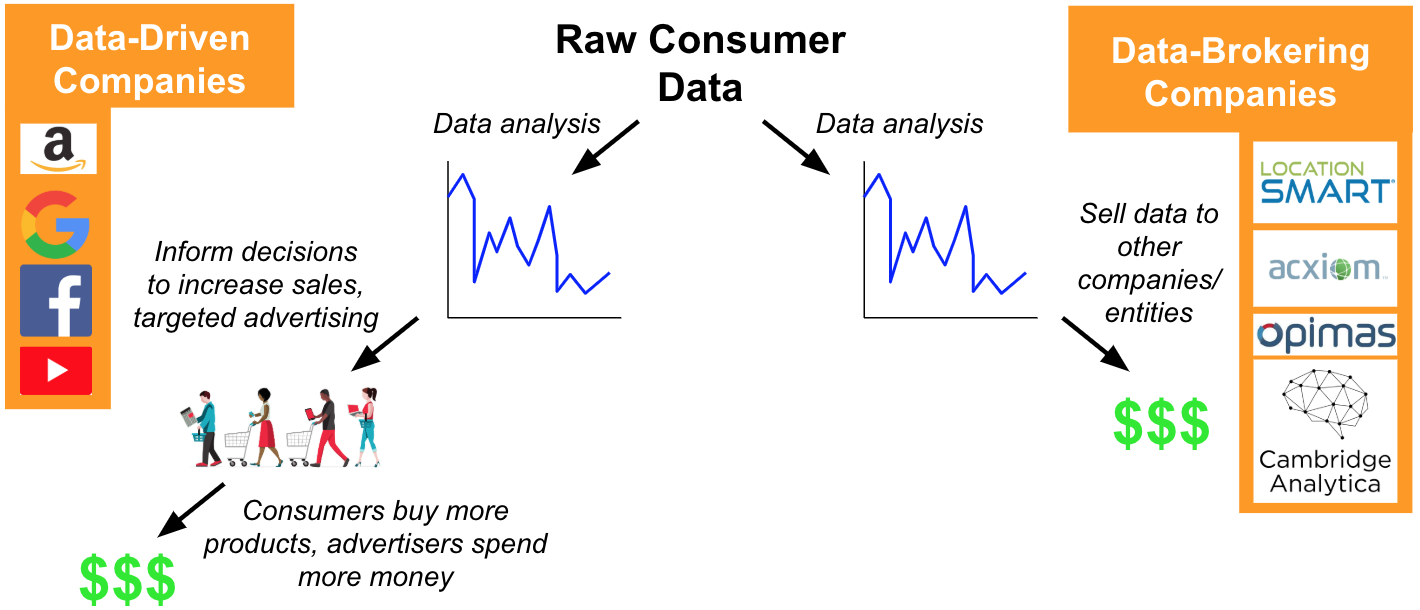
Algorithmic bias can inadvertently marginalize minority traditions that do not fit dominant data sets.
The Hidden Erasure: How Algorithmic Bias Marginalizes Minority Traditions Introduction We live in an era where algorithms act as the gatekeepers of culture, history, and social interaction. From the music we discover on streaming platforms to the medical diagnoses suggested by AI, data-driven systems shape our reality. However, these systems are not neutral. They are…
-
Data science in sacred domains must prioritize the principle of “do no harm” to community cohesion.
Outline Introduction: The intersection of data science and sacred spaces (tradition, indigenous knowledge, religious practice). Defining “algorithmic harm” in community contexts. Key Concepts: Data sovereignty, algorithmic extraction, and the “Do No Harm” ethical framework. Step-by-Step Guide: A practical roadmap for ethical data stewardship in sensitive domains. Examples: Analyzing the risk of digitizing sacred linguistics and…
-

Discrepancies between data and lived experience should be viewed as insightful gaps rather than errors.
The Insight Gap: Why Discrepancies Between Data and Lived Experience Are Your Greatest Asset Introduction In our modern era, we are taught to worship at the altar of “data-driven” decision-making. Whether in business, healthcare, or personal finance, we are told that numbers are objective, neutral, and absolute. If the spreadsheet shows a trend, we assume…
-

Sanctity is preserved when data analysis remains subservient to the practitioners’ own self-understanding.
Contents 1. Introduction: Define the tension between data-driven decision-making and human intuition. Introduce the concept of “analytical subservience.” 2. Key Concepts: Defining the practitioner’s self-understanding as the “North Star.” Why data is a map, not the destination. 3. Step-by-Step Guide: A practical framework for integrating data without losing human agency. 4. Examples/Case Studies: Application in…
-

Respecting sanctity necessitates a deliberate restraint in how models are designed and deployed.
The Architecture of Restraint: Why Protecting Human Sanctity Demands Deliberate AI Design Introduction We stand at a unique junction in technological history where our tools have begun to mirror the complexity of human cognition. As artificial intelligence moves from narrow task automation to generative creation and predictive modeling, we are no longer just building software;…
-

Establishing a hybrid framework requires balancing empirical validation with qualitative ethnographic depth.
Contents 1. Introduction: Defining the tension between “Big Data” (empirical) and “Thick Data” (ethnographic). 2. Key Concepts: Distinguishing between predictive modeling and human-centric meaning-making. 3. Step-by-Step Guide: How to integrate quantitative metrics with observational field study. 4. Case Studies: Real-world examples in UX research and organizational change. 5. Common Mistakes: The “False Objectivity” trap and…
-

Researchers must differentiate between analyzing a religion and defining its essential truths.
The Observer’s Dilemma: Differentiating Religious Analysis from Theological Truth Introduction In the academic study of religion, sociologists, historians, and anthropologists often find themselves walking a precarious tightrope. How does one study a tradition that claims to hold the keys to eternal salvation or absolute truth without either validating those claims or dismissively debunking them? The…
-

Data scientists must acknowledge that empirical data is only one layer of a multidimensional reality.
Beyond the Spreadsheet: Why Data Scientists Must Look Beyond Empirical Data Introduction In the modern enterprise, data is often treated as the ultimate source of truth. We build complex machine learning models, optimize conversion funnels, and predict customer churn based on petabytes of structured information. However, the most sophisticated algorithms frequently fail—not because the math…