
Uncategorized
-
Long-term human-AI collaboration requires iterative feedback loops to refine the quality of explanations.
The Architecture of Alignment: Why Long-Term Human-AI Collaboration Demands Iterative Feedback Loops Introduction The promise of artificial intelligence is no longer restricted to automated tasks; it is now defined by the quality of partnership. Whether you are an engineer using LLMs for code generation, a creative professional iterating on visual concepts, or a data analyst…
-

Challenges in High-Stakes XAI Deployment—————————————————-.
Outline Introduction: Defining the XAI gap in high-stakes industries like healthcare, finance, and autonomous systems. Key Concepts: Distinguishing between local vs. global explanations, and post-hoc vs. intrinsic interpretability. The Core Challenges: Dealing with the “accuracy-interpretability trade-off,” cognitive bias, and adversarial vulnerabilities. Step-by-Step Guide: A lifecycle approach to deploying XAI in regulated environments. Case Studies: Clinical…
-

Resilience against such manipulations is a core component of enterprise-grade AI security architectures.
Resilience Against Adversarial Manipulation: Building Enterprise-Grade AI Security Architectures Introduction The rapid integration of Large Language Models (LLMs) and generative AI into enterprise workflows has created a new, expansive attack surface. While organizations are quick to implement AI for productivity, few have addressed the underlying fragility of these models. Adversarial manipulation—ranging from prompt injection to…
-
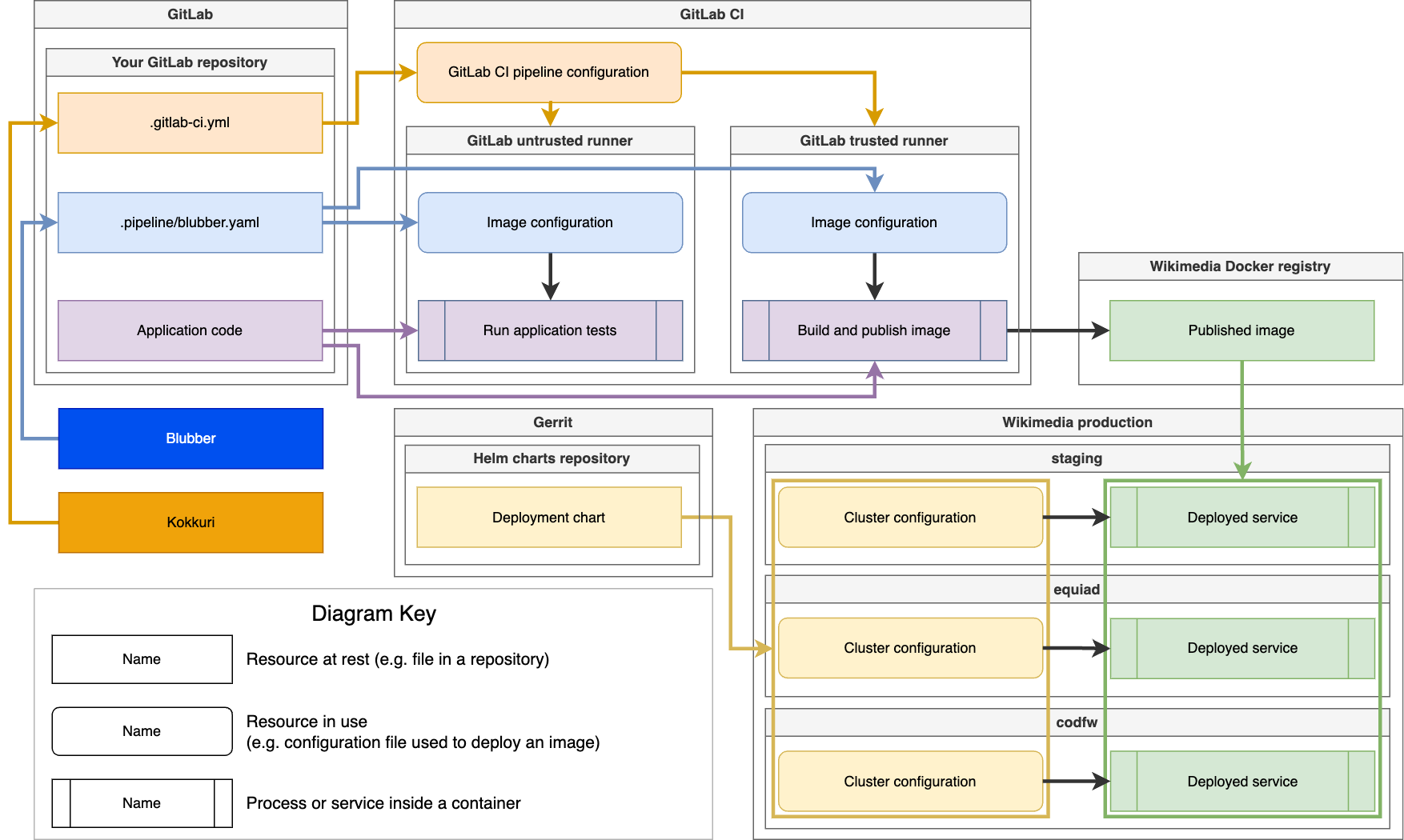
Continuous integration processes automate the generation of compliance documentation based on XAI outputs.
Outline Introduction: The intersection of DevOps speed and regulatory rigor. Key Concepts: Defining CI/CD, XAI (Explainable AI), and Automated Compliance. The Architecture: How to integrate XAI output into documentation pipelines. Step-by-Step Guide: Implementing an automated compliance pipeline. Real-World Applications: FinTech and Healthcare scenarios. Common Mistakes: Pitfalls in data logging and audit trail preservation. Advanced Tips:…
-

Adversaries can sometimes craft inputs that trick XAI tools into providing misleading,benign-looking explanations.
The Adversarial Mirage: How Manipulation Tactics Compromise Explainable AI Introduction Artificial Intelligence has moved beyond the “black box” phase. To satisfy regulatory requirements and build user trust, organizations increasingly rely on Explainable AI (XAI) tools—systems designed to interpret model decisions, such as LIME, SHAP, or Integrated Gradients. We assume these tools provide a window into…
-
Deployment of XAI in high-stakes environments must include rigorous testing for adversarial explanation attacks.
Contents 1. Introduction: The double-edged sword of XAI in high-stakes sectors (healthcare, finance, law). 2. Key Concepts: Understanding XAI (SHAP, LIME, Integrated Gradients) and the vulnerability to adversarial explanation attacks. 3. The Threat Landscape: How “explanation manipulation” works (e.g., hiding bias while looking objective). 4. Step-by-Step Guide: Implementing a robust testing framework for XAI security.…
-

Security audits assess whether XAI interfaces could be exploited to leak sensitive training data.
Contents 1. Introduction: The double-edged sword of Explainable AI (XAI) and the rise of model inversion attacks. 2. Key Concepts: Understanding Model Inversion, Membership Inference, and why XAI features (saliency maps, feature importance) inadvertently act as a roadmap for attackers. 3. Step-by-Step Guide: Auditing XAI interfaces (Threat modeling, API limitation, output sanitation, monitoring). 4. Real-World…
-

In legal contexts, this forces the system to isolate the variables that determine a risk classification.
Contents 1. Introduction: Define the legal necessity of variable isolation in risk classification systems (e.g., algorithmic sentencing, credit scoring, predictive policing). 2. Key Concepts: Distinguishing between correlation and causation, the role of explainability (XAI), and the legal concept of “algorithmic accountability.” 3. Step-by-Step Guide: Establishing a framework for isolating variables, from data cleaning to sensitivity…
-

API endpoints for explainability allow internal auditing tools to query model rationales programmatically.
Building Trust Through Transparency: API Endpoints for Model Explainability Introduction As machine learning models shift from experimental pilots to the backbone of enterprise decision-making, the “black box” problem has become a significant liability. When a model denies a loan application, rejects an insurance claim, or flags a transaction as fraudulent, stakeholders demand to know why.…
-

Technical debt management includes maintaining documentation for evolving CAI implementation strategies.
Outline Introduction: Defining the intersection of technical debt and Conversational AI (CAI). Key Concepts: Understanding “Documentation Debt” in the context of rapidly changing AI models. The Cost of Silence: Why undocumented prompt engineering and logic flows kill long-term scalability. Step-by-Step Guide: Implementing a “Living Documentation” framework for CAI. Case Study: A migration from legacy intent-based…