
Uncategorized
-

The cost of maintaining XAI infrastructure can be prohibitive for smaller firms in regulated sectors.
The Hidden Costs of Explainable AI: Navigating Compliance for Smaller Firms Introduction For financial institutions, healthcare providers, and insurance companies, artificial intelligence is no longer just a competitive advantage—it is a operational necessity. However, the mandate for “Explainable AI” (XAI) creates a significant divide. While large enterprises with bottomless R&D budgets can afford to build…
-

The legal definition of “explainability” remains fluid, creating uncertainty for enterprise compliance teams.
Contents 1. Introduction: The “Black Box” paradox in enterprise AI and the growing regulatory tension. 2. Key Concepts: Defining Explainability (XAI) versus Interpretability; why “mathematical transparency” isn’t “legal defensibility.” 3. Step-by-Step Guide: A roadmap for operationalizing explainability in compliance workflows. 4. Examples/Case Studies: Contrasting lending algorithms (local explanations) vs. medical diagnostic tools (feature importance). 5.…
-

Consistency in explanation across different model iterations is required to maintain user confidence.
### Article Outline 1. Introduction: Defining the “Black Box” problem and why consistency in AI explanations (XAI) builds trust. 2. Key Concepts: Understanding model stability, logic persistence, and the difference between accuracy and explainability. 3. Step-by-Step Guide: Implementing a framework for consistent model output reporting. 4. Examples and Case Studies: Financial services (loan approvals) and…
-
User feedback loops are vital to refine how explanations are presented to non-technical stakeholders.
The Feedback Loop: Refining Technical Explanations for Non-Technical Stakeholders Introduction In the modern enterprise, the gap between technical execution and business strategy is often bridged by a single, fragile thread: the explanation. Engineers, data scientists, and developers spend their days submerged in complexity, but their work only provides value when stakeholders—executives, marketing leads, or project…
-

Scalability of XAI computation is a bottleneck when processing large datasets in financial forecasting.
Outline Introduction: The tension between black-box complexity and regulatory necessity in finance. Key Concepts: Defining XAI (SHAP/LIME) and the “curse of dimensionality” in high-frequency datasets. The Scalability Bottleneck: Why standard XAI methods fail at scale (computational complexity, memory overhead). Step-by-Step Guide: Implementing scalable XAI strategies (Sampling, Surrogate models, Parallelization). Real-World Applications: Risk management and algorithmic…
-

Bias detection tools must be integrated directly into the XAI pipeline to ensure ongoing fairness compliance.
Outline Introduction: The shift from static model audits to continuous governance via XAI (Explainable AI) pipelines. Key Concepts: Defining the intersection of bias detection (Fairness metrics) and XAI (Interpretability techniques). Step-by-Step Guide: Implementing automated bias detection within MLOps/CI/CD pipelines. Real-World Case Study: Financial lending and the necessity of automated fairness checks in high-stakes environments. Common…
-
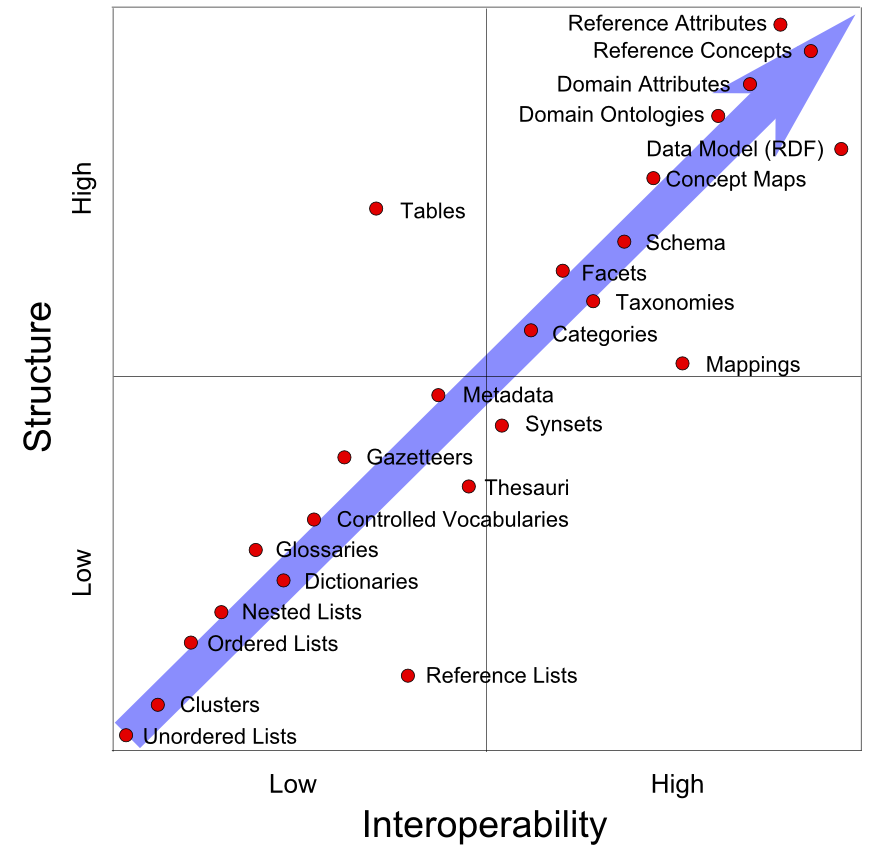
Interoperability between different XAI frameworks is currently limited, forcing vendor lock-in risks.
Outline Introduction: The “Black Box” problem and the emergence of the XAI fragmentation crisis. Key Concepts: Defining Model-Agnostic vs. Model-Specific explanations and the lack of standardization (SHAP, LIME, Integrated Gradients). The Risks of Vendor Lock-in: Exploring technical debt, lack of model portability, and audit compliance issues. Step-by-Step Guide: A framework for building an interoperable XAI…
-

Explainability reports must be generated in a format that satisfies both internal auditors and external regulators.
Contents 1. Introduction: The shift from “black-box” AI to “explainable” governance. 2. Key Concepts: Defining Model Explainability, interpretability vs. transparency, and the dual-audience requirement (Auditors vs. Regulators). 3. Step-by-Step Guide: Establishing a standardized reporting framework. 4. Examples/Case Studies: A financial credit scoring scenario and a healthcare diagnostic tool. 5. Common Mistakes: The “over-documentation” trap, technical…
-

Model cards serve as a standardized way to communicate the intent and limitations ofAI to end-users.
Outline Introduction: The “Nutrition Label” for AI and the shift toward transparency. Key Concepts: Defining Model Cards and the essential framework (Mitchell et al.). Step-by-Step Guide: How to author a high-quality model card. Real-World Applications: How organizations like Google and Hugging Face utilize them. Common Mistakes: Pitfalls in documentation (vague claims, ignoring bias). Advanced Tips:…
-

Cybersecurity risks emerge if XAI interfaces inadvertently reveal sensitive training data through the output.
Contents 1. Introduction: The paradox of Explainable AI (XAI) – balancing transparency with data security. 2. Key Concepts: Understanding Model Inversion, Membership Inference, and Training Data Extraction. 3. The Risk Mechanism: How XAI interfaces inadvertently act as a “leaky” diagnostic tool. 4. Step-by-Step Risk Assessment: A protocol for organizations to audit their XAI implementations. 5.…