
Uncategorized
-

Third-party auditing provides an objective layer of verification for complex black-boxalgorithms.
Outline Introduction: The “Black-Box” dilemma in modern AI and the necessity of external trust. Key Concepts: Defining algorithmic auditing, transparency vs. explainability, and the role of the third party. Step-by-Step Guide: Implementing an audit framework. Real-World Case Studies: Financial credit scoring and hiring algorithms. Common Mistakes: Pitfalls in scope, data privacy, and auditor independence. Advanced…
-
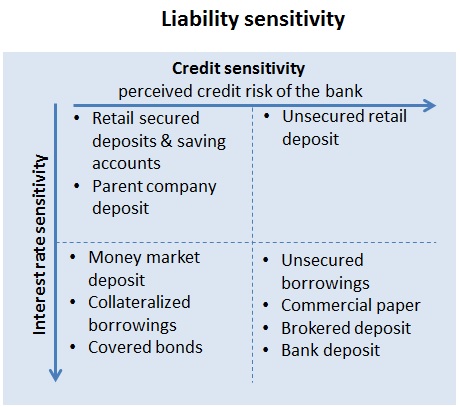
Liability frameworks are being redefined to clarify the responsibilities of developers and deployers.
Contents 1. Introduction: The shifting landscape of AI and software liability. 2. Key Concepts: Differentiating between the “Developer” (the creator) and the “Deployer” (the integrator). 3. Step-by-Step Guide: How companies can conduct a liability audit and risk mapping. 4. Examples: Real-world scenarios (e.g., medical AI, autonomous retail systems). 5. Common Mistakes: Misaligned SLAs, assuming indemnity,…
-

Periodic impact assessments are required to identify potential harms before full-scale deployment.
Outline Introduction: The move from “move fast and break things” to “assess, mitigate, and deploy.” Key Concepts: Defining periodic impact assessments (PIAs) and why they differ from one-time audits. Step-by-Step Guide: A lifecycle approach to conducting assessments. Real-World Applications: AI ethics in finance and software deployment in healthcare. Common Mistakes: The pitfalls of “check-box” compliance…
-
Risk management strategies must account for the evolving nature of AI-related legal liabilities.
Outline Introduction: The shift from static software risks to dynamic AI liability. Key Concepts: Defining “Black Box” liability, algorithmic bias, and shifting regulatory frameworks (EU AI Act, NIST AI RMF). Step-by-Step Guide: Building a resilient AI governance framework. Real-World Applications: Examining generative AI copyright disputes and automated decision-making failures. Common Mistakes: Over-reliance on vendor indemnification…
-

Bias mitigation strategies must be formally documented to demonstrate adherence tonon-discrimination principles.
The Mandate for Transparency: Documenting Bias Mitigation to Ensure Fair AI and Algorithmic Systems Introduction As artificial intelligence and algorithmic decision-making tools become deeply embedded in hiring, lending, healthcare, and criminal justice, the question is no longer whether these systems contain bias, but how we prove we are actively working to mitigate it. In an…
-

Fairness metrics must be quantified and reported to stakeholders to ensure equitable outcomes.
Outline Introduction: Moving from theoretical ethics to empirical accountability in algorithmic decision-making. Key Concepts: Defining Fairness (Demographic Parity, Equalized Odds, Predictive Parity). Step-by-Step Guide: A lifecycle approach to measuring, reporting, and auditing fairness. Examples/Case Studies: Practical scenarios in finance (lending) and hiring. Common Mistakes: Why “accuracy” isn’t a proxy for fairness and the “math-washing” trap.…
-

Version control logs ensure that changes to AI models are tracked for auditability and consistency.
Article Outline Introduction: The move from “black box” AI to accountable engineering. Key Concepts: Defining Version Control for AI (Models, Data, and Hyperparameters). Step-by-Step Guide: Implementing an audit-ready pipeline. Real-World Applications: Compliance in healthcare and finance. Common Mistakes: The pitfalls of relying on manual documentation. Advanced Tips: Immutable lineage and automated model registry integrations. Conclusion:…
-

Data provenance must be verified to ensure that training sets comply with privacy and intellectual property laws.
Data Provenance: The Foundation of Compliant AI Training Introduction The gold rush of Generative AI has moved from the experimental phase to the industrialization phase. As enterprises race to deploy Large Language Models (LLMs), the “training data” has become the most valuable asset in the corporate stack. However, this asset carries significant legal and ethical…
-

Model cards serve as a vital tool for documenting technical specifications and known limitations.
Contents 1. Introduction: Defining the “black box” problem in AI and the role of transparency. 2. Key Concepts: What is a model card? Core components (intended use, limitations, performance metrics). 3. Step-by-Step Guide: How to build a model card from scratch. 4. Real-World Applications: Case studies from industry (Hugging Face, Google). 5. Common Mistakes: Addressing…
-

Transparency requirements extend to providing meaningful information about the logic involved in AI-driven outcomes.
Outline Introduction: The shift from “Black Box” AI to “Explainable” AI (XAI). Key Concepts: Defining algorithmic transparency and the distinction between model interpretability and accountability. Step-by-Step Guide: How organizations can document and expose AI decision logic. Examples and Case Studies: Real-world applications in finance, healthcare, and hiring. Common Mistakes: Pitfalls like data dumping vs. meaningful…