
Uncategorized
-

Partial Dependence Plots visualize the marginal effect of one or two features on output.
Outline Introduction: The “Black Box” problem in machine learning and the role of interpretability. Key Concepts: Defining Marginal Effects and the mathematics of PDPs. Step-by-Step Guide: How to generate and interpret plots using Python (Scikit-Learn/PartialDependenceDisplay). Real-World Case Study: Credit scoring models and housing price prediction. Common Mistakes: The danger of correlated features and extrapolation. Advanced…
-

Standardizing documentation formats across the industry facilitates better regulatory oversight.
Standardizing Documentation Formats: The Catalyst for Regulatory Excellence Introduction In industries ranging from pharmaceuticals and aerospace to finance and manufacturing, the sheer volume of data generated is overwhelming. When every entity follows its own proprietary format for record-keeping, the resulting information silos act as barriers to safety, quality, and compliance. Regulatory bodies—such as the FDA,…
-

Feature permutation importance measures performance degradation when specific datacolumns are shuffled randomly.
Outline Introduction: The “Black Box” problem and the need for interpretability. Key Concepts: Defining feature permutation importance, how it works, and why it differs from impurity-based importance. Step-by-Step Guide: The mathematical/algorithmic process of measuring performance degradation. Real-World Applications: Fraud detection, healthcare diagnostics, and marketing propensity models. Common Mistakes: The danger of correlated features, biased validation…
-

The right to an explanation is a cornerstone of modern consumer rights in the age of automation.
Outline Introduction: The shift from human judgment to algorithmic decision-making and the birth of the “right to an explanation.” Key Concepts: Defining algorithmic transparency, the “black box” problem, and why “computer says no” is no longer an acceptable legal or ethical standard. Step-by-Step Guide: A practical framework for consumers to challenge automated decisions (Credit, Employment,…
-

LIME approximates complex models locally with interpretable surrogates to explain individual predictions.
Contents 1. Introduction: The Black Box Dilemma in Modern AI. 2. Key Concepts: Understanding Model Agnostic Explanations and Local Surrogate Models. 3. Step-by-Step Guide: How LIME actually works under the hood. 4. Real-World Applications: Healthcare, Finance, and Customer Churn. 5. Common Mistakes: The pitfalls of trusting LIME blindly. 6. Advanced Tips: Sampling strategies and kernel…
-
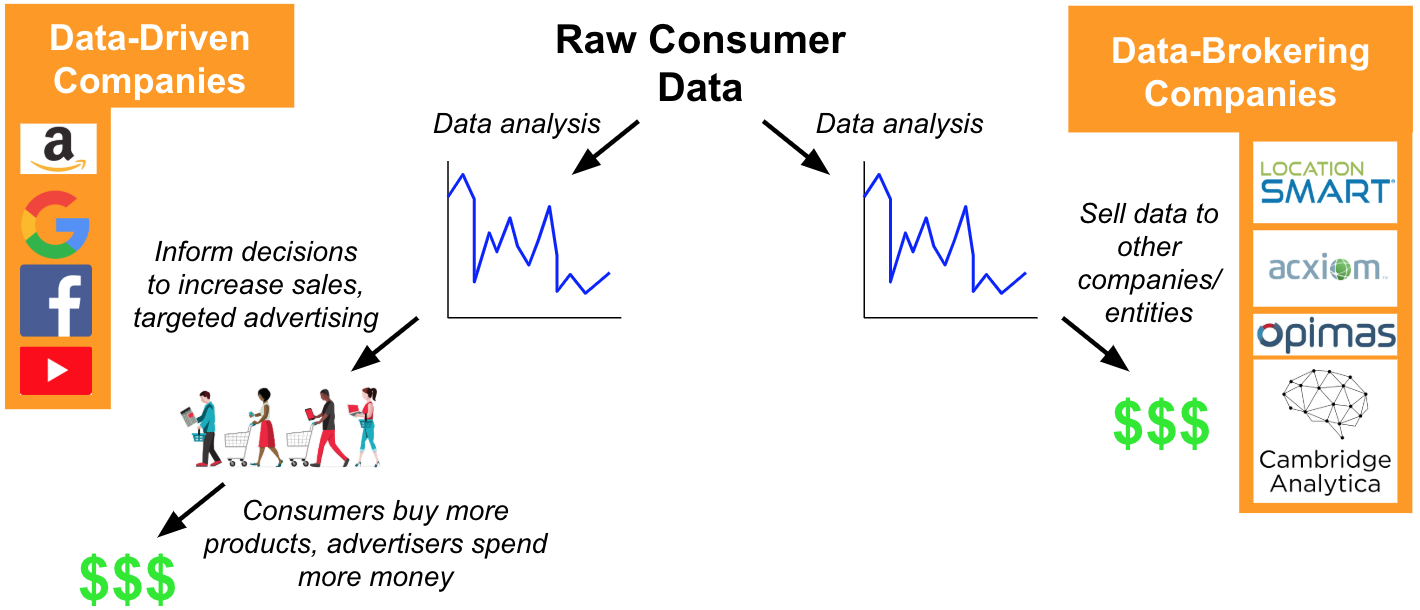
Data protection impact assessments (DPIAs) are critical for systems processing sensitive personal information.
Contents 1. Main Title: Beyond Compliance: Mastering Data Protection Impact Assessments (DPIAs) for Sensitive Systems 2. Introduction: Defining the DPIA as a strategic tool rather than a bureaucratic hurdle. 3. Key Concepts: Deconstructing “Data Protection by Design,” risk-based approaches, and the legal threshold for DPIAs (GDPR Article 35). 4. Step-by-Step Guide: A practical, six-phase framework…
-

SHAP values utilize game theory to assign contribution scores to each feature in a model.
Demystifying SHAP Values: How Game Theory Explains Your AI Model Introduction In the world of machine learning, we have moved past the era of the “black box.” Modern businesses rely on complex models—gradient boosting machines, deep neural networks, and random forests—to make high-stakes decisions. Yet, understanding why a model predicts that a customer will churn…
-

Contractual obligations regarding AI accountability should be clearly defined with third-party vendors.
The Accountability Gap: Why Contractual Precision with AI Vendors is No Longer Optional Introduction For years, businesses have treated software-as-a-service (SaaS) agreements with a “set it and forget it” mentality. When you integrate a cloud-based CRM or an accounting tool, the risks are generally predictable. However, the integration of Artificial Intelligence (AI) fundamentally changes the…
-

Integrated Gradients attribute prediction outcomes to input features by calculating integral gradients.
Demystifying Model Decisions: A Deep Dive into Integrated Gradients Introduction In the modern era of artificial intelligence, deep learning models often function as “black boxes.” While a model might predict with 99% accuracy that a medical scan shows signs of disease or that a loan application is high-risk, explaining why it reached that conclusion is…
-

Legal teams must collaborate closely with data scientists to ensure model transparency from design.
The Legal-Data Science Alliance: Architecting Transparency from Design Introduction In the age of algorithmic decision-making, “transparency” has moved from a buzzword to a regulatory imperative. Whether it is an AI tool determining loan eligibility, screening job applicants, or assessing insurance risk, the legal implications of a “black box” system are severe. When a model produces…