
Uncategorized
-
Privacy-preserving interpretability tools ensure sensitive data remains hidden during model inspections.
Privacy-Preserving Interpretability: Keeping Insights Transparent and Data Secure Introduction In the modern era of artificial intelligence, organizations face a paradoxical challenge: they must comply with strict data privacy regulations like GDPR and HIPAA while simultaneously providing clear explanations for why their machine learning models make specific decisions. As models become more complex, “black-box” decision-making is…
-
Dimensionality reduction methods like PCA help visualize complex latent spaces for human inspection.
Visualizing the Invisible: Using PCA to Map Complex Latent Spaces Introduction In the era of Big Data, we are increasingly dealing with information that exists in hundreds, or even thousands, of dimensions. Whether you are analyzing customer behavior, gene expression patterns, or the internal representations of deep learning models, high-dimensional data is the norm. However,…
-

Bias detection reports must be communicated clearly to avoid misinterpretation of model fairness.
Outline Introduction: The gap between technical bias metrics and stakeholder decision-making. Key Concepts: Defining “Fairness” beyond mathematics (Calibration, Parity, Opportunity). Step-by-Step Guide: How to build a translation layer from data to narrative. Examples: Analyzing a credit-scoring model scenario. Common Mistakes: The dangers of p-hacking and “fairness washing.” Advanced Tips: Moving toward human-in-the-loop auditing. Conclusion: Ethical…
-

Narrative explanations should focus on “why” rather than high-dimensional statistical coefficients.
Beyond the Coefficients: Why Narrative Explanations Drive Better Decision-Making Introduction We live in the era of “Big Data,” where algorithms churn through millions of variables to predict outcomes with startling precision. Whether it is a credit scoring model, a clinical diagnostic tool, or a marketing churn projection, the output is often a complex set of…
-

Surrogate models act as proxies to explain black-box systems without altering the baselogic.
The Art of Transparency: Using Surrogate Models to Decode Black-Box Systems Introduction In the age of artificial intelligence, we have become increasingly reliant on “black-box” models—complex algorithms like deep neural networks or ensemble gradient boosting machines that produce highly accurate predictions. Yet, the internal logic of these models remains a mystery, even to the data…
-

Visual dashboarding of SHAP values aids non-technical users in understanding modellogic.
Contents 1. Introduction: The “Black Box” problem in machine learning and the necessity of interpretability for business stakeholders. 2. Key Concepts: Defining SHAP (SHapley Additive exPlanations) and why visual dashboards bridge the gap between complex math and intuition. 3. Step-by-Step Guide: How to transform raw SHAP outputs into actionable business dashboards. 4. Real-World Applications: Use…
-
Monotonic constraints force models to behave logically regarding specific input feature directions.
Outline Introduction: The problem of “black box” logic in machine learning and how monotonic constraints provide guardrails. Key Concepts: Defining monotonicity (positive vs. negative), how it impacts model interpretability, and the mathematical trade-off with accuracy. Step-by-Step Guide: How to implement monotonic constraints in libraries like XGBoost, LightGBM, and CatBoost. Examples: Real-world scenarios (Credit risk, medical…
-

Documentation of model lineage and training data provenance supports regulatory audit requirements.
Contents 1. Main Title: The Trust Audit: Why Model Lineage and Data Provenance are Non-Negotiable 2. Introduction: Shifting from “black box” AI to accountable systems; the rising pressure from regulators (EU AI Act, NIST). 3. Key Concepts: Defining Model Lineage (the “where did this come from”) and Data Provenance (the “what went into this”). 4.…
-
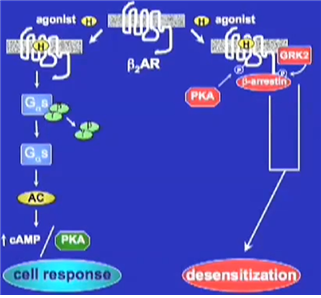
Regularization techniques like L1 penalization can prune features to improve model simplicity.
Contents 1. Introduction: The curse of dimensionality and the trade-off between complexity and performance. 2. Key Concepts: Defining regularization, L1 (Lasso) vs. L2 (Ridge) mechanics, and the “sparsity” phenomenon. 3. Step-by-Step Guide: How to implement feature pruning in a machine learning workflow. 4. Real-World Applications: Finance (credit scoring) and Genomics (gene selection). 5. Common Mistakes:…
-

Decision trees offer inherent interpretability but may suffer from high variance and instability.
The Double-Edged Sword of Decision Trees: Balancing Transparency with Stability Introduction In the landscape of machine learning, the decision tree remains a foundational pillar. It is perhaps the most intuitive algorithm we have, mimicking the way humans navigate binary choices—asking a series of “if-then” questions to arrive at a conclusion. Because they map directly to…