
Environment
-
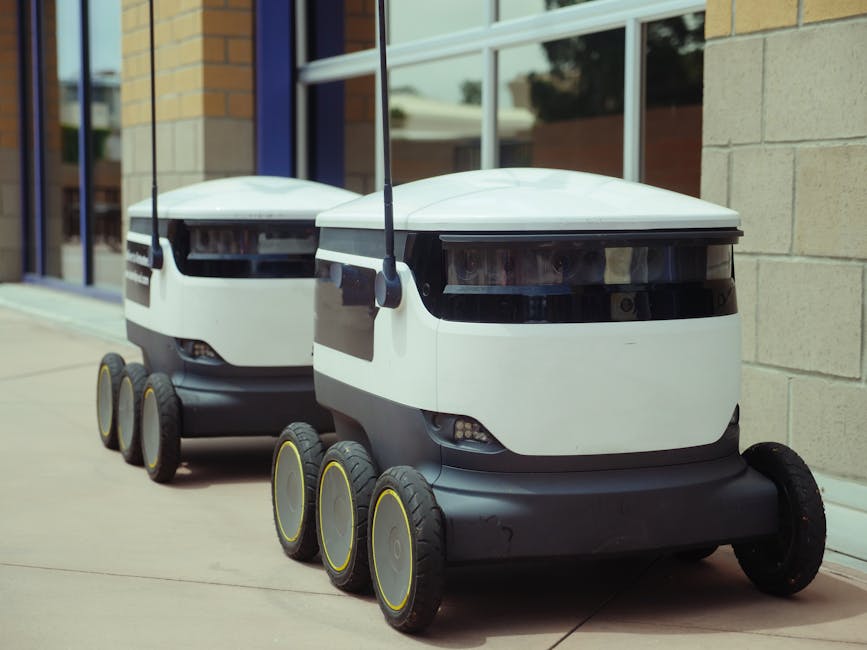
Trustworthy Autonomous Logistics for Scalable Geoengineering
Address the critical bottleneck of trust in high-stakes environmental interventions by implementing a framework for trustworthy autonomous logistics.
-
Climate Tech Innovation: Leveraging Multimodal Simulation
Master the complexity of climate technology by implementing multimodal simulation tools that integrate visual, auditory, and data-driven insights.
-

Risk-Sensitive Emergent Behavior Algorithms for Energy Grids
Learn to implement risk-aware AI frameworks for distributed energy resources using stochastic optimization and multi-agent systems.
-

Zero-Shot Climate Adaptation Simulator: Urban Resilience Guide
Discover how the Zero-Shot Climate Adaptation Simulator uses AI to predict urban outcomes for unprecedented weather events, revolutionizing modern city planning.
-

Quantum-Safe Simulation for Climate Tech: A Security Guide
Learn how to build an open-world quantum-safe simulator to protect climate tech infrastructure from quantum decryption threats and ensure long-term data security.
-
Self-Healing Protein Platforms for Space Systems | Engineering
Discover how self-healing protein platforms are revolutionizing aerospace engineering, enabling autonomous hull repair and radiation shielding for deep space.
-
Causality-Aware Hospital at Home: A Geoengineering Framework
Discover how the Hospital at Home model and causal inference can revolutionize planetary geoengineering through precise, decentralized, and systemic stewardship.
-
Green Fertilizer Policy: Benchmarking for Sustainable Agriculture
Learn how to benchmark safety-aligned green fertilizers. Explore policy frameworks, supply chain resilience, and the shift toward sustainable food production.
-
Intent-Centric Networking Simulators for Climate Tech | Guide
Learn how to build intent-centric networking simulators to optimize climate tech. Improve energy efficiency and data routing in decentralized sensor networks.
-
Autonomous Climate Adaptation Compilers: Resilient Supply Chains
Learn how Autonomous Climate Adaptation Compilers (ACAC) bridge climate modeling and logistics to build resilient supply chains against modern climate volatility.