Human memory has always functioned as a biological bottleneck. It is associative, reconstructive, and notoriously prone to entropy. For leaders and high-performers, the inability to recall precise data points or synthesize complex strategic patterns in real-time is a constraint on total output. We are now entering an era where the boundary between organic cognitive function and synthetic storage is dissolving. The development of bio-digital hybrid memory represents the next frontier in high-performance thinking, shifting the paradigm from \”what can I remember?\” to \”how do I integrate external storage into my cognitive architecture?\”
\n\n
The Architecture of Hybrid Recall
\n
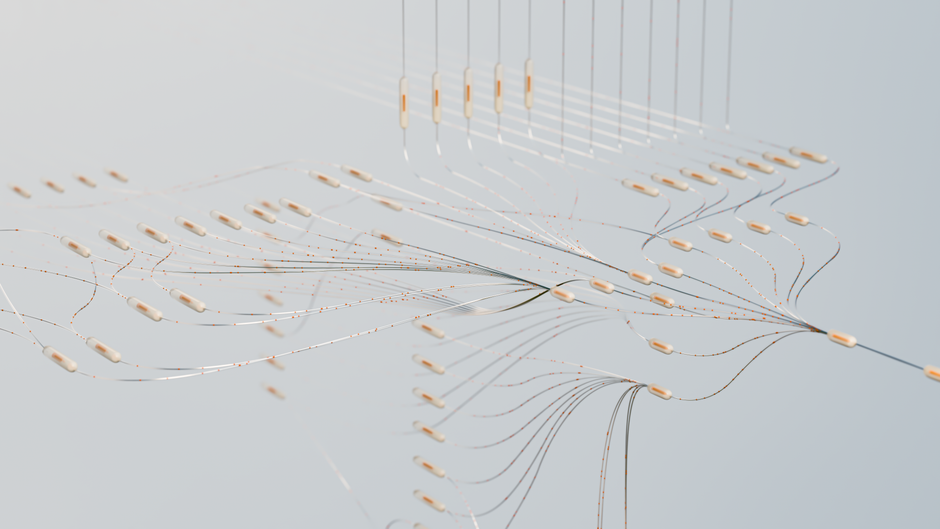
Current memory augmentation relies on external tools—notion databases, second brains, and LLMs—that remain siloed from the biological interface. Bio-digital hybrid memory seeks to bridge this gap by encoding digital information directly into biological substrates, such as synthetic DNA or protein-based molecular storage. This is not merely about increasing storage capacity; it is about creating a high-bandwidth feedback loop between biological intuition and machine-perfected precision.
\n\n
In a professional context, this technology promises the ability to offload high-fidelity operational context into a retrieval system that operates at the speed of thought. For a CEO or an operations lead, this implies a future where deep-domain expertise is not just learned but stored and retrievable with near-zero latency, allowing for more precise decision-making under extreme pressure.
\n\n
Operational Implications for Leaders
\n
The transition to hybrid memory systems will redefine what we consider \”intellectual capital.\” When memory becomes a hybrid asset, the competitive advantage shifts from the possession of information to the quality of the retrieval architecture. Leaders must begin to evaluate their internal systems through the lens of data accessibility.
\n\n
The Decay of Traditional Learning Models
\n
For decades, the standard for professional excellence was the accumulation of knowledge through rote experience. Hybrid memory renders this model obsolete. When technical specifications, historical performance metrics, and complex strategic frameworks can be stored in a semi-biological digital layer, the value of the human mind shifts toward synthesis and judgment. The operational goal is no longer to store information but to curate the inputs that feed the hybrid system.
\n\n
Strategic Synthesis over Rote Recall
\n
The most effective operators are those who can synthesize disparate data points into a coherent strategy. With hybrid memory, the burden of recall is removed, allowing the brain to devote its limited cognitive energy to higher-order functions: identifying anomalies, predicting second-order consequences, and refining strategy. This is the ultimate form of operational excellence—a state where the human operator functions as the architect of systems rather than a repository for data.
\n\n
The Ethics of Cognitive Augmentation
\n
As we move toward integrating digital storage into the biological framework, the stakes for organizational and personal security rise. If your memory becomes a hybrid asset, it becomes a target. Leaders must consider the security protocols of their own cognitive interfaces. The same execution discipline applied to cybersecurity must eventually be applied to the integrity of the hybrid memory substrate. Ensuring the veracity and privacy of stored data will be the defining challenge of the next decade.