Beyond the Office: Why Remote Work is an Architectural Ethics Crisis
We’ve spent decades analyzing the ‘panopticon’ of the open-plan office, debating how glass walls and shared corridors impact corporate integrity. But as the modern workforce migrates to home offices, coffee shops, and domestic spheres, a new ethical dilemma has emerged: The erosion of architectural containment.
When we decouple the workspace from the physical structure of the organization, we lose the ‘environmental architecture’ that once served as a silent guardian of professional conduct. If physical space is an active participant in decision-making, what happens when that space is entirely curated—or corrupted—by the individual?
The Loss of Collective Context
In a traditional corporate setting, the physical environment provides a ‘moral anchor.’ The presence of peers, the visibility of operational outcomes, and the structural separation between home and office act as environmental prompts for ethical behavior. When a leader makes a decision in a boardroom, they are physically situated within a space designed for institutional weight and accountability.
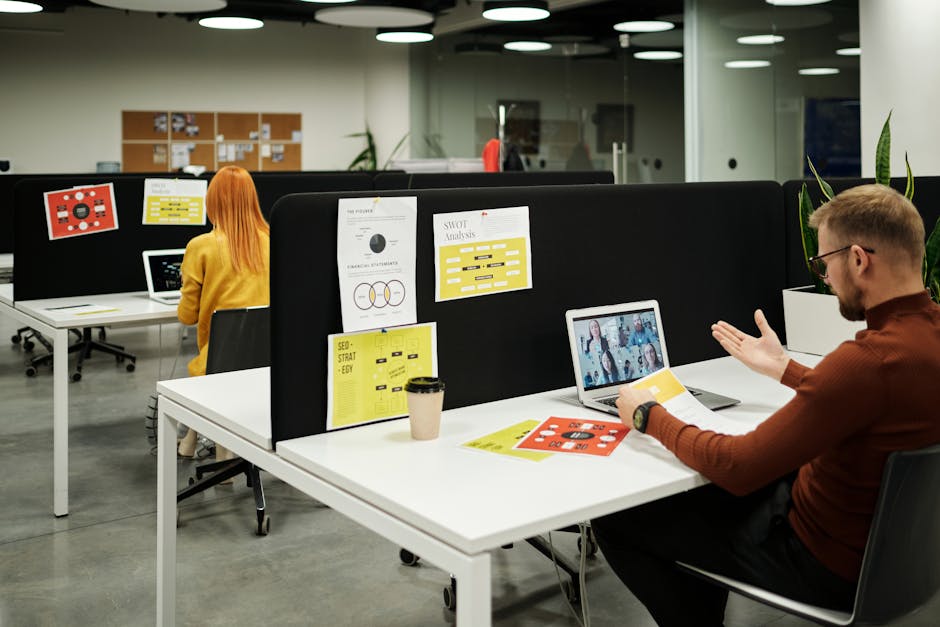
Conversely, the remote environment is a ‘context-free’ zone. When an executive makes a high-stakes decision from a home office, that environment is designed for personal comfort, domestic privacy, and isolation. Without the architectural cues of corporate governance, the distance between a decision and its consequence increases. We aren’t just experiencing ‘moral distance’—we are experiencing ‘architectural displacement.’
The Architecture of the ‘Third Space’
For remote-first leaders, the ethical challenge is no longer about managing space; it is about designing digital architecture that replaces the physical guardrails of the past. If you cannot rely on the layout of a building to nudge your team toward integrity, you must build that architecture into your virtual workflows.
Digital Transparency: Replace physical glass walls with radical document transparency. If you cannot see the work, you must see the process.
Asynchronous Accountability: Create ‘virtual floor-to-ceiling’ feedback loops where decisions are logged, critiqued, and traced. This replicates the visual accountability of an open-plan office without the surveillance anxiety.
Intentional Friction: Good architecture creates friction to slow down impulsive behavior. In a digital environment, this means building in ‘speed bumps’—mandatory peer reviews or ‘cooling-off’ periods for strategic decisions that might otherwise be made in the impulsive isolation of a remote setup.
Avoiding the ‘Home-Bias’ Trap
The danger of remote-bound leadership is ‘home-bias’—where the ethical framework of the office is replaced by the personal heuristics of the home. When your office is your bedroom or living room, the boundaries of professional conduct can blur with personal convenience. Leaders who ignore this are leaving their organizational culture to chance.
True organizational integrity in the remote era requires a shift from spatial design to procedural architecture. You must treat your communication tools, project management software, and decision-making protocols as the ‘building’ your team lives in. These systems must be engineered with the same level of ethical intent as a physical headquarters.
The New Mandate: Architecting Intention
You can no longer hide behind the excuse that your ‘culture’ is something that happens organically in the hallways. When there are no hallways, the architecture is entirely of your own making. Leaders must now become architects of the virtual, building systems that provide the same psychological clarity, peer visibility, and moral friction that physical structures once provided by default.
Your remote environment is a strategy. If you aren’t designing it to facilitate integrity, you are actively designing it to fail. For more on building high-integrity remote systems, continue exploring the analytical frameworks at The BossMind.