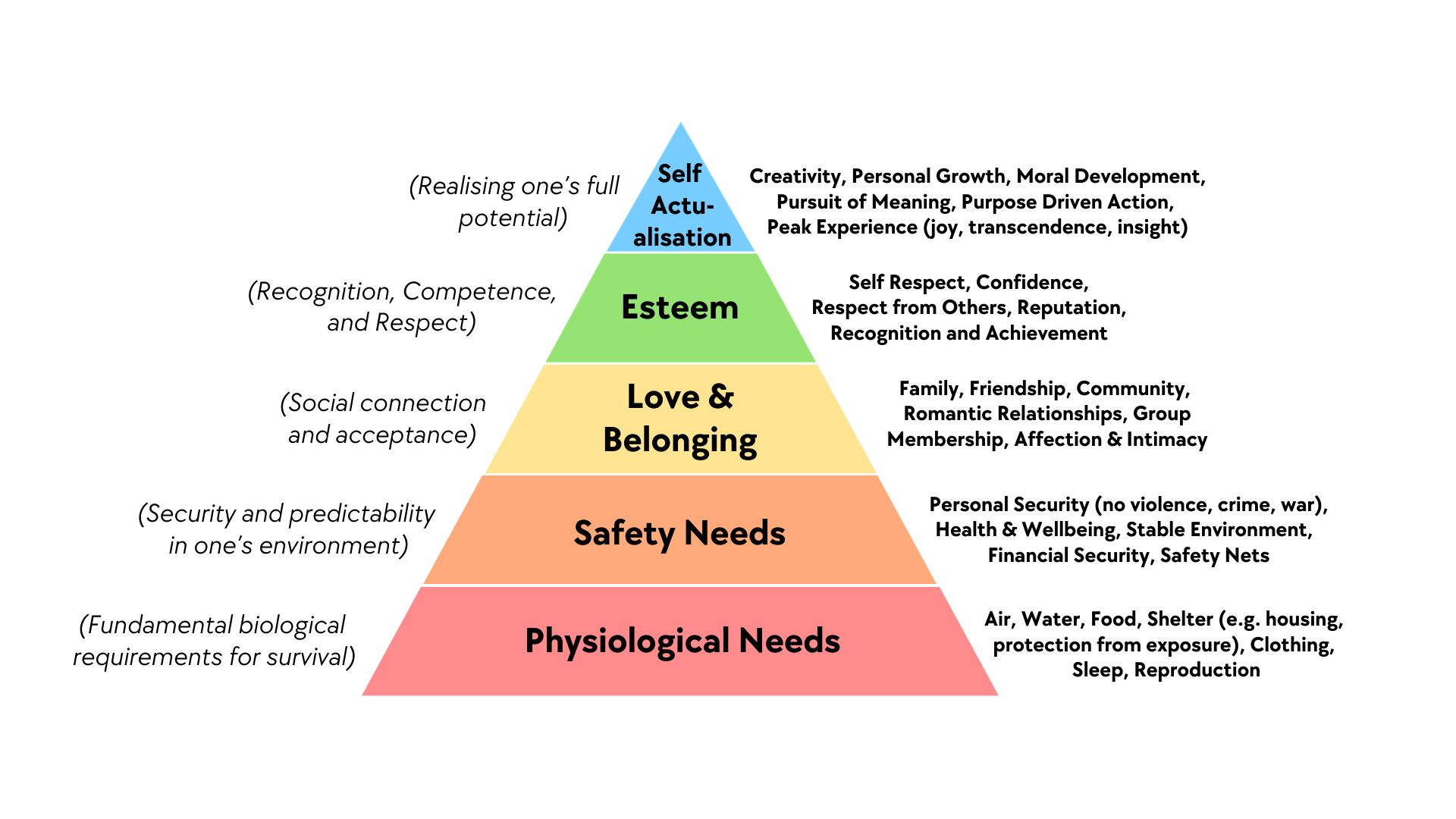
1. Introduction: The evolution of human motivation from the “survival mandate” to the “exploration mandate.” 2. Key Concepts: Defining Extrinsic Acquisition (Maslow’s lower levels) vs. Intrinsic Exploration (Self-Actualization and Flow). 3. Step-by-Step Guide: How to transition your personal framework from goal-chasing to passion-seeking. 4. Case Studies: Real-world examples of individuals and organizations pivoting from survival-mode to curiosity-driven innovation. 5. Common Mistakes: The traps of “purpose-paralysis” and the danger of confusing comfort with fulfillment. 6. Advanced Tips: Cultivating “Antifragility” and the role of constraints in high-level creative exploration. 7. Conclusion: The shift as the next stage of human development.
***
Beyond Survival: The Evolution of Human Motivation
Introduction
For most of human history, the primary architect of human behavior was necessity. We moved, worked, and organized ourselves around a singular, non-negotiable directive: survival. From securing caloric intake to avoiding environmental threats, our cognitive architecture was honed to prioritize extrinsic acquisition. We chased resources because the alternative was extinction.
However, we live in an era where the survival mandate is increasingly marginalized for a significant portion of the global population. When the basic requirements of life are met, a profound psychological vacuum emerges. This shift represents a critical juncture in the human experience: the transition from extrinsic acquisition—the accumulation of external markers of safety and status—to intrinsic exploration—the pursuit of self-actualization, curiosity, and systemic impact.
Understanding this transition is not merely a philosophical exercise; it is a practical necessity for anyone seeking to thrive in a post-scarcity-oriented environment. If you do not consciously define your “post-survival” driver, you risk spending your life chasing the ghost of a necessity that no longer exists.
Key Concepts
To understand the shift, we must distinguish between two types of motivational drivers: Extrinsic Acquisition and Intrinsic Exploration.
Extrinsic Acquisition is grounded in the “scarcity mindset.” It is driven by external validation, safety, and the accumulation of resources. This is the realm of the ego, which seeks to mitigate risk by stacking assets—be it money, status, or social capital. In this state, the brain is hyper-focused on the future, operating under the assumption that “once I have X, I will be secure.”
Intrinsic Exploration, by contrast, is grounded in the “abundance mindset.” It is driven by the internal reward of discovery, mastery, and the expression of potential. When the survival mandate is removed, the brain is finally free to engage in play—the highest form of learning. This is the domain of flow states, deep work, and creative synthesis. Here, the focus shifts to the present, operating under the assumption that “the process of engagement itself is the reward.”
Step-by-Step Guide: Transitioning to Intrinsic Exploration
Identify Your Safety Threshold: Determine the exact point at which your survival needs are met. This is not about being “wealthy”; it is about defining “enough.” Once you identify the baseline that allows you to stop worrying about rent and food, create a mental boundary that separates “survival work” from “exploration work.”
Audit Your “Acquisition” Habits: Review your daily tasks. Are you working to gain external approval or to solve a problem you genuinely find fascinating? If 80% of your time is spent on acquisition, you are still operating in survival mode, regardless of your bank balance.
Introduce “High-Variance” Play: Dedicate 10% of your time to a project with no clear external payoff. This could be learning a complex skill, writing, or building something for the sake of understanding. The goal is to train your brain to value internal feedback loops over external applause.
Adopt an “Iterative” Identity: In acquisition, failure is a threat to your status. In exploration, failure is merely data. Shift your self-concept from “a person who succeeds” to “a person who explores.” This removes the ego-attachment to specific outcomes.
Prioritize Autonomy Over Status: When faced with a choice, choose the path that grants you more agency over your time, even if it offers less social prestige. Status is a tool of the acquisition mindset; autonomy is the fuel of the exploration mindset.
Examples and Case Studies
Consider the trajectory of successful software engineers who reach “Financial Independence, Retire Early” (FIRE). Many initially pursue the career for the high salary (acquisition). Once they hit their number, they often experience a period of existential dread. The ones who thrive are those who pivot to “Intrinsic Exploration”—becoming open-source contributors, mentors, or founders of non-profit ventures. They stop working for the equity and start working for the intellectual challenge.
The most successful individuals are those who treat their careers as a laboratory for their own curiosity rather than a vault for their security.
Similarly, look at the transition of creative professionals in the age of AI. Those who view their skills as a means of “acquiring” a paycheck are finding themselves under threat. Those who view their profession as a medium for “exploration”—constantly experimenting with new tools and creative boundaries—are becoming more valuable, not because of what they produce, but because of how they think.
Common Mistakes
The “Status Trap”: Many people claim to be pursuing their passion, but they are actually pursuing the status associated with being a “passionate person.” If your exploration requires an audience to feel valid, you are still playing the acquisition game.
Confusing Comfort with Exploration: Many mistake the absence of survival stress for the presence of exploration. Simply consuming entertainment or living a life of leisure is not exploration; it is stagnation. True exploration requires active friction and the pursuit of mastery.
Purpose-Paralysis: When you no longer have to work for survival, the weight of “finding your purpose” can become paralyzing. Avoid the search for a singular, grand “purpose.” Instead, follow your curiosity in small, iterative steps.
Advanced Tips
To truly master the shift toward intrinsic exploration, one must cultivate Antifragility. Nassim Taleb defines this as the ability to gain from disorder. When your behavior is driven by exploration, you welcome stressors that force you to adapt. You are no longer trying to “insure” your life against change; you are using change as a catalyst for your next discovery.
Furthermore, understand the value of self-imposed constraints. When the world provides no survival constraints, you must create your own. This might mean setting a strict timeline for a project, limiting the resources you use, or forcing yourself to learn a new discipline from scratch. Constraints focus the mind and provide the necessary tension to move from passive consumption to active exploration.
Finally, engage in “Deep Work” as a lifestyle, not a tactic. Cal Newport’s concept of deep work is the ultimate vehicle for intrinsic exploration. It is the ability to focus without distraction on a cognitively demanding task. This state is where you create the most value and experience the most fulfillment, effectively turning your life into a continuous process of high-level output.
Conclusion
The removal of survival-based necessity is the greatest opportunity—and the greatest challenge—of the modern age. We are no longer defined by our ability to secure resources, but by our ability to direct our attention. If you remain trapped in the cycle of extrinsic acquisition, you will forever be a servant to external validation.
By consciously pivoting toward intrinsic exploration, you stop playing the game of survival and start playing the game of growth. This shift requires courage, as it demands that you abandon the safety of the status quo for the uncertainty of discovery. However, the reward is a life characterized by genuine autonomy, sustained flow, and the profound satisfaction of knowing that you are the primary author of your own actions.