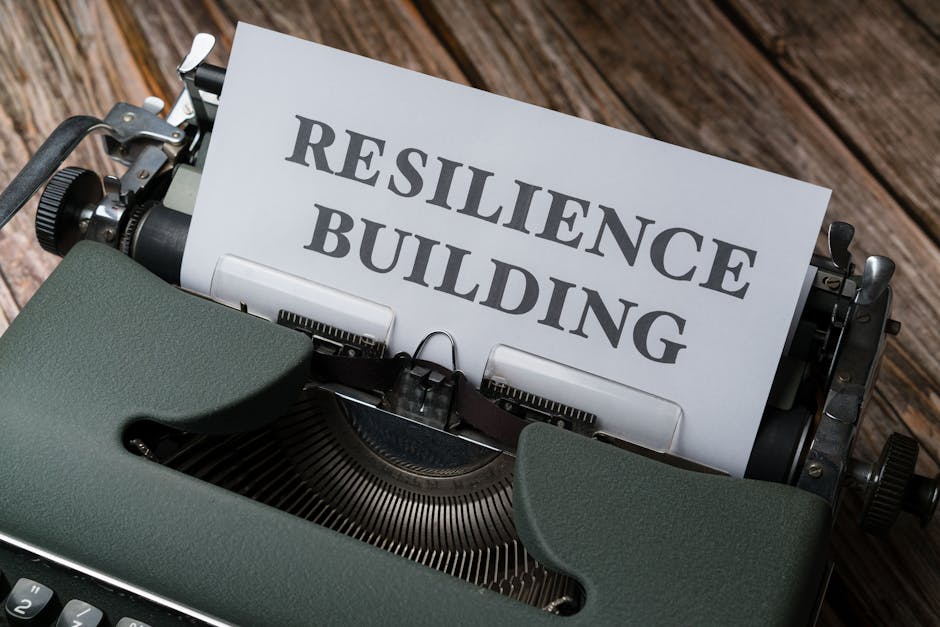
In our previous exploration of environmental resilience, we established that failure is a diagnostic tool—a necessary feedback mechanism for survival. However, resilience is merely a defensive posture. It implies returning to a baseline state after a shock. In today’s volatile market, simply ‘bouncing back’ isn’t enough. To truly dominate, organizations must transition from resilient to antifragile.
The Limit of Resilience
Resilience is the ability to absorb stress. A rubber band is resilient; stretch it, and it returns to its original shape. But there is a ceiling to resilience—when the pressure exceeds the system’s structural threshold, it snaps. Environmental systems that rely solely on resilience eventually experience ‘regime shifts’—total collapses where the old structure is fundamentally incompatible with the new environment.
The antifragile organization, a concept popularized by Nassim Taleb, takes a different approach: it gets stronger when exposed to volatility, randomness, and stressors. While a resilient company tries to prevent failure, an antifragile company thrives on the information gained from small-scale failures.
Implementing ‘Stress-Testing’ as a Competitive Strategy
To move beyond resilience, you must deliberately introduce stressors into your operations. If your supply chain or decision-making processes are never pushed to the brink, they become ‘brittle’ through lack of use. Consider these three tactical shifts:
Strategic Redundancy: Efficiency is often the enemy of antifragility. Lean, ‘just-in-time’ models break under pressure. By intentionally building redundant capacity—extra supplier options, surplus capital, or cross-functional team capabilities—you create a system that thrives when the primary path is blocked.
Inverse-Feedback Loops: Most organizations hide failures to protect reputations. Antifragile leaders reward the disclosure of near-misses. By mapping where your system almost broke, you identify the weak links before they become liabilities. Use these ‘near-miss’ data points as the primary input for R&D.
The ‘Barbell’ Strategy: Balance extreme caution with extreme risk-taking. Keep 90% of your operational assets in highly safe, conservative, and resilient structures, while allocating 10% to high-volatility, ‘all-or-nothing’ experiments. This ensures that the organization cannot be killed by a black-swan event, yet remains positioned to capture exponential gains from experimental failure.
Failure as a Capital Gain
The core shift here is financial. Stop viewing the cost of testing as an ‘expense.’ If you spend $50,000 to intentionally stress-test a market expansion that fails, you have not lost money; you have purchased an insurance policy against a $5 million disaster. You have gained the ‘optionality’ to pivot before your competitors, who are still busy trying to optimize their failing legacy structures.
From Maintenance to Mutation
Environmental stability is a myth. By treating your corporate structure not as a machine to be maintained, but as a living ecosystem to be mutated, you turn market volatility into your greatest advantage. The bossmind.com perspective is clear: stop trying to make your systems ‘fail-safe’ and start making them ‘fail-fast’ and ‘fail-better.’
When you stop fearing the breakdown, you stop competing with the status quo and start defining the next evolutionary cycle of your industry.