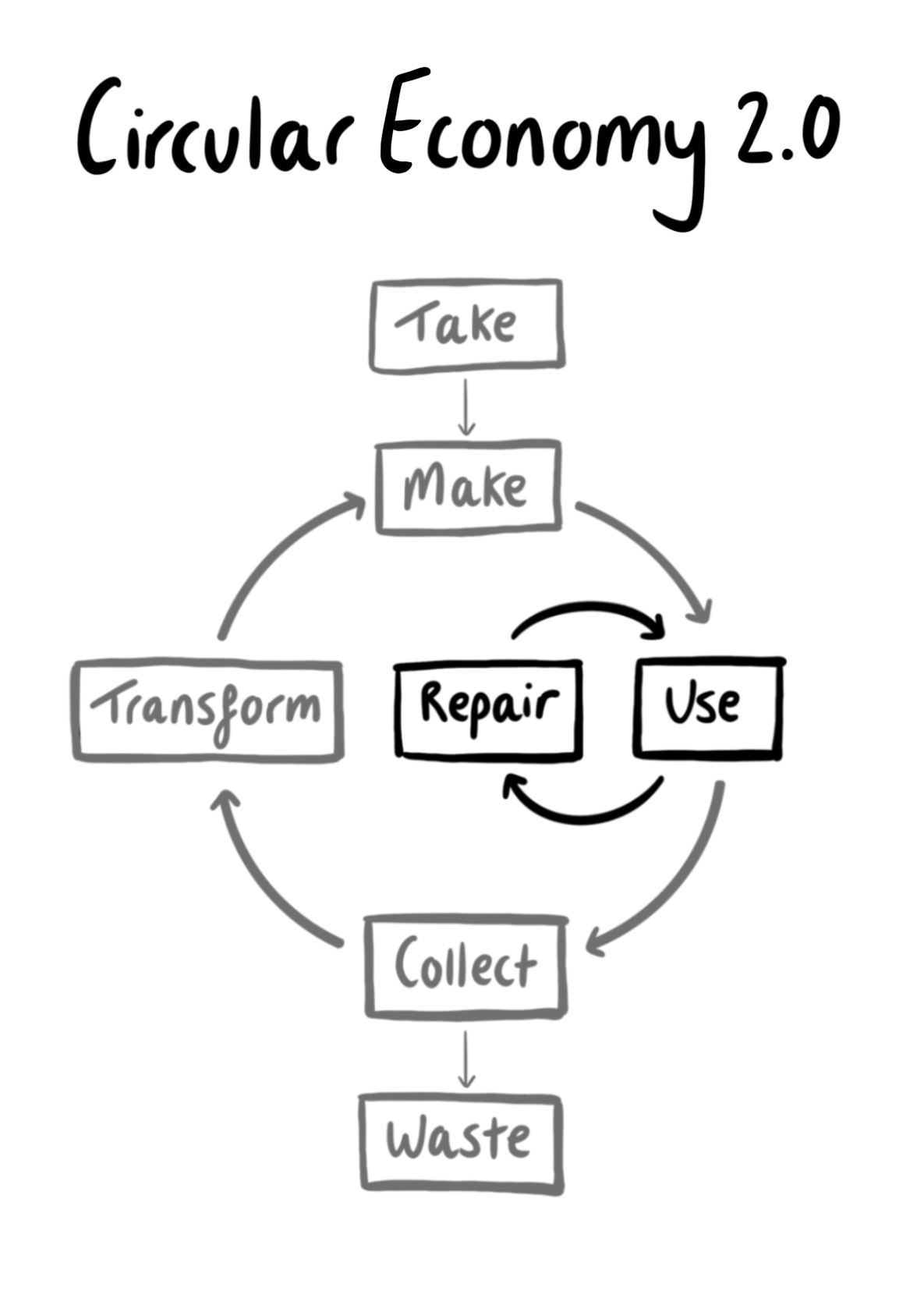
For years, the corporate playbook has equated sustainability with ‘circularity’—the art of doing less damage or recycling waste back into the system. While necessary for operational hygiene, this defensive posture has created a dangerous strategic blind spot. Leaders have become so obsessed with minimizing their footprint that they’ve forgotten to maximize their impact. If your sustainability strategy focuses solely on waste reduction, you are optimizing for mediocrity, not market leadership.
The Innovation Paradox of Efficiency
Operational efficiency—the bedrock of most sustainability initiatives—is a race to the bottom of the cost curve. If you only look at sustainability as a way to use 10% less plastic or 5% less electricity, you are merely tinkering with a legacy business model. True innovation doesn’t come from refining the existing machine; it comes from changing the game entirely. The most visionary companies are not asking, ‘How can we produce this item with less waste?’ They are asking, ‘Does this item need to exist at all, or can we deliver the value proposition through an entirely different medium?’
From Resource Scarcity to Value Abundance
The previous paradigm of sustainability was rooted in a ‘scarcity mindset.’ It assumed that inputs were fixed and the only variable was how much we could conserve. We propose a shift to ‘value abundance.’ This requires decoupling revenue from resource consumption. Look at the transition from hardware-heavy infrastructure to high-margin software-as-a-service models. The most sustainable tech firms are those that have eliminated physical distribution channels entirely, not by ‘greening’ their logistics, but by virtualizing the product experience. This isn’t just efficiency; it’s a strategic pivot that renders traditional material supply chains obsolete.
The ‘Anti-Fragility’ Advantage
Relying on circular supply chains to mitigate risk is essentially trying to patch a leaky boat. Instead, build an organization that is ‘anti-fragile’—one that thrives on the volatility that sustainability constraints create. When regulations tighten or resource costs spike, your competitors will scramble to adjust their existing processes. If you have spent your R&D budget on developing proprietary, resource-agnostic technologies or modular platforms that can shift inputs on the fly, you stop being a victim of market forces and become the entity that defines the new equilibrium.
Redefining the Leadership Mandate
The role of the modern executive is no longer to ‘manage carbon footprints.’ It is to engineer business models that inherently reward positive externalities. If your sustainability goals are siloed in a CSR department, they are decoupled from your P&L and your product roadmap. To drive competitive dominance, sustainability metrics must be tied to your most aggressive growth targets. If you aren’t using environmental constraints to force a radical breakthrough in product functionality, you aren’t doing sustainability—you’re just doing PR.
At The BossMind, we argue that the next generation of industry leaders won’t be the ones who manage their decline the slowest. They will be the ones who leverage environmental reality as the ultimate forcing function for disruptive innovation. Stop protecting your current state and start designing for the next one.