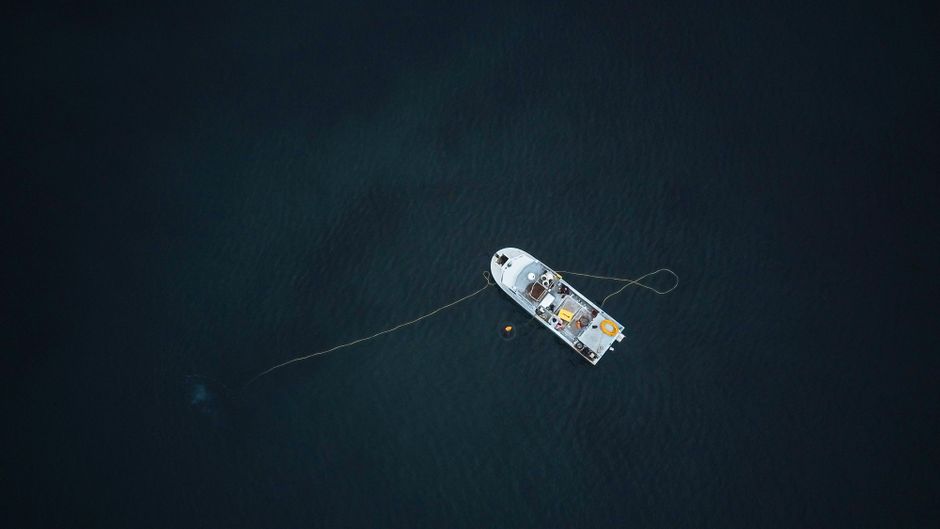
We have mapped the surface of Mars with greater precision than the floor of our own oceans. For the leadership teams tasked with managing global supply chains, subsea infrastructure, and resource extraction, this is not a trivia point—it is a massive blind spot in their strategy. Automated deep-sea mapping is finally closing this gap, transforming the abyss from a place of mystery into a structured data environment.
\n\n
The transition from manual, ship-tethered surveying to autonomous systems mirrors the shift we have seen in land-based logistics. By deploying swarms of AUVs (Autonomous Underwater Vehicles) equipped with synthetic aperture sonar and AI-driven image processing, organizations can now achieve sub-meter resolution in environments previously considered inaccessible. This is the industrialization of the deep sea.
\n\n
The Economics of Subsea Autonomy
\n
Traditional deep-sea surveying is prohibitively expensive, often costing hundreds of thousands of dollars per day in vessel time. The shift toward automated mapping changes the unit economics of exploration. By decoupling the data collection process from human-crewed surface vessels, companies reduce their operational expenditure (OPEX) while increasing the frequency of data refresh cycles.
\n\n
For operators, this creates a significant advantage in decision-making. When you possess a high-fidelity, real-time map of the seabed, you are no longer operating on legacy charts or probabilistic models. You are working with high-confidence datasets. This allows for:
\n
\n
Precision Infrastructure Placement: Minimizing the risk to subsea fiber optics, pipelines, and wind turbine foundations.
\n
Predictive Maintenance: Identifying geological shifts or structural erosion before they become catastrophic failures.
\n
Risk Mitigation: Eliminating the human safety risks associated with deep-water saturation diving and remote intervention.
\n
\n\n
AI as the Force Multiplier
\n
The raw data returned by deep-sea sensors is useless without processing. The bottleneck has historically been the time required for human analysts to stitch together acoustic snapshots into a coherent map. Today, machine learning models ingest these terabytes of raw sonar data, automatically identifying geological features, biological habitats, and man-made debris.
\n\n
This is where AI moves beyond the hype cycle and into tangible operational excellence. By automating the feature extraction process, organizations compress the time-to-insight from months to hours. When the speed of your insight exceeds the speed of your competition’s, you have achieved a structural advantage.
\n\n
Strategic Implications for High-Performance Teams
\n
The ability to map the deep sea autonomously is not just a technological feat; it is a signal that the barrier to entry for subsea operations is collapsing. Industries that were once gated by the sheer difficulty of understanding the seafloor are now open for agile, tech-forward competitors. Leaders must consider how this data availability impacts their competitive moat. If your infrastructure strategy is built on the assumption of seafloor uncertainty, a competitor with better mapping tools will eventually find the efficiencies you missed.
\n\n
The goal is not simply to collect more data, but to integrate it into your execution framework. The most successful organizations will be those that treat the seafloor as an extension of their digital twin architecture, enabling better long-term asset management and environmental stewardship.