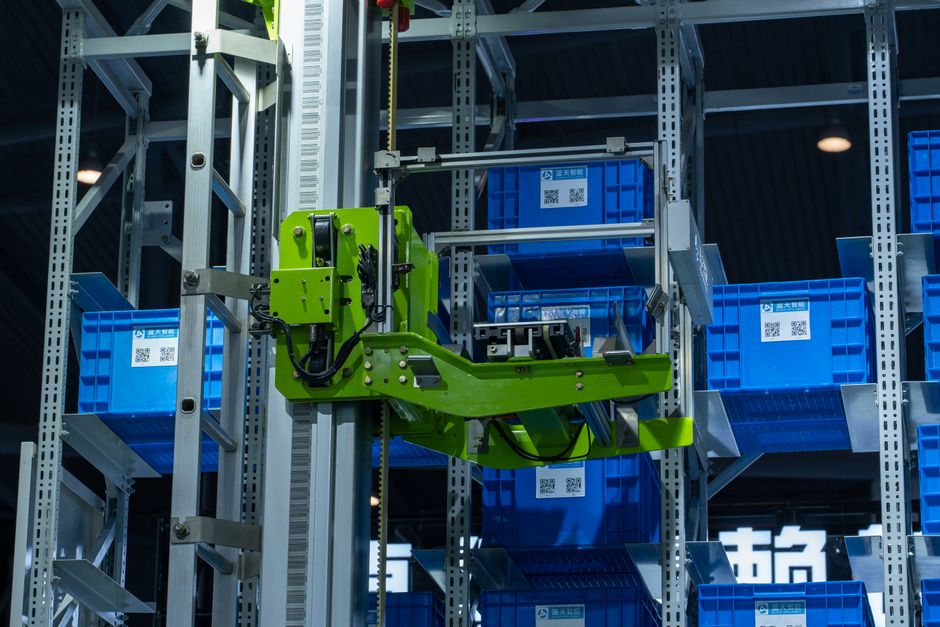
Most organizations treat logistics as a cost center to be minimized rather than a strategic engine to be optimized. This mindset is a relic of the pre-algorithmic era. When logistics remains manual, decision-making is perpetually reactive, chasing fires rather than orchestrating flows. Automated logistics is not merely about replacing human labor with robotics; it is about shifting from linear planning to high-frequency, data-driven execution. Hyper-Spatial Logistics is the future.
True operational excellence requires the removal of latency between the decision to act and the physical movement of goods. In a manual environment, the lag between a change in demand and the adjustment of inventory levels is the primary source of margin erosion. Automation collapses this lag, turning the supply chain into a real-time reflection of market reality. The 270ms Latency Gap is the enemy.
The Architecture of Autonomous Flow
Automating a broken process only accelerates the rate at which you fail. Before deploying automated storage and retrieval systems (AS/RS) or autonomous mobile robots (AMRs), leadership must audit the underlying logic of their strategy. Automation acts as a force multiplier; if your strategy is poorly defined, automation will simply amplify your inefficiencies. Autonomous Logistics is the force multiplier.
High-performance logistics relies on three architectural pillars:
Predictive Intelligence: Moving beyond historical averages to utilize machine learning models that account for seasonality, economic shifts, and localized demand spikes. Planetary Prediction Models are the tool.
System Integration: Ensuring that the warehouse management system (WMS) communicates seamlessly with procurement and customer-facing interfaces. Data siloes are the death of agility. Decentralized Cloud Strategy is the solution.
Exception-Based Management: Automation should handle the routine. Human capital must be reserved for handling the anomalies that the algorithms cannot resolve. Reducing Administrative Friction is the goal.
Decision-Making Under Algorithmic Constraints
The transition to automated logistics forces a change in how executives approach decision-making. In a traditional warehouse, managers make hundreds of micro-decisions per hour—where to store a pallet, how to route a picker, which order to prioritize. Automation delegates these decisions to software. The leader’s role shifts from tactical oversight to meta-strategy: tuning the constraints, setting the KPIs, and auditing the performance of the autonomous systems. Decentralized Decision-Making is the new standard.
This requires a high degree of technical literacy. If you do not understand the parameters governing your automated systems, you are effectively ceding your strategy to a black box. You must maintain the ability to intervene when the system’s objective functions diverge from your broader business objectives. Black Box Liability must be managed.
The Human Element in High-Performance Systems
There is a persistent myth that automation removes the human from the equation. In reality, it elevates the human role. The highest-performing organizations use automation to eliminate the “drudgery of movement,” allowing teams to focus on high-performance thinking—process improvement, vendor relationship management, and system architecture design. Building Collective Consciousness is the result.
When you remove the physical burden from your personnel, your investment shifts from labor costs to talent development. You are no longer hiring for endurance; you are hiring for analytical capacity. This shift is critical for long-term scalability. An organization that relies on brute-force manual labor hits a ceiling defined by the local labor market; an organization that relies on automated systems hits a ceiling defined only by the sophistication of its software. End Incrementalism.
Execution as a Competitive Moat
In a globalized economy, product parity is the norm. Your logistics capability is often the only sustainable differentiator. If you can deliver with 99.9% accuracy while your competitor struggles with stock-outs and delivery delays, you capture the market not because your product is better, but because your execution is more reliable. The Geopolitics of Frictionless Commerce is the context.
Automated logistics creates a compounding advantage. Every cycle of data collected by your automated systems provides feedback that improves the next cycle. This is the essence of execution—creating a system that gets smarter, faster, and more efficient with every transaction it processes. Feedback Loops are the engine.