1. Introduction: Defining the intersection of privacy and HCI through Adaptive Secure Multiparty Computation (ASMPC).
2. Key Concepts: Breaking down MPC, the “Adaptive” component, and why traditional security models fail in real-time interaction.
3. Step-by-Step Guide: How to implement an adaptive protocol in a user-facing system.
4. Real-World Applications: Privacy-preserving biometrics, collaborative design, and personalized AI.
5. Common Mistakes: Latency pitfalls, data leakage, and over-engineering.
6. Advanced Tips: Threshold cryptography and low-latency optimization strategies.
7. Conclusion: The future of trust-centric digital experiences.
—
Adaptive Secure Multiparty Computation: The Future of Privacy-Preserving Human-Computer Interaction
Introduction
As we move toward an era of ubiquitous computing, the tension between personalization and privacy has reached a breaking point. Users demand hyper-personalized experiences—AI that understands their habits, health, and preferences—but they are increasingly wary of the centralized data harvesting required to fuel these insights. Secure Multiparty Computation (MPC) has long been the cryptographic answer to this dilemma, allowing multiple parties to compute a function over their inputs while keeping those inputs private. However, traditional MPC is often too slow or rigid for the fluid, unpredictable nature of Human-Computer Interaction (HCI).
Enter Adaptive Secure Multiparty Computation (ASMPC). By dynamically adjusting the level of security and computational overhead based on the user’s context, ASMPC bridges the gap between high-stakes privacy and real-time responsiveness. This article explores how to architect these protocols to create trust-centric interfaces that do not sacrifice performance.
Key Concepts
To understand ASMPC, we must first define the core components. At its heart, MPC allows a set of parties to compute a function f(x1, x2, …, xn) without any party learning anything about the other inputs except for the final output. In the context of HCI, this might mean a server and a local device calculating a personalized recommendation without the server ever seeing the raw user data.
The “Adaptive” prefix changes the game. Standard MPC protocols are static; they use the same cryptographic primitives regardless of whether the user is typing a simple search query or authorizing a high-value financial transaction. An adaptive protocol assesses the security-latency trade-off in real-time. If the interaction is low-risk, the protocol reduces computational complexity to ensure the interface remains snappy. If the interaction involves sensitive biometric authentication, the protocol automatically scales up its cryptographic complexity to ensure maximum protection.
Step-by-Step Guide: Implementing ASMPC in HCI Systems
Contextual Risk Assessment: Before initializing the computation, define a “Risk Score” based on the interaction type. Use metadata such as input sensitivity, device posture, and user authentication level to categorize the request.
Protocol Selection: Design a library of MPC primitives with varying security guarantees. For example, use secret sharing for low-latency tasks and garbled circuits for complex, high-security logical operations.
Dynamic Thresholding: Implement a system where the number of parties required to reconstruct the computation varies. In a mobile environment, you might involve the user’s local device, a cloud server, and an edge node, adjusting the participation threshold based on network availability.
Latency Buffering: Use pre-computation (offline phase) to generate cryptographic material during idle time. This ensures that when the user performs an action, the “online phase” requires minimal communication.
Feedback Loop Integration: Ensure the UI provides transparent indicators of privacy protection. If the protocol shifts to a higher security mode, inform the user why the computation might take an extra few milliseconds.
Examples and Case Studies
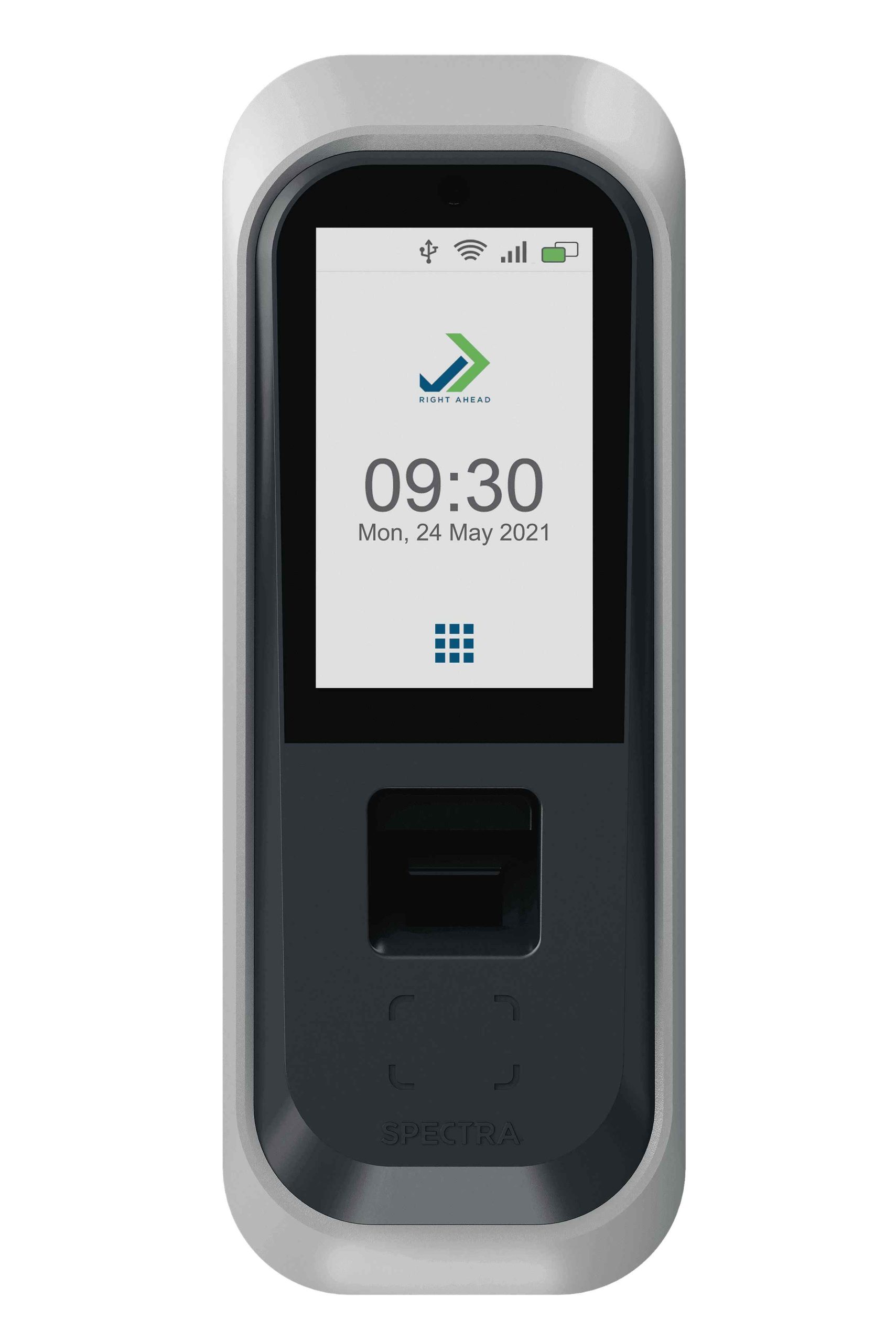
1. Privacy-Preserving Biometric Authentication: Imagine a smart lock that uses facial recognition. Instead of the camera sending a raw image to the cloud, the device and the server perform an ASMPC protocol. The server provides a reference template, and the device provides the user’s features. They compute the similarity score without the server ever seeing the user’s face and without the device downloading the entire database of faces. ASMPC allows this to happen in milliseconds by adjusting the precision of the comparison based on current lighting and network signal.
2. Collaborative Predictive Text: When multiple users collaborate on a shared document, predictive models often struggle to provide personalized suggestions without data leakage. ASMPC allows the collaborative platform to aggregate user preferences for “next-word” prediction across a group, ensuring that individual user typing styles remain encrypted even from the service provider.
Common Mistakes
Ignoring the Communication Bottleneck: The biggest mistake in MPC is assuming that local computation speed is the bottleneck. In reality, it is the number of communication rounds between parties. Design protocols that minimize round trips.
Static Security Policies: Implementing a “one-size-fits-all” security model kills the user experience. If your app takes three seconds to respond to a simple swipe gesture because of heavy cryptography, users will disable it.
Failure to Handle Disconnections: In mobile HCI, network instability is a reality. Ensure your ASMPC protocol is robust against parties dropping out mid-computation, utilizing secret sharing schemes that allow for partial reconstruction.
Underestimating Side-Channel Attacks: Even if the computation is secure, the timing of the response can leak information. Ensure your implementation includes constant-time operations to prevent timing-based data leakage.
Advanced Tips
To truly master ASMPC, focus on Threshold Cryptography. By distributing the “secret” required to decrypt or sign data across multiple servers, you eliminate the single point of failure. If one server is compromised, the attacker still lacks the threshold of parts required to reconstruct the user’s data.
Pro Tip: Leverage hardware-backed security modules (like Apple’s Secure Enclave or Android’s StrongBox) to hold the local “shares” of your cryptographic keys. This adds a layer of physical security that complements the logical security provided by the MPC protocol.
Another advanced strategy is Functional Encryption (FE). While MPC is about the process of computation, FE is about the result. By combining the two, you can allow a server to compute a specific result (like “Is this user’s credit score above 700?”) without the server ever seeing the actual credit score, providing a more elegant interface for complex data queries.
Conclusion
Adaptive Secure Multiparty Computation is not merely a cryptographic upgrade; it is a paradigm shift for Human-Computer Interaction. By moving from centralized, “trust-me” architectures to decentralized, “verify-me” protocols, we can build digital systems that are both deeply personalized and inherently private.
The path forward requires a balance of rigorous engineering and a deep understanding of user behavior. By prioritizing low-latency execution and context-aware security, developers can ensure that privacy becomes a seamless part of the user experience rather than a barrier to it. As we continue to integrate AI into our daily lives, ASMPC will be the bedrock upon which the next generation of trusted digital relationships is built.



Leave a Reply