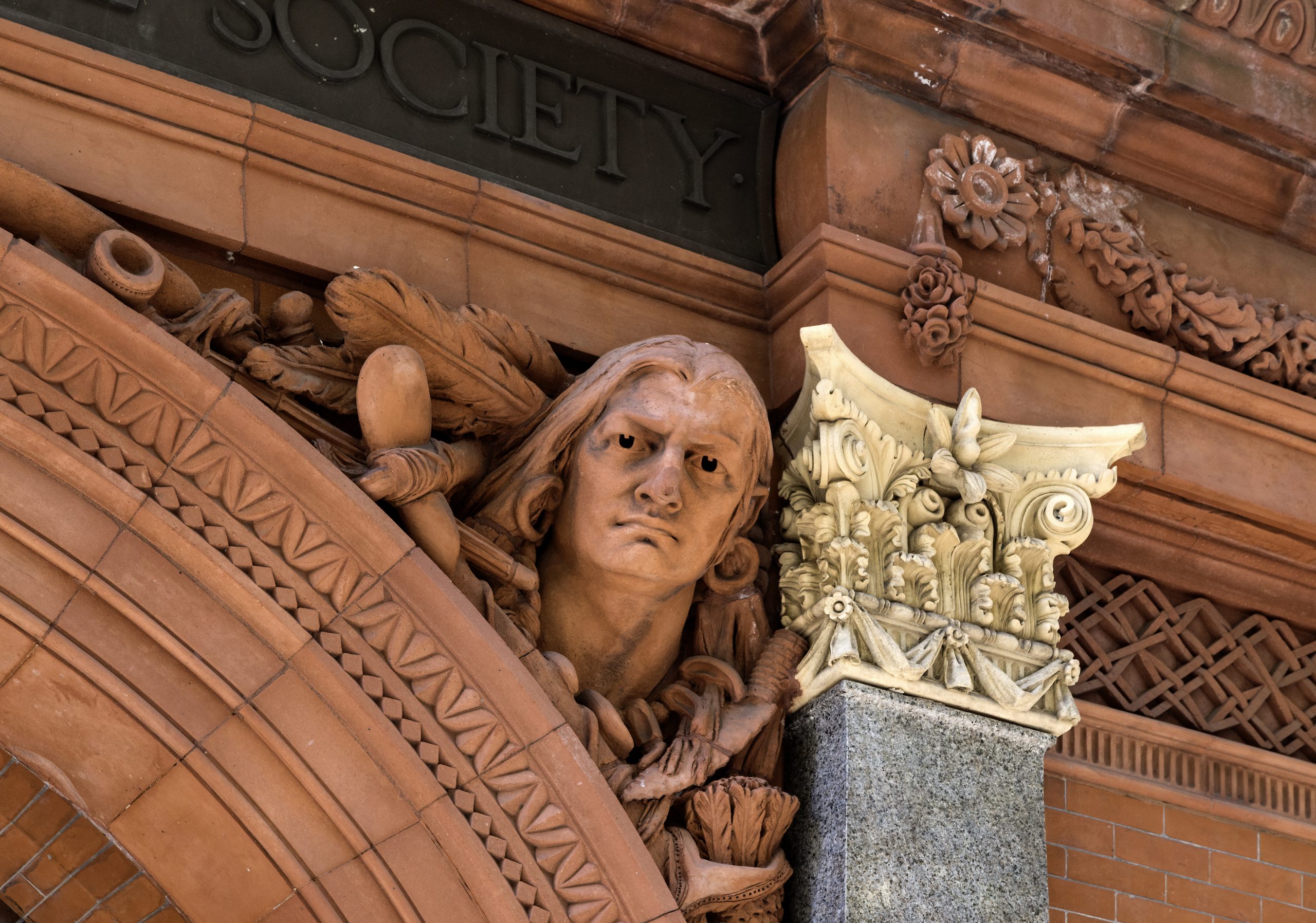
In the quest to build enduring institutions, we often focus on the “Moroni Archetype”—the role of the preserver, the herald, and the guardian of the Golden Plates. We obsess over institutional memory, archival integrity, and the sacred nature of founding principles. But there is a dangerous, often fatal, blind spot in this pursuit: the trap of Institutional Idolatry.
The Trap of the Golden Plates
If the Moroni Archetype is about the preservation of core, immutable assets, the Iconoclast’s Paradox suggests that the very act of canonizing these assets can lead to the slow, agonizing death of a firm. While memory provides stability, it also provides the anchors that drown a company when the market currents shift. History is littered with organizations that became so obsessed with the “foundational record” that they mistook the map for the territory.
To build a legacy that truly outlives you, you must be prepared to do something counterintuitive: you must periodically perform an iconoclastic purge.
The Myth of the Unchanging Core
The original Moroni framework advocates for a “Master Branch” of company mission that cannot be altered. But in a volatile, AI-driven market, that “Master Branch” can quickly become technical debt of the soul. If your foundational beliefs are immutable, your strategy is fragile. True longevity isn’t found in the preservation of the past, but in the curated evolution of it.
The most enduring institutions don’t just carry their plates; they rewrite them in the margins, and occasionally, they melt the plates down to mint new currency. This is not betrayal; this is stewardship.
The Three Rules of Radical Stewardship
To avoid the stagnation of your own institutional history, apply these three rules:
1. The “Burning of the Ships” Audit
Instead of merely auditing what you need to keep, audit what you need to kill. Identify the sacred cows of your culture—the processes, the myths, and the methodologies that everyone agrees on but that no longer generate competitive advantage. If a principle is not actively fueling growth or solving a modern existential threat, it is likely a relic that inhibits speed. Kill it before it kills your momentum.
2. Destructive Innovation (From Within)
Create a “Red Team” whose specific job is to argue against your founding vision. If your mission statement is true, it will survive scrutiny. If it isn’t, you want to know that now, not when a competitor disrupts your revenue stream. Resilience is not the absence of change; it is the ability to withstand the pressure of your own evolution.
3. Narrative Fluidity
Your history is not a static script; it is a living narrative. You can maintain the integrity of your origin story while acknowledging that the mission has grown beyond the original scope. The most successful leaders act as narrative architects—constantly reframing the past to provide context for the current pivot, rather than using the past as an excuse for stagnation.
The Paradox of Permanence
The ultimate irony of the Moroni Archetype is that if you protect your institution too well, you eventually curate it into a museum. A company is a living organism, not a monument. To build a legacy that lasts, you must accept that the only thing more important than what you started is your willingness to let it change into something you wouldn’t even recognize today.
Stop trying to preserve your company as it was. Start building an organization that is intellectually honest enough to acknowledge when its own past is no longer relevant. That is the only way to ensure your institution survives into the next era—not by remaining the same, but by remaining essential.
In our previous exploration of the Architecture of Sovereignty, we discussed the Verchiel archetype—the Solar leader who commands through heart-centered…
In today’s lightning-fast financial markets, speed is king. Automated trading systems, high-frequency algorithms, and execution bots process millions of transactions…