The Logistics of Expansion: Beyond Earth-Bound Constraints
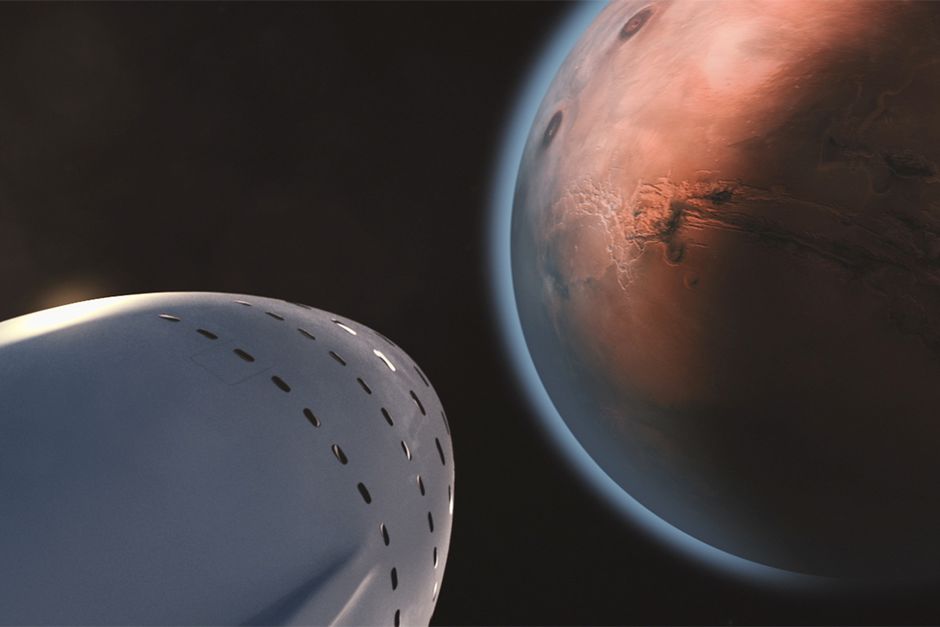
Most organizations struggle to manage supply chains across three time zones. Scaling that complexity to an interplanetary level is not merely an engineering challenge; it is the ultimate test of decision-making under extreme uncertainty. When the speed of light dictates a communication lag of minutes or hours, the traditional command-and-control model of corporate leadership collapses. To succeed in interplanetary transit, we must move from centralized management to autonomous, edge-based execution.
The transit logistics required for Mars or asteroid belt operations force a transition from “just-in-time” supply chains to “just-in-case” resilience. On Earth, inefficiency is a margin drain. In deep space, inefficiency is a fatal flaw. Leaders who master these logistics understand that the bottleneck is not rocket fuel—it is the synchronization of operational excellence across vast, disconnected nodes.
The Physics of Lead Time and Inventory Strategy
On Earth, we optimize for velocity and reduced inventory carrying costs. Interplanetary transit renders these metrics obsolete. The Hohmann transfer orbit—the most fuel-efficient path between planets—creates a rigid, non-negotiable schedule. You cannot “expedite” a shipment once the launch window has closed. This reality demands a fundamental shift in strategy.
Successful interplanetary logistics rely on predictive modeling rather than reactive purchasing. We must treat orbital mechanics as the primary constraint of our business model. This requires:
Strategic Redundancy: Because the cost of failure is absolute, critical components must be pre-positioned at destination nodes years in advance.
Additive Manufacturing: The ability to print parts on-site is the only way to mitigate the “long-tail” risk of missing a launch window.
Decentralized Governance: Local crews must possess the authority to make high-stakes calls without waiting for Earth-based sign-off.
AI as the Autonomous Transit Controller
Human latency is the enemy of deep-space efficiency. Relying on Earth-bound mission control for real-time logistics adjustments is a recipe for disaster. This is where AI becomes more than a productivity tool—it becomes a survival mechanism. We require autonomous systems that manage the flow of resources, monitor equipment health, and re-route transit vectors without human intervention.
This shift mimics the evolution of high-performance organizations, where high-performance thinking is pushed down to the front lines. By delegating tactical logistics to AI agents, human leadership is freed to focus on the long-term mission architecture and the ethical implications of interplanetary expansion.
Operational Resilience in a Low-Bandwidth Environment
Interplanetary transit logistics highlight a critical lesson for any leader: distance magnifies the cost of poor planning. When your supply chain spans millions of kilometers, you cannot “fix it in post.” Every failure is magnified by the inability to send a replacement part or a technician.
This environment rewards the “Architect” mindset over the “Firefighter” mindset. Firefighters thrive on solving immediate, visible problems. Architects design systems where problems are prevented through rigorous testing and modular integration. If you are building a logistics framework that cannot survive a six-month communication blackout, you are not building a system; you are building a liability.
Executing at the Edge
The future of interplanetary transit is not about bigger rockets; it is about better logistics protocols. We must standardize containers, interfaces, and data packets to allow for seamless handoffs between autonomous shuttles and surface stations. This is the execution phase of space exploration. It requires an uncompromising focus on modularity and interoperability.
True leadership in this domain involves creating a culture where the mission—not the ego of the department—dictates the movement of assets. As we push into the solar system, the organizations that thrive will be those that have mastered the art of letting go of control, trusting their autonomous systems, and accepting the brutal reality of orbital physics as the ultimate authority.