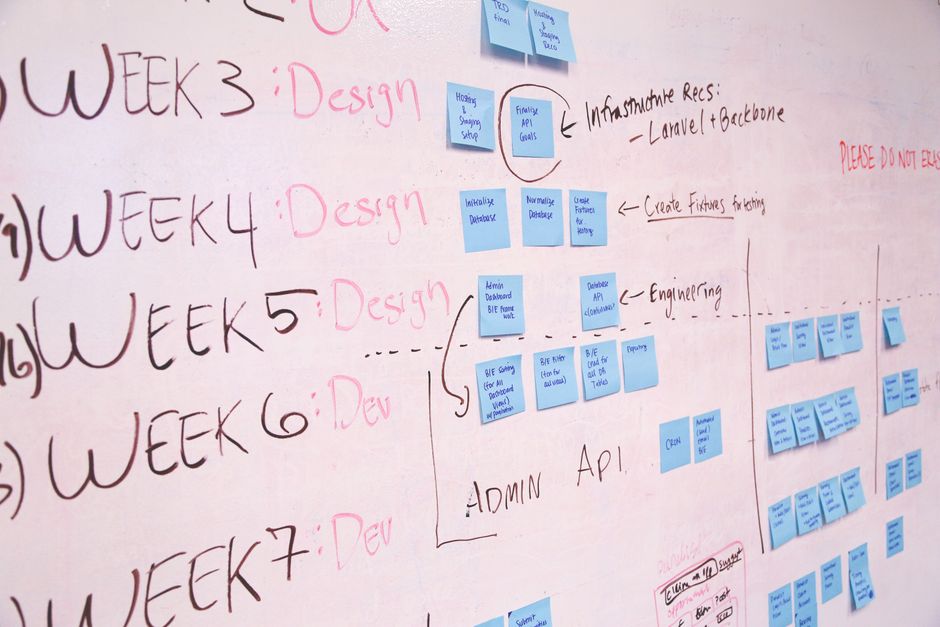
The Cost of Deferral: Strategic Infrastructure Scheduling
\n\n
Most organizations treat infrastructure upgrades as a necessary evil—a technical burden to be squeezed into the gaps between \”real\” work. This mindset is a failure of leadership. When you view systems maintenance as a reactive chore, you surrender control over your operational velocity. High-performance organizations do not schedule upgrades; they orchestrate them as a strategic planning event designed to widen the gap between them and their competitors.
\n\n
Infrastructure is the silent architect of your output quality. When your foundational systems lag, your decision-making latency increases, and your team’s execution speed hits an artificial ceiling. Scheduling these upgrades requires a shift from calendar-based maintenance to value-based optimization.
\n\n
The Economic Calculus of Downtime
\n\n
The primary reason upgrades are deferred is the fear of immediate operational disruption. This is a classic cognitive bias: valuing the certainty of a small, immediate cost over the probability of a catastrophic, delayed failure. To master operational excellence, you must quantify the \”cost of inaction.\”
\n\n
Calculate the opportunity cost of your current bottleneck. If an outdated database or legacy hardware forces your team to spend 20% of their time on manual workarounds or debugging, that is not a maintenance issue; it is a direct tax on your company’s profit margins. When you frame the upgrade cost against the annualized loss of productivity, the upgrade ceases to be a liability and becomes an investment in recovered time.
\n\n
Orchestrating Deployment Cycles
\n\n
Execution is where most leaders lose their way. Upgrades fail when they are treated as monolithic projects rather than modular iterations. Adopt a strategy of incremental deployment to minimize risk and maintain continuous delivery.
\n\n
De-risking Through Phased Rollouts
\n
Break your infrastructure overhaul into non-dependent modules. By decoupling system components, you can upgrade specific segments during low-traffic windows without exposing the entire enterprise to a single point of failure. This approach allows your team to validate performance gains in real-time, creating a feedback loop that informs the next stage of the rollout.
\n\n
The Role of AI in Predictive Maintenance
\n
Stop waiting for systems to alert you to their own obsolescence. Modern artificial intelligence tools can analyze telemetry data to predict failure points before they manifest as downtime. Integrating these insights into your schedule allows for proactive maintenance rather than reactive crisis management. When you can foresee a performance degradation, you move from being a firefighter to an engineer.
\n\n
Aligning Technical Debt with Business Strategy
\n\n
Not all systems require the same level of investment. A common strategic error is applying an equal priority to all infrastructure upgrades. You must categorize your stack based on its proximity to your core value proposition. Systems that directly touch your customer experience or drive your primary revenue stream deserve a ‘fast-track’ maintenance cycle.
\n\n
Conversely, non-critical systems can be relegated to a lower tier of maintenance. This requires disciplined decision-making. If a system is not providing a competitive advantage, the goal should be to stabilize it with minimal effort until it can be retired or replaced. Focusing your best resources on maintaining legacy systems that add no value is a misallocation of intellectual capital.
\n\n
Execution Discipline
\n\n
The success of your infrastructure schedule hinges on the discipline of your team. Establish clear protocols for the \”rollback\” phase. If an upgrade does not meet the pre-defined performance metrics within a specified window, the team must have the authority to revert immediately. This is not a failure; it is an exercise in risk management. Leaders who foster a culture of transparent reporting regarding system performance enable their teams to act with precision, ensuring that the infrastructure remains a catalyst for growth rather than a constraint on ambition.