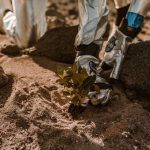
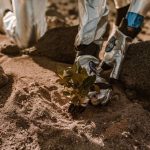
Most systems—whether planetary or corporate—fail because they are built for a static environment that no longer exists. We treat stability as a baseline, but in high-stakes environments, stability is merely a temporary pause between periods of radical volatility. Dynamic terraforming adjustments represent the ultimate expression of iterative strategy: the ability to reshape the environment to meet the needs of the objective, rather than forcing the objective to accommodate a hostile landscape.
If you are waiting for the conditions to be perfect to launch a project or pivot an organization, you have already lost the initiative. High-performance leaders understand that the terrain is malleable. By applying the principles of dynamic adjustment, you transition from being a victim of circumstance to being the architect of your own operational reality.
The Feedback Loop of Adaptive Execution
Terraforming is fundamentally an exercise in feedback loops. In a biological or planetary context, this involves atmospheric monitoring, pressure regulation, and resource distribution. In a leadership context, it involves the rapid synthesis of data to modify internal operations before the external environment forces a collapse.
Most organizations suffer from “atmospheric stagnation.” They rely on quarterly reports or annual reviews to gauge the health of their mission. This is equivalent to attempting to terraform a planet by checking the temperature once a decade. True operational excellence requires real-time telemetry. You must build systems that detect shifts in market sentiment, supply chain stability, and internal morale, allowing for micro-adjustments that prevent the need for catastrophic, wholesale pivots.
The Principle of Incremental Conditioning
Large-scale change often triggers institutional rejection. When an organization senses a massive shift, it tends to tighten its defenses, leading to paralysis. Dynamic terraforming succeeds because it is incremental. By adjusting one variable at a time—a shift in communication protocols here, a reallocation of capital there—you condition the organization to survive in a new, more aggressive, or more complex environment.
This is where decision-making becomes a science. Each adjustment must be treated as a controlled experiment. If the adjustment improves the output, it is codified. If it destabilizes the system, it is reversed immediately. This requires a culture where the cost of being wrong is lower than the cost of standing still.
Integrating AI into the Terraforming Cycle
The manual oversight of environmental variables is a bottleneck. We are moving into an era where AI serves as the primary engine for dynamic adjustment. By deploying autonomous agents to monitor the health of your operational ecosystem, you move from reactive problem-solving to predictive maintenance.
An AI-driven approach to strategy allows for the optimization of thousands of variables simultaneously. Where a human team might struggle to balance resource allocation with talent retention and market volatility, an integrated intelligence layer can execute these adjustments in the background. The human role shifts from the laborer of the strategy to the designer of the parameters. You define the desired state; the system adjusts the environment to ensure that state is maintained.
Operationalizing the Shift
To implement dynamic terraforming within your own structure, you must dismantle the silos that prevent data flow. If your marketing, finance, and product teams are operating on different versions of reality, you are not terraforming; you are merely moving dirt around in the dark.
Begin by identifying your “constant variables”—the core values and mission objectives that must remain unchanged. Then, treat everything else as a variable to be adjusted. If your current workflow is inefficient, it is not a fixed law of physics; it is a environmental factor that requires recalibration. By treating your execution as an evolving landscape, you gain the ability to thrive in conditions that would cause your competitors to expire.
The goal is not to reach a final, static destination. The goal is to build an organization that creates its own climate, regardless of the storm blowing outside.