The Physics of Deceleration: Strategic Lessons from Aero-braking
Most leaders equate progress with acceleration. They view the path to growth as a constant application of force—more capital, more headcount, more velocity. Yet, in high-stakes environments, the most dangerous phase of any mission is not the launch; it is the arrival. Whether you are scaling a company or entering a new market, the ability to shed momentum without losing structural integrity is a hallmark of elite leadership.
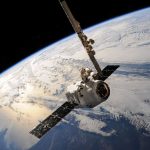
In orbital mechanics, aero-braking is the process of using a planet’s atmosphere to slow a spacecraft down. Instead of relying solely on expensive, finite fuel reserves to counteract massive kinetic energy, a vessel skims the upper layers of an atmosphere. The friction of the air acts as a natural brake. It is a masterclass in efficiency: utilizing the environment itself to achieve a critical objective.
The Operational Efficiency of Environmental Friction
In business, we often treat “friction” as an enemy to be eliminated. We obsess over frictionless user experiences and frictionless internal processes. However, strategic aero-braking suggests that controlled, external friction can be a vital tool for organizational stabilization. When a company is moving too fast—outpacing its cash flow, its culture, or its operational capacity—the goal should not be to slam on the brakes using brute force. That leads to structural failure.
Instead, look for the “atmosphere” in your market. This might take the form of regulatory scrutiny, customer feedback loops, or supply chain constraints. Rather than fighting these external forces, an elite operator recognizes them as deceleration vectors. By leaning into these natural constraints, you shed the excess velocity that threatens to tear your organization apart during a pivot or a high-speed expansion phase.
Precision and the Cost of Error
Aero-braking is unforgiving. If a spacecraft enters the atmosphere too steeply, the resulting heat and pressure will incinerate the hull. If the angle is too shallow, the craft skips off the atmosphere and drifts into the void, missing its target destination entirely. This is the ultimate metaphor for high-performance decision-making.
Every major strategic transition requires finding the “Goldilocks zone.” You must balance the need for speed against the risk of disintegration. This requires a shift in mindset from “how fast can we go” to “how much energy can we dissipate without losing control.”
Identify the Threshold: Know the maximum stress your operational excellence framework can handle before it degrades.
Calibrate the Angle: Adjust your pace based on the density of the external environment. In a volatile market, slow down by tightening internal controls. In a stable market, you can increase your entry velocity.
Monitor Heat Shields: Your “heat shield” is your core value proposition and your team’s morale. If your current strategy is scorching these assets, you are moving too fast.
The Fallacy of Fuel-Heavy Deceleration
Many executives rely on “fuel-heavy” deceleration. When a project goes off the rails, they inject more capital, add more senior management, or extend deadlines. They are burning reserves to solve a problem that could have been handled by better trajectory management. Relying on sheer resource expenditure is a sign of poor strategy.
Aero-braking requires foresight. You must plan your descent long before you arrive at the target. Leaders who master this understand that deceleration is not a sign of weakness or a loss of momentum; it is a calculated phase of the mission. By mastering the art of using external constraints to your advantage, you preserve your internal energy for the work that happens once you have successfully arrived at your destination.