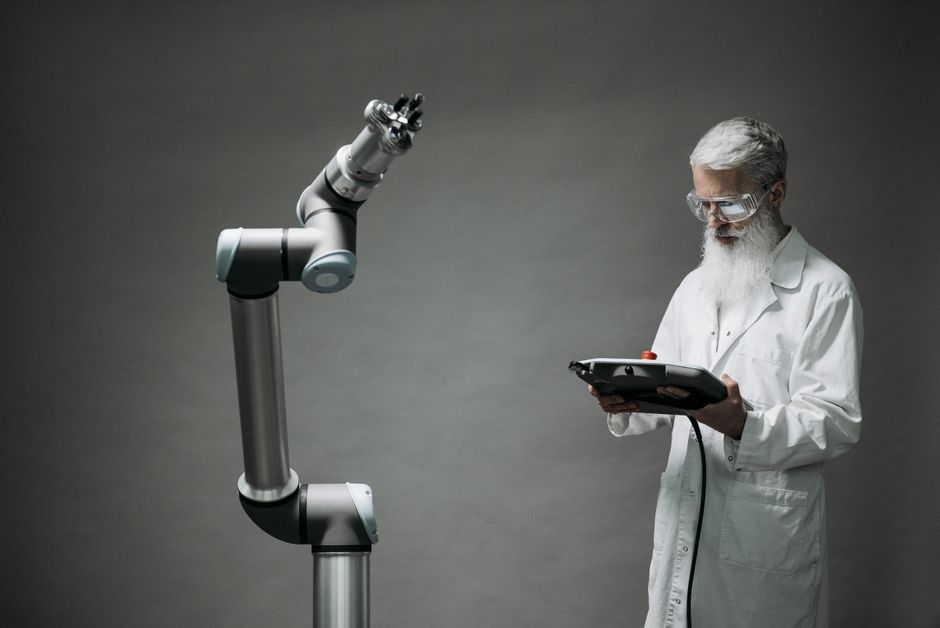
Most organizations treat artificial intelligence as a digital employee—a tool to be delegated tasks or used for basic automation. This is a failure of imagination. True competitive advantage in the coming decade will not come from replacing humans with machines, nor from humans simply using machines. It will emerge from human-computer synthesis: the seamless integration of biological intuition and silicon-based processing power.
This is not about efficiency; it is about extending the reach of executive decision-making. When the human mind is coupled with high-fidelity data processing, the result is a hybrid intelligence capable of identifying patterns and risks that are invisible to either component acting in isolation.
The Fallacy of the Human-AI Divide
The prevailing narrative suggests that AI will eventually render human judgment obsolete. History suggests the opposite. As computing power grows, the premium on high-level strategy, moral framing, and context-dependent judgment increases. Synthesis requires a shift in how leaders approach operational excellence. You are no longer managing a team of humans; you are managing a cognitive ecosystem.
In this framework, the human provides the “why”—the intent, the ethical guardrails, and the strategic vision. The computer provides the “how”—the massive scale, the speed of iteration, and the unbiased analysis of complex variables. The synthesis occurs when the feedback loop between these two entities becomes instantaneous.
Designing for Feedback Loops
Operational success depends on the velocity of your feedback loops. If your AI systems provide insights that take days to reach a human decision-maker, synthesis is broken. You must architect systems where data flows into models and immediately prompts human intervention or validation. This is the essence of execution at scale.
Consider the difference between a dashboard and a synthesis engine. A dashboard is passive; it tells you what happened. A synthesis engine is active; it presents a range of high-probability outcomes based on your strategic parameters, requiring you to select the path that aligns with your long-term strategy.
The New Mandate for Leadership
Leaders who master human-computer synthesis move faster than their peers because they offload the cognitive load of data synthesis to machines, freeing up mental bandwidth for high-stakes problem-solving. This is the ultimate form of leverage. You are not just using software to move faster; you are using it to think broader.
Data Stewardship: The quality of your synthesis is strictly limited by the quality of the data your AI consumes. Garbage in, genius out is a myth.
Strategic Framing: AI cannot define your market position. It can only optimize your path once the destination is set.
Cognitive Offloading: Identify which tasks drain your decision-making reserves and automate them. Reserve your biological processing power for non-routine, high-complexity challenges.
There is a constant temptation to automate for the sake of automation. This is a trap. If you automate a flawed process, you simply accelerate your own failure. Synthesis requires rigorous high-performance thinking to audit your processes before they are integrated into an AI-driven workflow.
True synthesis is not the absence of human input, but the amplification of it. If your AI is doing all the talking, you have built an echo chamber, not an engine.
When you integrate AI, ask yourself: Does this system force me to think harder, or does it encourage me to stop thinking entirely? If it reduces the need for human cognition without providing a superior strategic output, you have built a crutch rather than an extension.
Building the Hybrid Organization
The future belongs to the hybrid organization—one where the culture of the company is built on the assumption that every employee is an augmented entity. This requires a shift in hiring and development. We must prioritize individuals who demonstrate high “synthesis literacy”—the ability to communicate intent to machines and interpret machine-generated outputs into actionable strategy.
Human-computer synthesis is the next frontier of professional evolution. It is not a technology play; it is a leadership mandate. Those who successfully blend the speed of the machine with the wisdom of the human will define the standards of excellence for the next century.