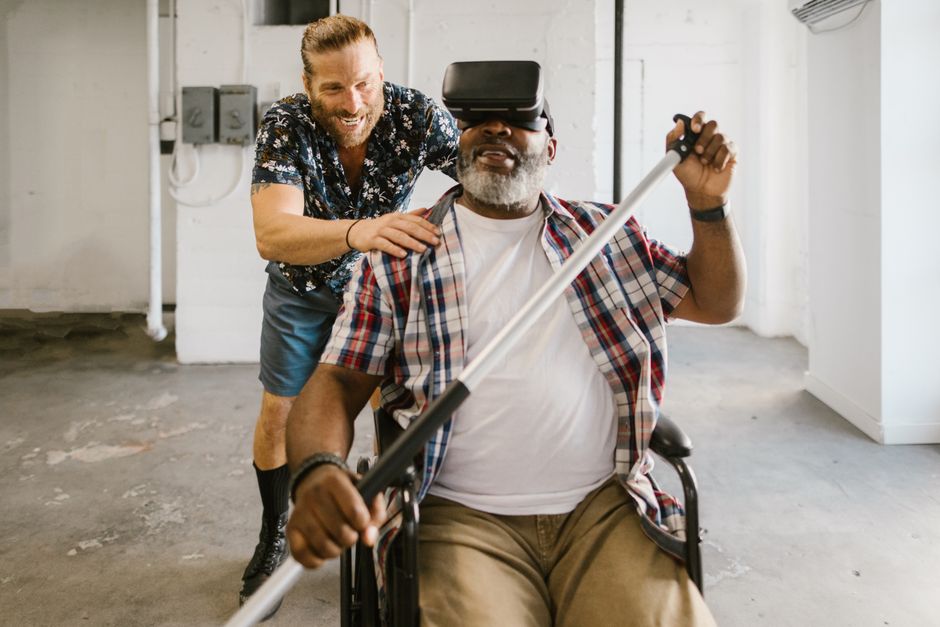
Traditional exposure therapy relies on a paradox: to overcome a psychological barrier, the patient must confront the very stimulus they fear. Historically, this required either real-world exposure—often logistically impossible or dangerously unpredictable—or the patient’s ability to conjure vivid mental imagery. Both methods suffer from significant friction. Real-world interaction is difficult to control, while reliance on imagination assumes a high level of cognitive flexibility that many patients in crisis lack.
\n
Virtual reality therapy (VRT) fundamentally alters this equation by offloading the cognitive demand of simulation to technology. By providing a controlled, immersive environment, VRT allows for precise titration of stimuli. This is not merely a technological upgrade; it is a shift in decision-making architecture. It enables clinicians to design exposure protocols with the same rigor one might apply to a high-stakes strategy session, where the variables are known, the risk is managed, and the feedback loop is instantaneous.
\n\n
Operationalizing Psychological Resilience
\n
In high-performance environments, we often discuss the necessity of stress inoculation. VRT provides a scalable model for this. By placing a subject in a virtual scenario—whether it is public speaking, phobic stimuli, or combat-related triggers—therapists can manipulate the environment in real-time. If a patient is overwhelmed, the therapist can dial back the intensity of the simulation immediately. This granular control is the hallmark of operational excellence in clinical practice.
\n
When you strip away the technological novelty, VRT is essentially a tool for rehearsal. Just as an executive uses simulations to prepare for a merger or a crisis, patients use VRT to build neural pathways that favor calm over panic. The execution of these sessions requires a departure from subjective, talk-based therapy toward a data-driven, behavioral approach. It shifts the burden from the patient’s ability to ‘explain’ their fear to the patient’s ability to ‘experience’ their resilience under controlled conditions.
\n\n
The Strategic Advantage of Immersion
\n
The primary advantage of VRT is the reduction of the ‘imagination gap.’ In traditional settings, the therapist relies on the patient’s subjective description of a trigger. This creates a disconnect between the clinical intervention and the real-world event. VRT bridges this gap by standardizing the stimulus. If you are treating a pilot for fear of flying, you are no longer relying on the pilot’s memory of turbulence; you are providing the pilot with the actual sensation of turbulence in a setting where they can practice coping mechanisms without physical risk.
\n
From a high-performance thinking perspective, this is about efficiency. VRT compresses the time required for habituation. When the patient is no longer required to expend energy imagining the scene, they can focus entirely on the physiological and psychological response. This is the difference between learning a skill through a textbook and learning it through a simulator. The cognitive load is minimized, and the retention of the coping strategy is maximized.
\n\n
Scaling Behavioral Change
\n
The future of VRT lies in its integration with AI-driven feedback. Imagine a system that monitors heart rate, skin conductance, and eye movement, adjusting the virtual environment to keep the patient in the ‘Goldilocks zone’—the precise point where the stimulus is challenging enough to induce growth but not so intense that it triggers a trauma response. This is the ultimate application of AI in behavioral health: a system that learns the patient’s threshold and optimizes the intervention in real-time.
\n
For organizations and individuals alike, the lesson is clear: if you want to change behavior, you must change the environment in which that behavior is performed. VRT is the most powerful tool currently available for creating those environments. It proves that the most effective way to confront a complex problem is not to think harder about it, but to build a system that forces the correct response.