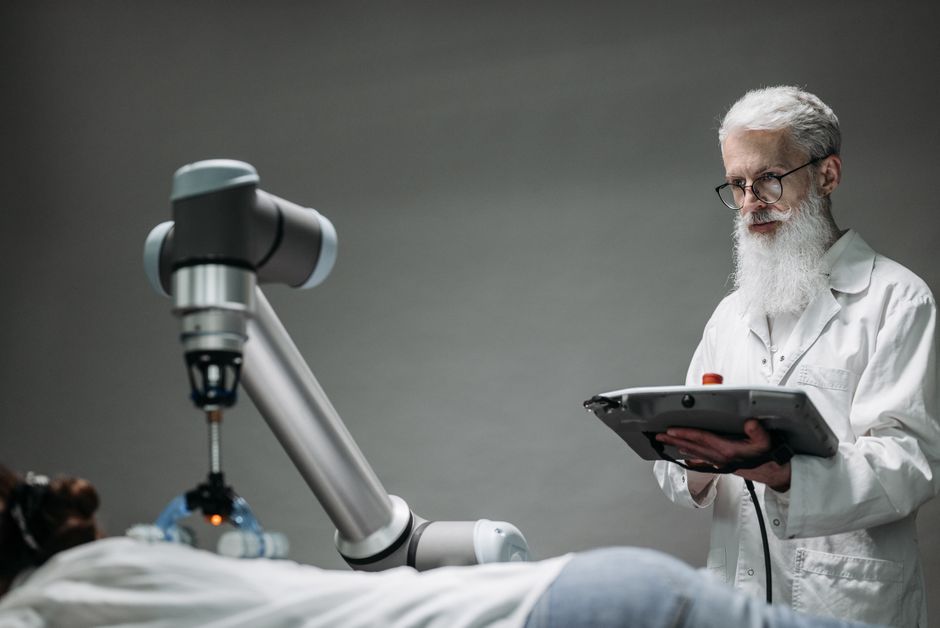
The Precision Paradox: Why Remote Robotic Surgery Defines the Future of Operational Excellence
The most dangerous variable in any high-stakes environment is human latency. Whether you are managing a global supply chain or performing a delicate resection on a human liver, the delay between observation, decision, and execution is where failure takes root. Remote robotic surgery—once the domain of science fiction—has moved into the realm of operational excellence, providing a blueprint for how leaders must approach distributed command and control.
When a surgeon operates from a console miles away from the patient, the physical distance is irrelevant. What matters is the fidelity of the feedback loop. This technological shift is not merely about medical innovation; it is a masterclass in removing friction from critical systems. In any organization, the goal of leadership is to maintain high-resolution oversight while decentralizing the actual work. Remote surgery proves that when the infrastructure is sufficiently robust, physical proximity is no longer a prerequisite for world-class performance.
Latency as the Primary Constraint
In robotic surgery, the technical challenge is “jitter” and lag. If the surgeon moves their hand, the robotic arm must replicate that motion with sub-millimeter precision. If the data transmission lags by even a fraction of a second, the system fails. This mirrors the decision-making bottlenecks found in corporate hierarchies. When information travels through too many layers of middle management, the “signal” becomes distorted, and the executive team effectively operates with a lag that renders their decisions obsolete by the time they reach the front line.
High-performance organizations minimize latency by empowering the edge. Just as the robotic system uses edge computing to process inputs locally before communicating with the central server, successful companies push decision-making authority to the individuals closest to the problem. The surgeon remains the architect of the procedure, but the system manages the granular execution. This is the essence of scalable command: designing a framework so precise that the leader’s intent is executed perfectly, regardless of the physical distance between the mind and the tool.
The Architecture of High-Stakes Execution
Remote robotic surgery relies on three pillars: high-bandwidth data transmission, haptic feedback, and redundant safety protocols. These are the same pillars required for high-performance thinking in any industry.
High-Bandwidth Communication: Success requires a clear, unobstructed flow of data. If your team does not have access to the same facts, they cannot execute the strategy. Eliminate silos that act as firewalls against necessary information.
Haptic Feedback: A surgeon needs to “feel” the tissue resistance through the robotic interface. Similarly, leaders need real-time performance metrics—not just lagging financial reports—to understand the “resistance” in their organization. You cannot correct a course if you cannot feel the friction.
Redundant Safety Protocols: In surgery, if the connection drops, the system defaults to a “fail-safe” mode. Organizations should be designed with the same foresight. What happens if the primary strategy fails? What is the automated fallback that prevents a catastrophic outcome?
The Shift Toward Distributed Competence
The democratization of surgical expertise via robotics allows a specialist in a major city to assist a team in a rural hospital. This is a form of strategy that focuses on resource optimization rather than resource hoarding. By decoupling expertise from geography, organizations can deploy their most talented thinkers where they are needed most, rather than where they happen to reside.
Leaders who cling to the idea that “being in the room” is essential for control are missing the shift in the global landscape. The future belongs to those who build systems that function with clinical precision across distances. When you remove the need for physical presence, you gain the ability to scale your impact exponentially. The robot does not get tired, it does not get distracted, and it does not allow ego to interfere with the protocol. By adopting this robotic mindset, leaders can foster an environment where the process—not the personality—guarantees the result.
Remote robotic surgery is not just a medical milestone. It is a signal that the era of centralized, proximity-dependent leadership is closing. The new standard is defined by high-fidelity systems, minimal latency, and the courage to trust a robust architecture over a physical presence.