The End of Guesswork: How Precision Agriculture Redefines Operational Excellence
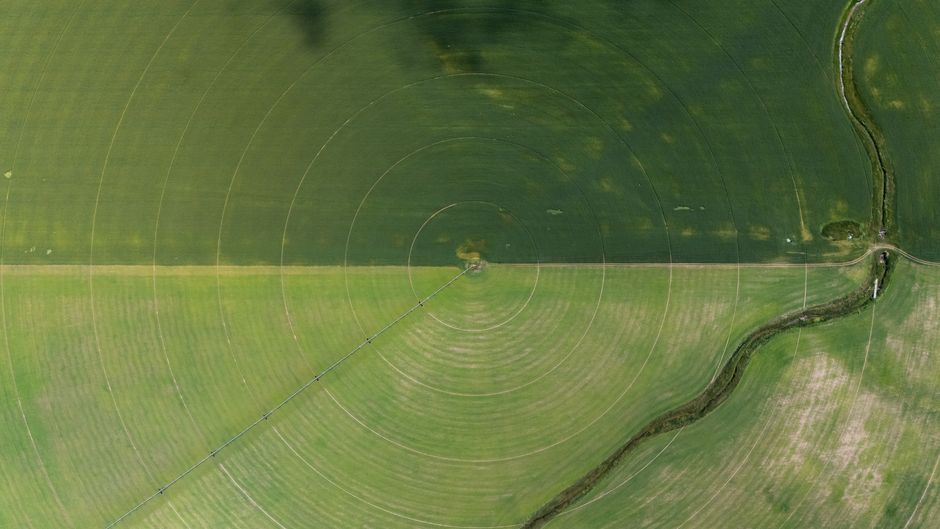
Most industries suffer from a dangerous reliance on averages. They treat a field, a factory, or a workforce as a monolithic entity, applying uniform inputs to achieve uniform outputs. Precision agriculture shatters this paradigm. It replaces broad-brush management with granular, data-driven decision-making, proving that when you measure at the micro-level, you unlock macro-level gains in efficiency and yield.
In high-performance organizations, the core constraint is rarely a lack of resources; it is the inefficient distribution of those resources. Precision agriculture—the practice of managing crops with spatial and temporal accuracy—is not merely a technological upgrade for farmers. It is a masterclass in operational excellence that every executive should study. When you move from treating a 1,000-acre field as one unit to treating it as 1,000 distinct square units, you stop wasting capital on the healthy and start targeting the deficient.
Data as the Primary Asset
The transition to precision agriculture is fundamentally a transition to an information-first model. Farmers now deploy sensors, satellite imagery, and IoT-enabled machinery to monitor moisture levels, nutrient density, and pest pressure in real-time. This is the definition of high-performance thinking: reducing the feedback loop between observation and execution.
In business, as in agriculture, the lag between performance and data availability is a silent killer. If your strategy relies on quarterly reports to identify operational drag, you are already months behind the curve. Precision agriculture teaches us that the highest returns are found in the variability of the data. By identifying the specific zones of a field that require intervention, a farmer minimizes the “cost of waste”—the expense of applying fertilizer to soil that cannot absorb it or water to areas already saturated.
Scaling Through Automated Execution
The most sophisticated precision tools are not just diagnostic; they are autonomous. Variable Rate Technology (VRT) allows equipment to adjust planting density or fertilizer application rates on the fly, based on pre-loaded maps generated by AI algorithms. This is the ultimate form of execution: the removal of human error from routine, repetitive, yet complex tasks.
For the modern leader, the goal is to build systems that act with this same degree of autonomy. When you automate the application of resources based on precise triggers, you free your human capital to focus on higher-order problems—like long-term planning, market shifts, and innovation. The machine handles the “how,” while the leader dictates the “what” and the “why.”
The Risk of Information Overload
A common trap in precision agriculture is the accumulation of data without a corresponding increase in insight. You can have a thousand sensors in a field, but if they do not lead to a change in behavior, they are merely an expense, not an asset. This is a critical lesson in leadership: the utility of data is zero if it does not drive a decision.
Effective leaders curate their data streams ruthlessly. They prioritize the metrics that directly influence the bottom line—yield per acre, cost per unit, and resource efficacy. Precision is not about seeing everything; it is about seeing the right things clearly enough to act with conviction. When you focus on high-fidelity information, you eliminate the noise that usually paralyzes decision-makers.
From Agriculture to Organizational Strategy
The principles of precision agriculture are universal. Whether you are managing a crop cycle or a product launch, the path to excellence follows a repeatable sequence:
Map the variability: Understand that your resources, team members, and departments do not perform uniformly.
Target the input: Allocate capital and attention where the marginal return is highest.
Automate the repetitive: Use technology to standardize the execution of routine tasks.
Close the loop: Use the results of your actions to refine the next cycle of data collection.
By adopting this mindset, you treat your organization as a living, breathing system that requires constant calibration. The goal is to move beyond the comfort of averages and embrace the complexity of the individual unit. In doing so, you stop managing by intuition and start operating by design.