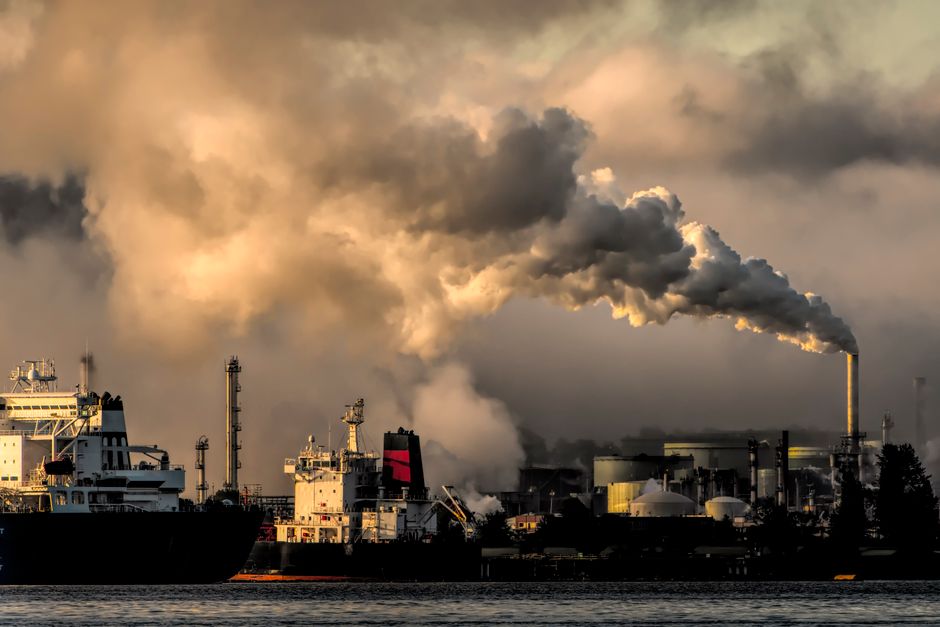
The shipping industry is responsible for nearly 3% of global greenhouse gas emissions. For years, the sector focused on alternative fuels—hydrogen, ammonia, and biofuels—as the primary path to decarbonization. However, the economic reality of retrofitting global fleets and the logistical nightmare of global fueling infrastructure present a bottleneck that traditional strategy cannot solve. This is where marine carbon capture enters the conversation, not as a peripheral technology, but as a critical lever for operational survival.
Marine carbon capture (MCC) shifts the focus from the fuel source to the combustion point. By treating the exhaust stream directly on board, companies can maintain the energy density of heavy fuel oil while neutralizing the environmental liability. This is an exercise in operational excellence: managing the output rather than waiting for the entire global supply chain to reinvent itself.
The Structural Advantage of Point-Source Capture
From a strategy perspective, MCC offers a distinct advantage over carbon-neutral fuel development: it is compatible with existing assets. Replacing a global fleet of tankers and container ships requires a capital expenditure cycle that spans decades. MCC systems, conversely, are modular. They can be integrated into existing exhaust gas cleaning systems—commonly known as scrubbers—which are already installed on a significant portion of the global fleet to meet sulfur emission regulations.
Integrating carbon capture at the source allows leadership to bypass the “waiting game” of infrastructure maturity. When a company controls the capture process, it reduces its exposure to the volatility of the green fuel market. It transforms a regulatory compliance burden into a proprietary execution advantage. Firms that implement these systems early gain a predictable path to net-zero, insulating themselves from the rising costs of carbon taxes and environmental litigation.
Operational Complexity and the Engineering Reality
Capturing CO2 at sea is fundamentally different from terrestrial capture. The primary challenge is not the chemistry, but the physical constraints of a vessel. Space is the most expensive commodity on a ship; every cubic meter dedicated to carbon storage or capture hardware is a cubic meter lost to cargo.
High-performance thinking requires leaders to view this as a trade-off optimization problem. The core components of an MCC system include:
Solvent-based absorption: Utilizing chemical amines to strip CO2 from exhaust gases.
Compression and liquefaction: Reducing the volume of captured CO2 for storage.
Storage logistics: Managing on-board tanks and coordinating port-side offloading.
The constraint here is energy. Running a capture system requires power, which burns more fuel, creating a feedback loop of emissions. Success in this domain is measured by the net capture rate—the difference between the CO2 captured and the additional CO2 emitted to power the system. If the net efficiency isn’t optimized, the project fails the test of decision-making rigor.
The Strategic Integration of AI in Emission Management
The next frontier for MCC is the application of AI to optimize capture rates in real-time. Vessel speed, engine load, and ambient temperature all influence the efficacy of chemical absorption. By deploying machine learning models, operators can adjust capture parameters dynamically based on current engine performance and environmental conditions.
This is where high-performance thinking meets maritime logistics. Rather than running a system at a flat rate, AI-driven automation allows for peak efficiency during transit, adjusting for the specific carbon intensity of the journey. This level of precision differentiates the leaders from the laggards in the shipping industry. It moves the organization from reactive compliance to proactive emission management.
The Future of Maritime Asset Value
We are entering a period where the value of a maritime asset will be tied directly to its carbon intensity. Ships that cannot be retrofitted for carbon capture will face accelerated depreciation as carbon pricing becomes more aggressive. Leaders must view MCC not merely as an environmental initiative, but as a mechanism for asset protection.
The companies that master the integration of MCC into their existing fleet will be the ones that hold the most leverage when carbon markets mature. They will have the infrastructure in place to monetize their captured carbon or, at the very least, eliminate the premiums they would otherwise pay in a carbon-constrained economy. The goal is to build a system that is robust enough to handle the transition, regardless of which alternative fuel eventually wins the broader energy war.