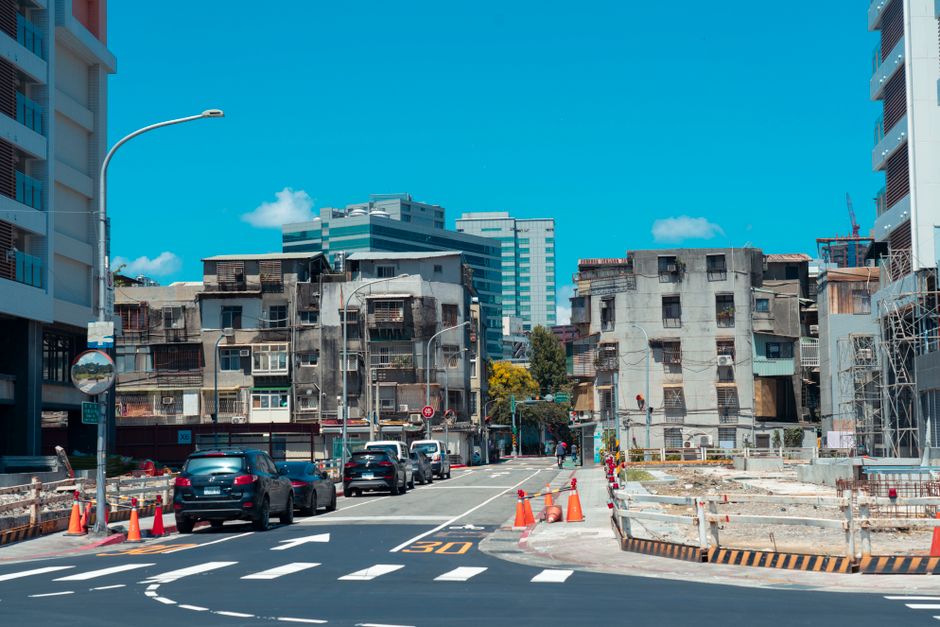
Most urban planning operates on a fallacy: that a city is a finished product. In reality, a city is a living, breathing set of interconnected workflows. When leaders treat infrastructure as a static asset—a collection of roads, pipes, and grids—they invite systemic failure. High-performance urban environments require the same principles of operational excellence that govern world-class organizations. The moment your infrastructure stops being dynamic, it becomes a liability.
Static infrastructure is rigid. It fails under the weight of unexpected demand or sudden shifts in user behavior. Dynamic infrastructure, by contrast, is built on the premise of adaptability. It prioritizes modularity and real-time data ingestion to maintain flow. Leaders who understand this realize that a city’s efficiency is not measured by its capacity at rest, but by its throughput during peak stress.
Data as the Nervous System
You cannot manage what you cannot measure, and you certainly cannot optimize what you cannot see in real time. Modern, dynamic infrastructure relies on a distributed sensor network—an Internet of Things (IoT) architecture—that acts as the central nervous system for urban operations. This is not merely about tracking traffic patterns; it is about creating a feedback loop that informs decision-making.
When transit systems adjust frequency based on live demand rather than static schedules, they eliminate waste. When energy grids balance loads based on predictive modeling rather than historical averages, they prevent brownouts. This is the application of AI to physical systems. It transforms infrastructure from a passive cost center into a responsive asset that creates value through precision.
Strategic Modularity and Execution
The biggest barrier to dynamic infrastructure is the sunk cost fallacy. Leaders often cling to massive, monolithic projects because of the sheer capital invested in them. However, true strategy demands that you prioritize agility over scale. Large-scale urban projects take decades to complete, by which time the technology they were built on is often obsolete.
A better approach is modular infrastructure. Design systems that can be upgraded in pieces. If a bridge needs to house fiber-optic arrays or charging capabilities for autonomous vehicles, the design must allow for these integrations without requiring a total overhaul of the foundation. This requires a shift in procurement and execution: stop buying “finished products” and start building “platforms.”
The Human Element in Urban Logic
Technological sophistication is meaningless without a clear understanding of human behavior. High-performance thinking in urban development means designing for how people actually move, not how they are “supposed” to move. If your transit system requires complex interfaces or unintuitive pathways, it will suffer from low adoption. The goal is frictionlessness. Friction is the enemy of efficiency, whether in a corporate hierarchy or a municipal subway system.
Leaders must observe the “desire paths”—the shortcuts people take despite what the map says—and formalize them. This is the essence of user-centric design applied to the macro level. It respects the reality of human intent and aligns infrastructure to support it, rather than forcing citizens to conform to a rigid, top-down mandate.
Resilience Through Redundancy
Efficiency is dangerous if it lacks resilience. Many organizations focus so heavily on lean operations that they strip away the safety margins necessary to survive a shock. In urban infrastructure, this looks like a single point of failure in a power grid or a lack of alternative transit routes.
Strategic redundancy is not “waste.” It is insurance. It allows for the continuity of operations when the primary systems encounter an anomaly. A resilient city is one where infrastructure is decentralized enough that a failure in one quadrant does not cripple the entire organism. This requires a disciplined approach to leadership: the courage to invest in capacity that may not be used every day, but is essential for the survival of the system during a crisis.