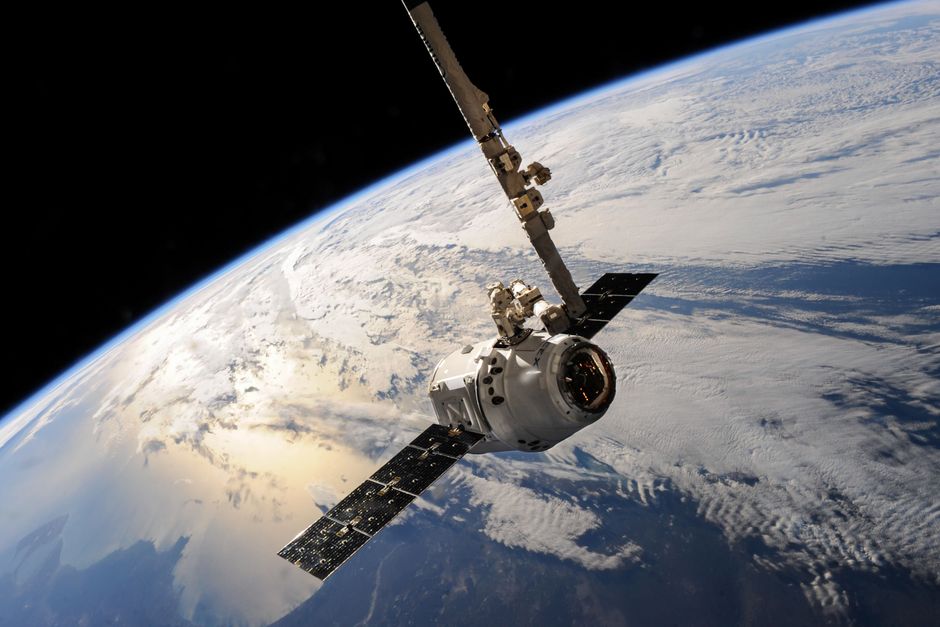
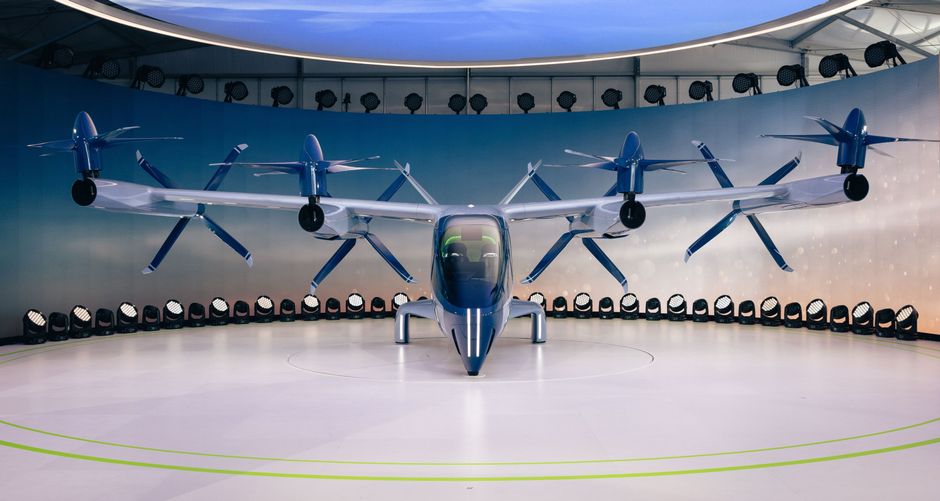
For six decades, access to space was the exclusive province of superpowers. It was a domain defined by prohibitive costs, massive bureaucracy, and a pace of innovation that favored incrementalism over iteration. That era is effectively over. The shift toward democratized space launch is not merely a technological milestone; it is the most significant opening of a new frontier for commercial strategy and operational excellence in modern history.
When the cost to orbit drops by orders of magnitude—thanks to reusable launch vehicles and high-cadence manufacturing—the barrier to entry evaporates. This is no longer about government mandates. It is about the strategy of deployment. When space becomes a commodity, the advantage shifts from the entity that can build the rocket to the entity that can best utilize the payload.
Operational Excellence at Mach 25
Democratization in space launch relies on the same principles that define high-performance organizations on the ground: modularity, rapid prototyping, and the relentless pursuit of efficiency. Companies like SpaceX did not win by simply building a bigger rocket; they won by treating launch architecture as a software problem. They applied execution frameworks that prioritized the feedback loop over the perfect design.
In traditional aerospace, failure was an existential threat. In the new landscape, failure is a data point. By treating launch systems as iterative products, leaders can now test, refine, and deploy hardware at a speed that renders legacy approaches obsolete. This is the definition of operational agility: the ability to reconfigure your assets in response to real-time performance data rather than rigid, multi-year mission profiles.
Strategic Implications for the Modern Enterprise
What does democratization mean for the leader who has nothing to do with aerospace? It signals a massive expansion of the “adjacent possible.” As launch costs continue to plummet, the infrastructure supporting global communication, earth observation, and logistics will fundamentally change.
We are moving into an era of persistent, high-fidelity data. Businesses that currently operate with delayed feedback loops—whether in global supply chains, environmental monitoring, or secure communications—will suddenly have access to real-time, orbital-grade intelligence. The decision-making process for global operations is about to get significantly faster and more precise. The leaders who win will be those who integrate this orbital data into their core business logic before their competitors realize the market has shifted.
The Shift from Scarcity to Abundance
Historical constraints forced leaders into a defensive posture. You were limited by what you could do locally or through terrestrial infrastructure. Democratized space launch introduces a shift toward abundance. You no longer need to lobby for a seat on a government-funded flight; you can purchase capacity as a service.
This transition forces a reassessment of leadership priorities. Are you optimizing for a world of limited resources, or are you preparing for a world where your operational footprint can span the globe with minimal friction? The shift from scarcity to abundance is the ultimate stress test for any business model.
The AI and Orbital Convergence
The democratization of space launch is occurring in lockstep with the maturation of AI. These two forces are multiplicative, not additive. Space provides the raw data—the vast, untapped streams of imagery and telemetry—while AI provides the processing power to turn that noise into actionable strategy.
Consider the logistical implications. Autonomous systems, once limited by connectivity and localized processing, will soon have persistent, low-latency, high-bandwidth access to the entire planet. The ability to manage global assets with the same precision as a local warehouse is no longer a fantasy. It is an engineering challenge that is being solved right now.
Reframing the Frontier
The democratization of space launch is a mirror reflecting our own capacity for change. It challenges the assumption that the “way things have always been done” is the safest path. High-performance thinking demands that we look at the removal of historical barriers not as a convenience, but as a mandate to innovate.
If the cost of access to the most difficult environment on Earth has dropped, what are the excuses for failing to innovate within your own industry? The bottleneck is no longer the infrastructure; it is the vision required to utilize it.