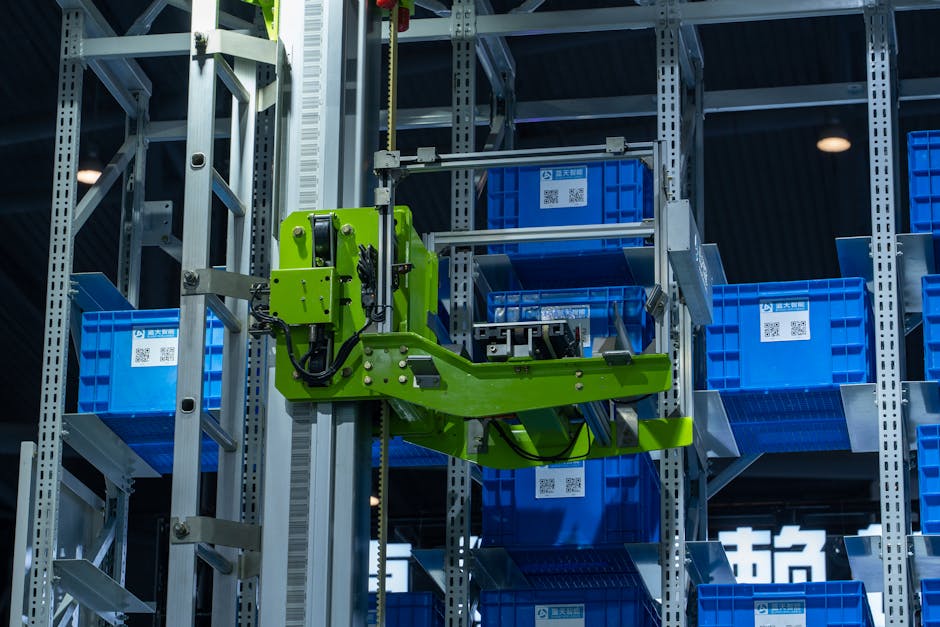
In the push toward operational excellence, educational leaders often view automation as an unalloyed good. By removing friction from scheduling, grading, and admissions, we are told we can unlock ‘high-value cognitive engagement.’ While the administrative efficiency gained from these systems is undeniable, there is a looming danger: the Automation Paradox. When we automate the institutional experience to the point of frictionlessness, we risk stripping away the serendipitous, high-touch interactions that define true pedagogical growth.
The Danger of the ‘Invisible’ Institution
The goal of modern EdTech is often to make the institution ‘invisible’—to allow students to progress through systems without ever hitting a wall or experiencing a delay. However, learning is rarely a linear, optimized process. It is messy, iterative, and social. When we treat the student experience as a workflow to be optimized, we risk turning the educational journey into a consumer transaction. If a student never has to navigate a manual process, advocate for themselves against a rigid policy, or engage in the ‘friction’ of human negotiation, they lose critical developmental opportunities.
The Culture of Convenience vs. The Culture of Mentorship
True educational leadership is not about the ruthless elimination of all non-essential processes. Some ‘inefficiencies’ are actually the infrastructure of mentorship. Consider the professor who personally manages office hours rather than relying on an automated scheduler, or the advisor who manually reviews an outlier case rather than letting an algorithm decide. These moments of manual labor are where institutional culture is forged. When we automate away the human hand in the machine, we replace mentorship with management.
Redefining ‘High-Value’ Labor
The original mandate for educational automation correctly identifies that human intelligence shouldn’t be wasted on data entry. However, leaders must avoid the trap of assuming that all human-to-human interaction is ‘low-value’ simply because it is time-consuming. We must categorize work into two buckets:
Operational Friction: Data reconciliation, rigid form processing, and scheduling—this must be automated.
Relational Friction: Challenging academic advising, complex disciplinary resolution, and project-based collaboration—this must be protected.
A Framework for Balanced Innovation
To implement automation without eroding the human element, leaders must adopt a ‘Human-in-the-Loop’ design philosophy. Before deploying an automated system, ask these three questions:
Does this automation remove a barrier to learning, or does it remove an opportunity for human connection?
Are we tracking ‘efficiency metrics’ at the expense of ‘engagement metrics’?
Does this system allow for a human override when the student’s specific context necessitates a non-standard path?
Conclusion: High Tech, High Touch
The most elite institutions of the future will not be the ones that are the most automated; they will be the ones that use automation to buy back time for deeper human connection. Use machines to handle the administration, but use the liberated hours to deepen the mentorship. Efficiency is the floor of institutional success, not the ceiling. The true competitive advantage remains in the very thing automation cannot replicate: the intentional, high-touch human relationship.