Energy-Aware Causal Inference for Sustainable Agritech
— by
Steven Haynes
Contents
1. Introduction: The nexus of sustainable agriculture and computational efficiency.
2. Key Concepts: Understanding Causal Inference and the “Energy-Aware” constraint in edge computing.
3. Step-by-Step Guide: Implementing an energy-aware causal model in agricultural IoT.
4. Case Study: Precision irrigation optimization in water-scarce environments.
5. Common Mistakes: Overfitting, latency-energy trade-offs, and data noise.
6. Advanced Tips: Adaptive sampling and hardware-aware pruning.
7. Conclusion: The future of self-sustaining smart farms.
—
Energy-Aware Causal Inference: Powering the Future of Sustainable Agritech
Introduction
Modern agriculture is undergoing a data revolution. From soil moisture sensors to satellite imagery and autonomous drones, the modern farm is a massive data generator. However, the true value lies not in collecting data, but in understanding the causal mechanisms behind crop health. While traditional machine learning identifies correlations—such as “high humidity correlates with fungal growth”—causal inference asks “why.” It answers whether a specific intervention, like applying a fungicide or adjusting irrigation, will actually cause the desired yield increase.
The challenge? Deploying sophisticated causal inference algorithms on resource-constrained IoT devices in remote fields. When power is limited by solar batteries and bandwidth is intermittent, we cannot afford the computational overhead of cloud-based causal discovery. This is where energy-aware causal inference becomes a critical engineering frontier for sustainable agritech.
Key Concepts
Causal Inference vs. Correlation: Correlation suggests a relationship, but causation defines an effect. In agritech, confusing the two leads to catastrophic resource waste. For instance, high sunlight might correlate with high temperatures, but reducing sunlight does not necessarily solve heat stress if the root cause is soil salinity.
The Energy Constraint: Agricultural IoT sensors often operate on Low Power Wide Area Networks (LPWAN). Every CPU cycle consumed by an algorithm drains the battery, shortening the device’s lifespan and increasing maintenance costs. Energy-aware algorithms optimize the “Inference-to-Watt” ratio, ensuring that the model provides actionable insights without depleting the power supply.
Structural Causal Models (SCM): These are the mathematical frameworks used to represent causal relationships as a graph. In an energy-aware context, we focus on sparse SCMs, which ignore insignificant variables to save computation time and energy.
To implement an energy-aware causal inference pipeline, follow these steps to balance accuracy with power consumption:
Feature Selection via Information Bottleneck: Before running a causal discovery algorithm (like PC or GES), compress your input data. Use the Information Bottleneck principle to discard features that do not significantly contribute to the causal prediction. This reduces the dimensionality of the search space.
Adaptive Sampling Rates: Do not process data at a constant frequency. Implement a “trigger-based” causal analysis where the algorithm only runs a full inference cycle when sensor data deviates from an expected baseline.
Quantized Causal Discovery: Utilize fixed-point arithmetic instead of floating-point operations for your causal graphs. Quantizing the weights of your causal model reduces power consumption by up to 40% on microcontrollers like ARM Cortex-M series.
Edge-Cloud Hybrid Execution: Execute lightweight causal filtering on the edge device to identify “high-confidence” causal relations. Offload only the heavy structural learning to the cloud during off-peak hours or when the device is fully charged via solar input.
Examples and Case Studies: Precision Irrigation
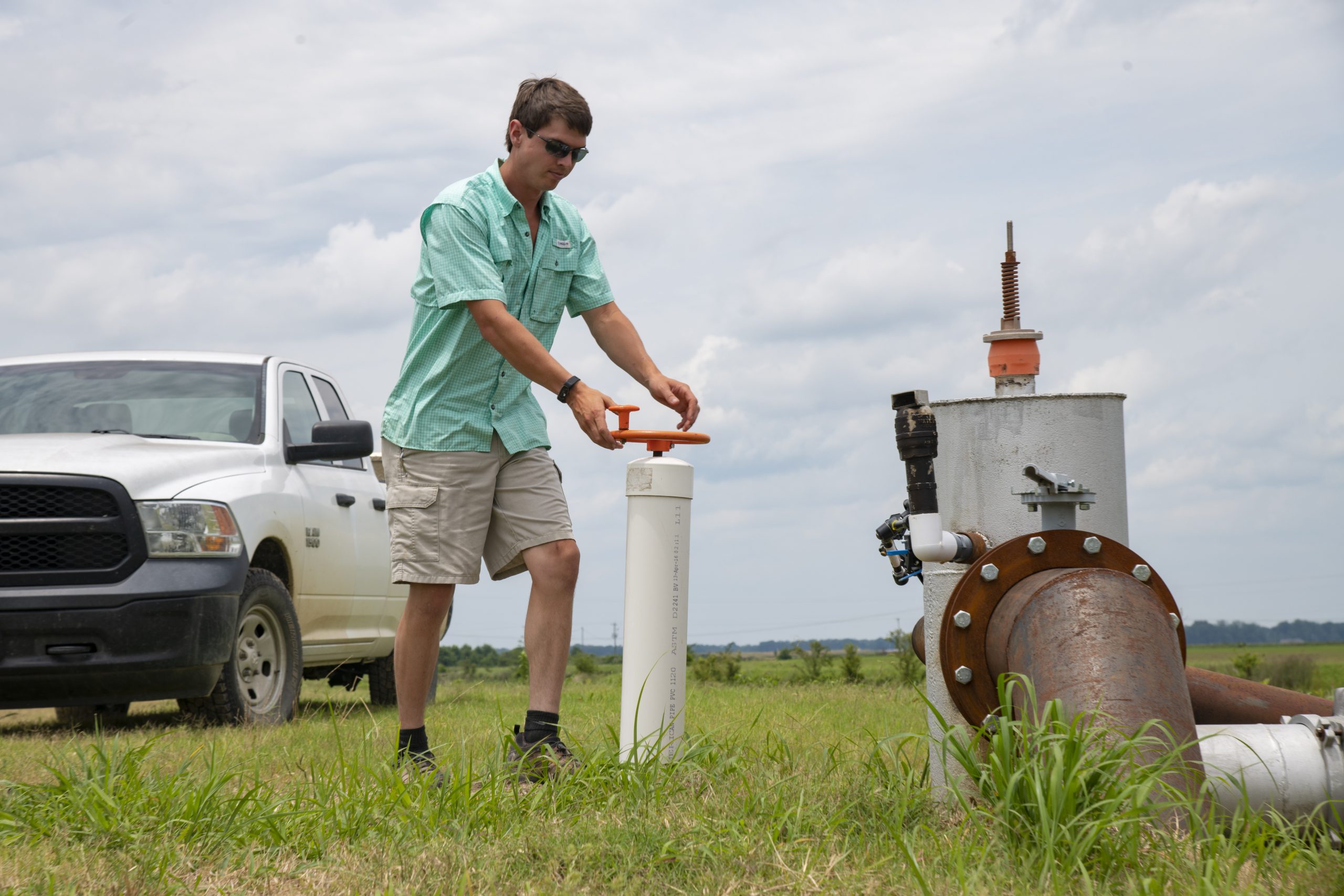
Consider a large-scale almond orchard in a drought-prone region. The goal is to optimize water usage without sacrificing nut size. A standard ML model might suggest increasing water whenever the trees show stress. However, a causal model might reveal that the stress is caused by deep-root oxygen deprivation due to over-irrigation in clay-heavy soil.
“By deploying an energy-aware causal inference model at the edge, the irrigation system identifies that water application is a confounder rather than a cause of health in specific sectors. This reduces water consumption by 22% and battery usage by 15% compared to continuous-sensing models that transmit raw data to the cloud.”
In this scenario, the algorithm performs local causal checks every four hours, only transmitting a “Decision Update” to the central hub if the causal graph structure changes significantly, thereby saving massive amounts of transmission energy.
Common Mistakes
Ignoring Measurement Noise: Agricultural data is notoriously noisy. Attempting to force a causal structure on high-variance data leads to “spurious edges” in your graph, which wastes energy as the model tries to optimize for non-existent causal relationships.
Static Power Budgeting: Failing to account for battery degradation. An algorithm that is energy-efficient on day one may cause a brownout on day 300 as the battery capacity fades. Always implement a dynamic power management layer.
Over-Engineering the Edge Model: Trying to run a full Bayesian Network discovery on an 8-bit microcontroller. Stick to linearized causal approximations for edge hardware and reserve non-linear complexity for backend analytics.
Advanced Tips
Hardware-Aware Pruning: If you are deploying on FPGAs or specialized AI chips, prune your causal graph based on the hardware’s memory architecture. Keep the most frequently accessed causal nodes in the L1 cache to minimize memory fetch energy.
Causal Transfer Learning: Do not train your causal model from scratch on every device. Train a base model on a high-powered server and push the “minimal causal weights” to the edge devices. Use local data only for fine-tuning, which requires significantly fewer cycles than initial discovery.
Predictive Energy Scheduling: Integrate weather forecasting into your algorithm. If the forecast predicts low solar irradiance for the next three days, the algorithm should automatically switch to a “Low-Energy Mode,” increasing the threshold for causal inference and prioritizing only critical health alerts.
Conclusion
Energy-aware causal inference is the bridge between theoretical data science and the practical, harsh realities of agricultural environments. By shifting from resource-heavy, cloud-dependent correlation models to lean, edge-based causal discovery, agritech firms can provide farmers with actionable intelligence that respects the physical constraints of the field.
The future of farming is autonomous, but it must be efficient. By optimizing the way we compute causal relationships, we ensure that our digital tools support the longevity of the land rather than simply consuming power. Start by auditing your current data pipeline for unnecessary transmissions, and move toward decentralized, energy-conscious causal discovery today.



Leave a Reply