
Contents
1. Introduction: Defining the paradigm shift from “launch-to-deploy” to “in-situ fabrication.”
2. Key Concepts: Defining Zero-Shot learning in the context of robotic manufacturing and the unique constraints of the orbital environment (microgravity, vacuum, radiation).
3. Step-by-Step Guide: Implementing the Zero-Shot pipeline for orbital energy systems (e.g., solar arrays, modular batteries).
4. Real-World Applications: Case study on autonomous solar sail fabrication and grid-scale energy storage.
5. Common Mistakes: Addressing sensor drift, thermal expansion errors, and material degradation.
6. Advanced Tips: Integrating Digital Twins and Generative Adversarial Networks (GANs).
7. Conclusion: The future of sustainable space infrastructure.
***
Zero-Shot On-Orbit Manufacturing: Engineering Energy Systems in the Void
Introduction
For decades, the space industry has been bound by the tyranny of the rocket equation: every component must be launched from Earth, folded into a fairing, and deployed with high-risk mechanical hinges. This approach is inherently limited by volume, mass, and the catastrophic risk of deployment failure. The emerging field of Zero-Shot On-Orbit Manufacturing (ZOOM) changes this narrative entirely.
Zero-Shot manufacturing refers to an autonomous system’s ability to fabricate, assemble, or repair complex energy infrastructure—such as solar panels or battery matrices—without having been explicitly trained on the specific geometry or environmental conditions of that exact mission. By utilizing adaptive algorithms, space-based platforms can now “print” or assemble infrastructure on demand, turning raw feedstock into high-efficiency energy systems. This is not just a technological upgrade; it is the prerequisite for long-term human presence in deep space.
Key Concepts
To understand Zero-Shot manufacturing for energy systems, we must look at the intersection of three domains: Generative Design, Robotic Path Planning, and In-Situ Material Characterization.
Zero-Shot Learning (ZSL) in this context allows an AI agent to recognize and manipulate materials or build structures it has never encountered in its training data. In an orbital environment, where teleoperation is hindered by signal latency, the system must possess the intelligence to troubleshoot its own assembly process in real-time.
Orbital Energy Systems present unique challenges. Unlike terrestrial manufacturing, we operate in microgravity, which eliminates the need for structural support against weight but introduces complex dynamics in fluid management and thermal dissipation. A Zero-Shot algorithm must account for the lack of convection, meaning energy systems must be designed for radiative cooling and vacuum-stable material deposition.
Step-by-Step Guide: Implementing the Zero-Shot Pipeline
Deploying an autonomous manufacturing agent for orbital energy systems requires a robust, modular pipeline. Follow these steps to architect a resilient system:
- Environmental Modeling: Establish a real-time digital twin of the orbital craft. The algorithm must ingest sensor data regarding current solar flux, orbital velocity, and thermal cycling to determine the “stress state” of the build site.
- Feature Extraction & Semantic Mapping: The system identifies raw feedstock (e.g., polymer-based photovoltaic inks or metallic struts) and maps their properties against the design requirements of the energy array.
- Generative Path Planning: Instead of executing a pre-programmed path, the AI generates a toolpath based on the current load-bearing requirements and the available energy budget of the satellite.
- Adaptive Deposition: The system monitors the build quality via computer vision. If the material flow deviates due to radiation-induced sensor noise, the algorithm executes a “zero-shot correction,” adjusting the deposition rate without human intervention.
- Verification and Validation: The system performs an autonomous diagnostic check on the newly fabricated energy component, testing electrical conductivity and mechanical stress before integrating it into the main power bus.
Examples and Real-World Applications
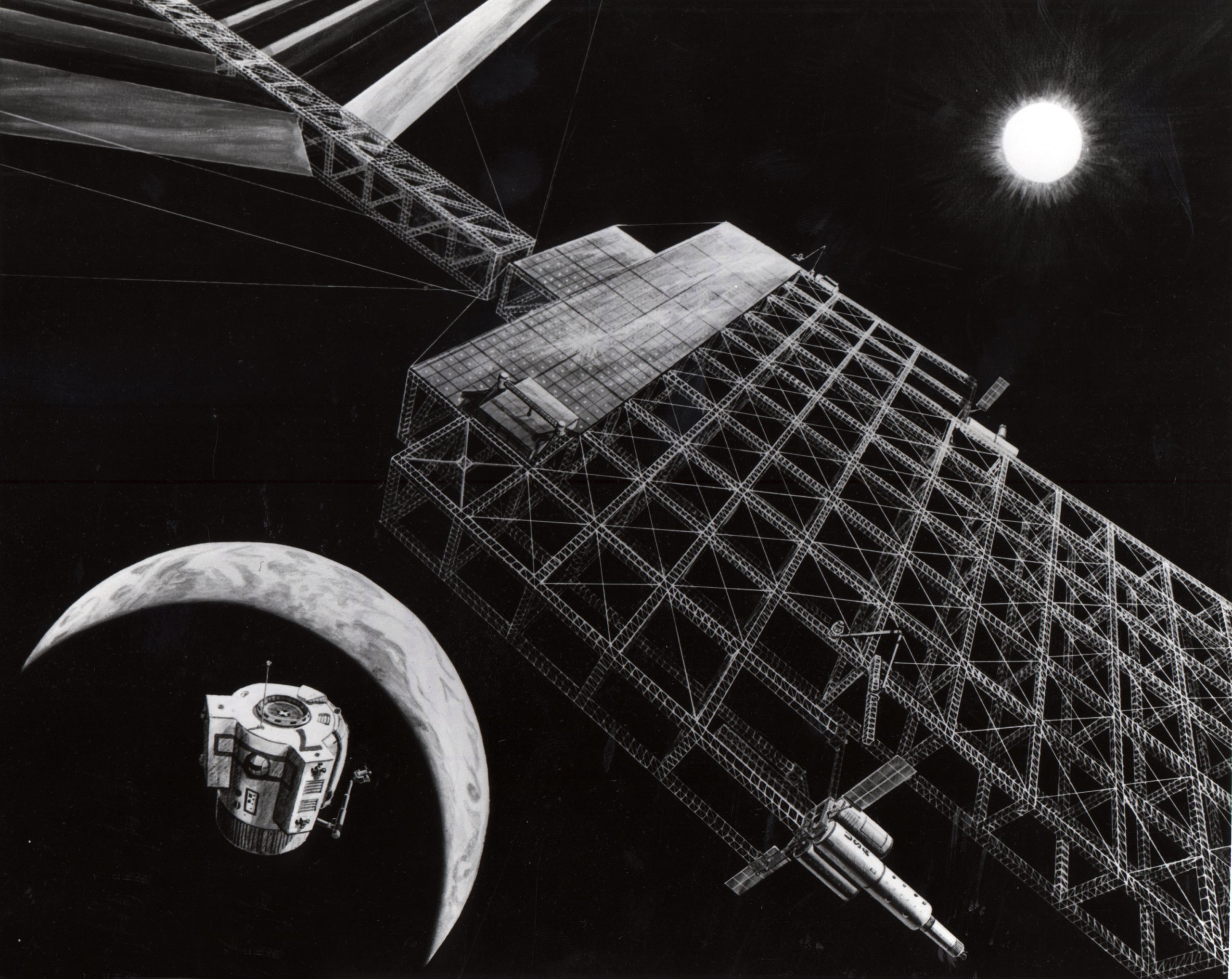
The most immediate application of Zero-Shot manufacturing is the Autonomous Solar Array Expansion. Current satellites are limited by the size of the solar wings they launch with. A Zero-Shot system can utilize additive manufacturing to extend these wings over time, increasing the satellite’s power output as the mission demands grow.
“The ability to print electronics directly onto structural substrates allows for the creation of ‘smart skins’—where the spacecraft’s hull itself becomes an energy-harvesting, energy-storing device.”
Another application involves In-Situ Battery Fabrication. By printing thin-film solid-state batteries directly onto the chassis, manufacturers can optimize energy density based on the specific orbital trajectory, ensuring that power storage is distributed exactly where it is needed to balance the thermal load of the craft.
Common Mistakes
When engineering for Zero-Shot orbital manufacturing, technical teams often fall into traps that can lead to mission failure:
- Ignoring Thermal Drift: In space, temperatures fluctuate by hundreds of degrees. Algorithms that do not account for the expansion and contraction of the “build plate” will produce components that fail upon cooling.
- Underestimating Radiation Interference: High-energy particles can flip bits in the AI’s neural network. If your algorithm lacks robust error correction, it may “hallucinate” a build path that leads to structural instability.
- Over-Reliance on Vision Systems: Relying solely on optical cameras for quality control is a mistake. In the harsh lighting of space, high-contrast shadows can mask defects. Multi-modal sensing (ultrasonic, thermal, and visual) is mandatory.
Advanced Tips
To push your Zero-Shot algorithms to the next level, consider the following strategies:
Incorporate Reinforcement Learning (RL) with Sim-to-Real Transfer: Use high-fidelity simulations to train your model in “worst-case” orbital scenarios. By exposing the agent to millions of simulated failures, it learns the underlying physics of material behavior, allowing it to adapt to novel situations without further training.
Dynamic Resource Allocation: Optimize your algorithm to prioritize energy-intensive builds during periods of high solar exposure. By syncing the manufacturing cycle with the orbital energy harvest cycle, you create a self-sustaining system that never drains its primary batteries.
Digital Twin Synchronization: Maintain a constant feedback loop between the orbital hardware and the digital model. If the physical component shows a micro-fracture, the digital twin should immediately re-calculate the structural integrity of the rest of the array and suggest a reinforcing print path.
Conclusion
Zero-Shot on-orbit manufacturing represents a fundamental shift in how we approach space exploration. By moving away from rigid, pre-fabricated designs toward autonomous, adaptive fabrication, we unlock the ability to build massive infrastructure in the vacuum of space. The challenges—radiation, thermal cycling, and complexity—are significant, but they are solvable through the implementation of robust, AI-driven manufacturing pipelines. As we look toward lunar bases and interplanetary logistics, the ability to “print” our energy systems on-demand will be the difference between a mission that survives and a mission that thrives.


Leave a Reply