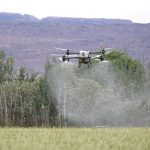
Autonomous Precision Agriculture: A Blueprint for Farm Systems
Learn to implement autonomous precision agriculture (APA) with this guide on sensor fusion, interoperability standards, and edge intelligence for modern farming.
Contents
1. Introduction: Defining the shift from basic automation to autonomous precision agriculture (APA) in complex, variable environments.
2. Key Concepts: Cyber-physical systems (CPS), sensor fusion, and decision-support algorithms.
3. Step-by-Step Guide: Implementing an interoperable APA framework.
4. Examples/Case Studies: Swarm robotics in viticulture and AI-driven variable rate application (VRA).
5. Common Mistakes: Data silos, hardware-software mismatch, and ignoring interoperability standards (ISO 11783).
6. Advanced Tips: Leveraging edge computing and digital twins for predictive maintenance.
7. Conclusion: The future of autonomous scalability in global food security.
—
The Blueprint for Autonomous Precision Agriculture in Complex Systems
Introduction
Modern agriculture is undergoing a fundamental transformation. We are moving beyond the era of simple tractor guidance and basic GPS tracking into the realm of Autonomous Precision Agriculture (APA). In complex, non-linear environments—where soil chemistry, micro-climates, and crop health fluctuate within meters—the challenge is no longer just “doing things faster,” but “doing the right thing at the right place at the right time.”
For professionals managing large-scale operations, the complexity of these systems often acts as a barrier. Integrating autonomous fleets, sensor networks, and decision-support software requires more than just capital; it requires a standardized, systemic approach. This article explores how to architect autonomous systems that don’t just function in isolation but thrive as an interconnected, intelligent ecosystem.
Key Concepts
To understand the autonomous farm, we must first define the architecture of its components. At the core of APA lies the Cyber-Physical System (CPS). This is the bridge between the digital world (software, AI, data) and the physical world (soil, water, machinery).
Sensor Fusion: Unlike traditional automation, APA relies on multi-modal data. By combining satellite imagery, ground-based IoT soil sensors, and real-time machine vision, a system can make decisions that a human operator might miss, such as detecting localized nutrient deficiencies before they manifest as leaf discoloration.
Interoperability Standards (ISO 11783/ISOBUS): For autonomous fleets to work together, they must “speak” the same language. Standards ensure that a sprayer from one manufacturer can receive telemetry data from a tractor of another, creating a seamless data pipeline.
Edge Intelligence: In remote fields with limited connectivity, processing data in the cloud is often too slow. Edge computing brings the AI to the machine, allowing for millisecond-level decision-making—essential for autonomous navigation and precision spraying.
Step-by-Step Guide: Implementing an APA Framework
Transitioning to an autonomous precision model is a process of architectural integration. Follow this framework to ensure your system is scalable and resilient.
Establish a Unified Data Architecture: Before deploying hardware, you must centralize your data. Use an API-first approach to ensure that your Farm Management Information System (FMIS) can ingest data from disparate hardware sensors.
Standardize Communication Protocols: Adopt the ISOBUS standard across all equipment to eliminate proprietary “walled gardens.” This ensures that your fleet remains vendor-agnostic.
Deploy Sensor-to-Actuator Loops: Configure your machinery so that sensor inputs (e.g., nitrogen levels) trigger automatic actuator adjustments (e.g., variable rate fertilizer application) without human intervention.
Implement Digital Twin Validation: Create a virtual replica of your farming operation. Run your autonomous algorithms through a digital twin simulation to stress-test your decision-making logic against various weather and soil scenarios before deploying to the field.
Establish Fail-Safe Protocols: In autonomous systems, safety is the primary constraint. Implement geofencing, emergency stop triggers, and “human-in-the-loop” oversight for high-risk operations.
Examples and Case Studies
Case Study 1: Swarm Robotics in Specialty Crops
In high-value viticulture, large tractors are often too cumbersome and cause soil compaction. A vineyard in California replaced traditional equipment with a fleet of small, autonomous electric robots. Using visual odometry and LiDAR, these robots navigate narrow vine rows autonomously to perform mechanical weeding. Because the systems are interconnected, the robots share spatial data, ensuring that no square inch of the vineyard is missed or double-treated.
Case Study 2: AI-Driven Variable Rate Application (VRA)
A large-scale grain operation in the Midwest utilized drone-based multi-spectral imaging to identify crop stress. This data was fed into an autonomous liquid applicator. Instead of a uniform application, the system adjusted the dosage of herbicides based on the density of weed patches identified by the AI. This resulted in a 30% reduction in chemical usage and a 10% increase in harvest yield, proving that precision is the most effective tool for sustainability.
Common Mistakes
The “Data Silo” Trap: Many managers collect massive amounts of data but fail to integrate it. If your harvester cannot “talk” to your soil-mapping software, your automation is incomplete.
Ignoring Latency: Relying on high-latency cellular connections for real-time autonomous navigation can lead to accidents. Always prioritize on-board, low-latency processing.
Hardware-Software Mismatch: Purchasing expensive autonomous hardware without a robust software backend is a waste of capital. Ensure your software roadmap is as long-term as your machinery lifecycle.
Over-reliance on Automation: Autonomous systems are tools, not replacements for agricultural expertise. Failing to calibrate sensors regularly will result in “garbage in, garbage out” decision-making.
Advanced Tips
To take your autonomous system to the next level, focus on Predictive Maintenance. By analyzing vibration, heat, and hydraulic pressure data from your autonomous fleet, you can predict component failure before it happens. This “proactive uptime” strategy is the hallmark of sophisticated agricultural enterprises.
Additionally, look into Federated Learning. This allows your autonomous machines to learn from each other’s experiences without sharing sensitive raw data. For example, if one robot encounters a localized pest outbreak, it can update the “knowledge” of the entire fleet, improving the collective response time across the entire farm.
The goal of autonomous precision agriculture is not to remove the farmer from the equation, but to empower the farmer with an intelligent, scalable, and responsive system that operates with a precision impossible for human hands alone.
Conclusion
Autonomous precision agriculture is no longer a futuristic concept; it is a current necessity for competitive, sustainable farming. By focusing on standardized protocols, robust data integration, and edge intelligence, you can transform your operation from a collection of machines into a cohesive, autonomous system.
Start small, prioritize interoperability, and treat your farm as a complex, dynamic dataset. Those who master the integration of these technologies today will define the standards for global food production tomorrow. The shift toward autonomy is not just about technology—it is about achieving a new level of environmental stewardship and operational efficiency.
Discover how Topology-Aware Neuromorphic Chips (TANC) are revolutionizing geoengineering by enabling real-time, high-dimensional climate modeling and control.
Introduction For decades, the fields of nanotechnology and neuroscience have operated in parallel silos. Nanotechnology has focused on the manipulation…
Outline Introduction: The intersection of heritage and innovation. Why “technological neutrality” is a myth in cultural preservation. Key Concepts: Defining…
Ethical Certifications for Religious Software Providers: Incentivizing Principled Development Introduction The digital transformation of faith-based communities has ushered in a…