Entropy Metrics: Prevent Power Solidification in Organizations
— by
Steven Haynes
Contents
1. Introduction: Defining the “Entropy Metric” approach to decentralized power structures.
2. Key Concepts: Understanding organizational entropy, power solidification, and negative feedback loops.
3. Step-by-Step Guide: Implementing entropy-based monitoring in teams and systems.
4. Examples/Case Studies: Decentralized Autonomous Organizations (DAOs) and Agile scaling.
5. Common Mistakes: Misinterpreting noise as entropy and over-correcting.
6. Advanced Tips: Leveraging algorithmic transparency and rotating authority.
7. Conclusion: The shift from control-based management to flow-based governance.
***
Entropy Metrics: The Science of Preventing Power Solidification
Introduction
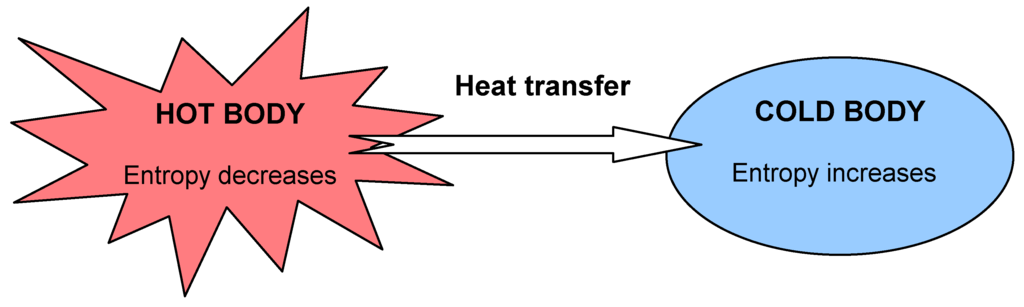
Every system, whether a corporation, a government, or a software architecture, faces a silent, inevitable force: the accumulation of power. Over time, influence tends to pool around specific nodes—individuals, departments, or protocols—creating bottlenecks that stifle innovation and breed stagnation. This is not just a management failure; it is a physical reality analogous to thermodynamic entropy.
To remain agile and sustainable, modern organizations are turning to “entropy metrics.” These are not merely productivity KPIs; they are diagnostic tools designed to detect the early crystallization of power before it solidifies into an immovable hierarchy. By measuring the distribution of decision-making, information flow, and resource access, leaders can effectively “disperse” power concentrations, keeping the system dynamic and resilient.
Key Concepts
In physics, entropy is the measure of disorder or randomness. In organizational theory, we flip this definition. High organizational entropy represents a system where information and agency are widely distributed, allowing for rapid adaptation. Low entropy—or “solidification”—occurs when power is centralized, creating predictable but brittle structures.
Power Solidification is the process by which a node in the network gains disproportionate control over the system’s output. When this happens, the system loses its ability to process diverse inputs, as all decisions begin to mirror the biases and limitations of the central node.
Entropy Metrics function by monitoring three primary vectors:
Decision Velocity: How many layers of approval are required for a standard action? A decrease in velocity often signals that power has moved upward.
Information Asymmetry: The degree to which critical data is restricted to a small circle. High asymmetry is a precursor to power consolidation.
Dependency Mapping: Identifying if specific projects or processes rely solely on a single point of failure (a “key person” or “gatekeeper”).
To identify and disperse power concentrations, follow this structured approach to maintain a decentralized, high-entropy state.
Audit Communication Hubs: Analyze your messaging platforms and email logs. Identify “super-nodes”—individuals who are cc’d on every thread or whose approval is sought for even minor tasks. This is your primary entropy metric.
Map Decision-Making Autonomy: Create a “Delegation Matrix.” If your team consistently waits for top-down validation on low-risk decisions, your system is solidifying. Empower individual contributors to make decisions within defined “safety boundaries.”
Introduce Randomization Protocols: Institutionalize the rotation of responsibilities. By periodically shifting who manages specific projects or leads meetings, you prevent the formation of “expert silos” where one person becomes the sole authority on a topic.
Audit Information Silos: Use transparent documentation tools. If information is stored in private direct messages rather than public knowledge bases, you are creating centralized power pockets. Move all decision-making context to public, searchable channels.
Apply Dispersal Triggers: When a metric shows a high concentration (e.g., one person holds over 70% of the decision-making power for a project), trigger a mandatory dispersal event. This might involve splitting the project into smaller, autonomous streams or assigning “deputy” roles to distribute the workload.
Examples and Case Studies
The most successful implementations of entropy metrics are found in decentralized autonomous organizations (DAOs) and high-scale tech companies.
“The goal is not to eliminate leadership, but to make the leadership position as fluid as possible, preventing the calcification of institutional authority.”
Case Study: Decentralized Engineering Teams
A mid-sized software firm noticed that all database architecture decisions were flowing through a single Lead Architect. By tracking “dependency metrics,” they realized that 80% of the engineering team was blocked by this one individual. They implemented an entropy-based intervention: the “Architectural Guild.” Instead of one lead, they rotated the responsibility among four senior engineers. The result was a 40% increase in deployment frequency and a significant rise in innovation, as different perspectives were applied to the system architecture.
Case Study: Open-Source Governance
Many successful open-source projects use “maintainer rotation” as an entropy metric. By limiting the duration a maintainer can hold “write access” to the primary codebase, they ensure that power is cycled. This prevents the project from becoming a reflection of one person’s stylistic preferences and ensures the code remains robust and adaptable to various community needs.
Common Mistakes
Attempting to manage organizational entropy is a delicate process. Avoid these pitfalls to ensure your system remains effective.
Confusing Noise with Entropy: Just because a team is chaotic does not mean it is decentralized. True entropy is about distributed agency, not lack of coordination. Ensure you have clear, shared goals while maintaining distributed execution.
Over-Correcting: If you disperse power too aggressively, you risk “decision paralysis.” Ensure that individuals have the training and context to handle the autonomy they are given.
Ignoring Informal Hierarchies: Entropy metrics often measure formal structures, but power often solidifies in informal relationships. Watch for “shadow leaders”—people who hold no official title but control all outcomes.
Treating it as a One-Time Fix: Entropy is a constant force. If you stop measuring, the system will naturally revert to centralization. This must be a permanent part of your organizational hygiene.
Advanced Tips
For those looking to deepen their application of these metrics, consider the following advanced strategies:
Algorithmic Transparency: Use tools that visualize organizational networks. By seeing a visual map of who talks to whom, you can immediately identify clusters where power is pooling. These visualizations act as a “heatmap” for potential bottlenecks.
The “Sunset” Rule: Implement a rule where every meeting, process, or committee must be justified every six months. If it cannot prove its continued value, it is sunsetted. This prevents the accumulation of “process entropy,” where legacy power structures exist simply because they have always existed.
Incentivize Knowledge Transfer: Make the dispersal of power a key performance indicator (KPI) for managers. If a manager’s team cannot function when they are on vacation, that manager is failing the entropy metric. Reward those who effectively “de-risk” the organization by training their reports to replace them.
Conclusion
The solidification of power is the natural enemy of progress. When systems become too rigid, they lose the ability to learn, pivot, and grow. By adopting entropy metrics, you are not just managing a team or a project; you are actively maintaining the health of a complex system.
The core takeaway is simple: monitor the flow of influence, identify the nodes where power is crystallizing, and proactively disperse that authority. When you prioritize the distribution of agency over the consolidation of control, you create an organization that is not only more efficient but inherently more adaptable to the unpredictable challenges of the future.




Leave a Reply