
Visualizing Neural Networks: How Class Activation Mapping (CAM) Explains Model Decisions
Introduction
In the field of deep learning, neural networks are often criticized for being “black boxes.” We feed an image into a convolutional neural network (CNN), and it outputs a prediction: “This is a Golden Retriever.” But how does the model know? Is it looking at the dog’s ears, the texture of the fur, or perhaps the grass in the background? Understanding the “why” behind these predictions is critical for building trust, debugging models, and ensuring fairness.
Class Activation Mapping (CAM) emerged as a groundbreaking technique to solve this visibility problem. Unlike post-hoc interpretation methods that might require complex training or surrogate models, CAM allows us to peer directly into the discriminative regions of an image that triggered a specific classification. Best of all, it achieves this without requiring a full model retraining, making it an essential tool in every computer vision practitioner’s toolkit.
Key Concepts
To understand CAM, you must first understand the architecture of a standard CNN. Typically, a CNN consists of multiple convolutional layers followed by a Global Average Pooling (GAP) layer and a final Softmax output layer. The GAP layer is the secret ingredient of CAM.
Global Average Pooling (GAP): In traditional architectures, developers often used fully connected layers at the end of the network. These layers flatten spatial information, destroying the relationship between the pixels and the feature maps. By replacing these with GAP, we maintain the spatial structure of the features while reducing the dimensionality. This creates a direct link between the feature maps of the final convolutional layer and the output classes.
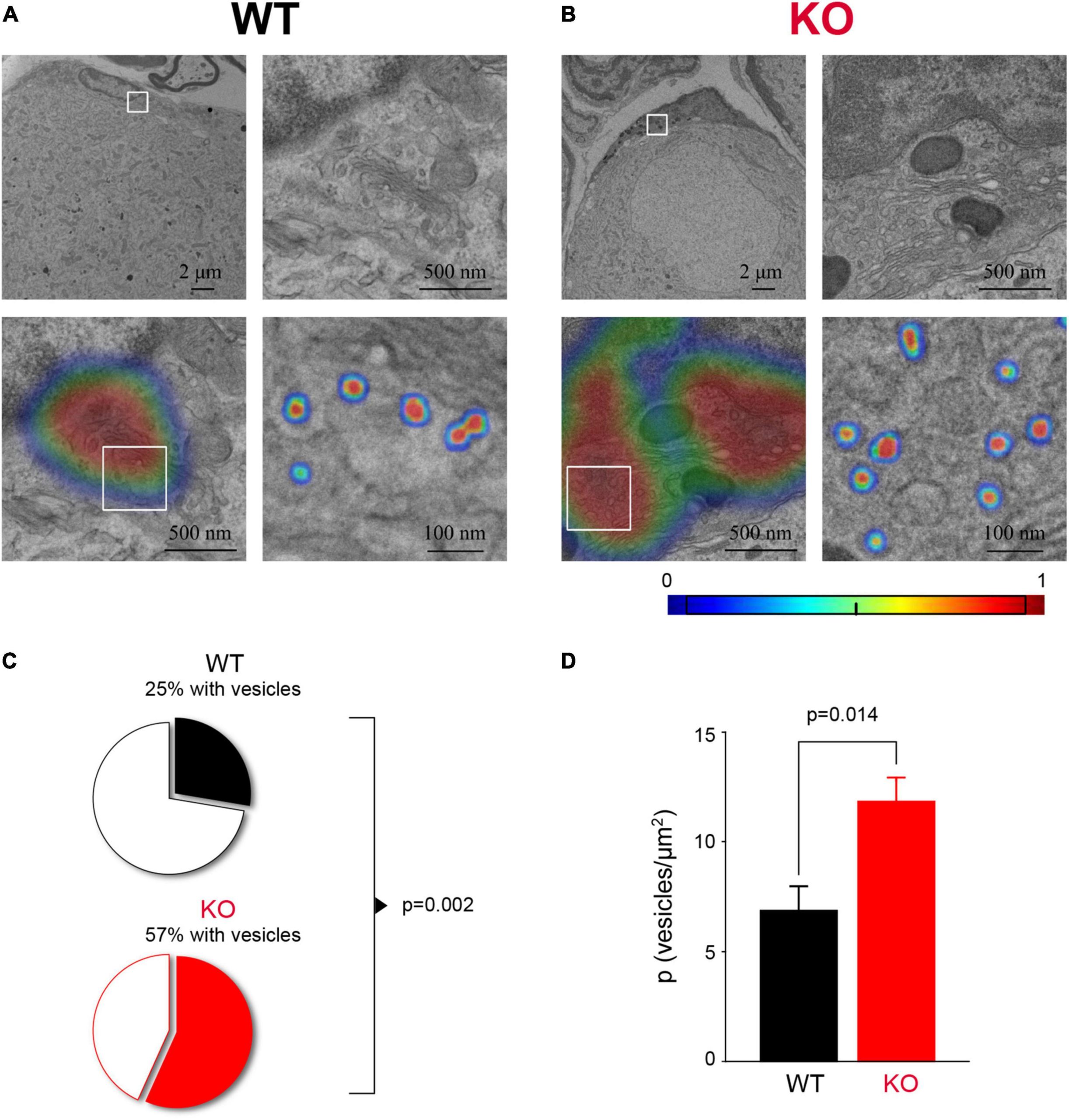
The Discriminative Map: The CAM technique generates a heatmap that highlights the specific areas of the input image that contributed most significantly to the final classification score. By taking the weighted sum of the feature maps, we can project the internal knowledge of the model back onto the original image space, creating a visual representation of the model’s focus.
Step-by-Step Guide: Implementing CAM
You can apply CAM to an existing, pre-trained network with minimal code modifications. Here is the logical workflow to generate these heatmaps:
- Modify the Architecture: Ensure your network utilizes a Global Average Pooling layer before the final Softmax layer. If your pre-trained model uses fully connected layers, you may need to perform a “surgical” adjustment by removing the dense layers and retraining only the final weights (this is often called “fine-tuning,” but it is significantly faster than training from scratch).
- Extract Feature Maps: Perform a forward pass of your target image through the modified model. Instead of looking only at the output, you must capture the output of the final convolutional layer.
- Identify Class Weights: Retrieve the weights of the fully connected layer that connects the GAP output to your specific target class (e.g., the output node for “cat”).
- Compute the Weighted Sum: Multiply each feature map by its corresponding weight for the target class. Sum these results together.
- Upscale and Overlay: The resulting map will be smaller than your original image (due to the pooling layers). Upscale this map to match the input image dimensions using bilinear interpolation and overlay it as a heatmap.
Examples and Real-World Applications
The utility of CAM extends far beyond academic research. It provides actionable insights in high-stakes industries where accountability is paramount.
“The ability to visualize what a model ‘sees’ is not just for debugging; it is for validation. If a model detects pneumonia by looking at a hospital-provided metadata tag on the X-ray rather than the lungs, CAM will reveal this catastrophic flaw.”
- Healthcare Diagnostics: Radiologists use CAM to verify that AI models are focusing on anatomical abnormalities rather than noise or artifacts in X-ray or MRI scans. If a model identifies a fracture, it must highlight the bone, not the background of the imaging room.
- Autonomous Vehicles: When a car brakes, it is essential to know if it reacted to a pedestrian or a billboard. CAM allows engineers to audit the decision-making process to ensure safety-critical decisions are based on the correct environmental features.
- Quality Control in Manufacturing: In industrial settings, cameras identify defects in parts. CAM helps engineers understand if the model is focusing on legitimate structural defects or merely lighting variations, allowing for better training data curation.
Common Mistakes
- Ignoring Spatial Resolution: Because of pooling layers, the resulting heatmap is significantly downsampled. If you do not upscale it properly, or if you use an architecture with too much downsampling, the heatmap will appear as a blurry, unhelpful blob.
- Misinterpreting High Activation: Just because a region is “hot” does not mean the model is “correct.” A model might correctly classify a scene as a “beach” while focusing entirely on the sky instead of the sand. Always check if the “discriminative” region aligns with human logic.
- Relying on Outdated Architectures: CAM requires a GAP layer. If you are using a model that uses flattened, dense layers at the end, you cannot use original CAM. You might need to look toward Grad-CAM, an extension that computes gradients to work with non-GAP architectures.
Advanced Tips
Once you are comfortable with basic CAM, consider these professional-grade refinements to get deeper insights into your models.
Transition to Grad-CAM: If you cannot modify your model architecture to include a GAP layer, move to Grad-CAM. It uses the gradients of the target class flowing into the final convolutional layer to produce a localization map. It is more versatile and compatible with almost any CNN architecture.
Multi-class Visualization: Do not just visualize the top prediction. Generate CAM heatmaps for the top three predictions. This reveals what the model thinks an image is “not.” For example, if an image of a bus is classified as a “bus,” but the CAM for “car” also shows high activation on the bus’s wheels, you know your model is confusing similar vehicle types based on localized features.
Clean Your Data: If your CAM output consistently focuses on irrelevant regions (like the corners of the image), it is a red flag that your dataset contains “shortcut learning.” Use the insights from CAM to remove these artifacts from your training data, effectively retraining the model to look at the relevant features.
Conclusion
Class Activation Mapping represents a bridge between deep learning performance and human interpretability. By highlighting exactly where a model looks, practitioners can gain confidence in their systems, identify biases, and improve accuracy without the resource-heavy burden of starting from scratch. Whether you are debugging a healthcare diagnostic tool or fine-tuning a visual classifier, CAM is an essential lens through which to view your model’s intelligence. Start by inspecting your model’s focus today; you might be surprised at what you find lurking in those feature maps.
Further Reading

Leave a Reply