
Data Minimization: Scaling AI Responsibly by Ingesting Less
Introduction
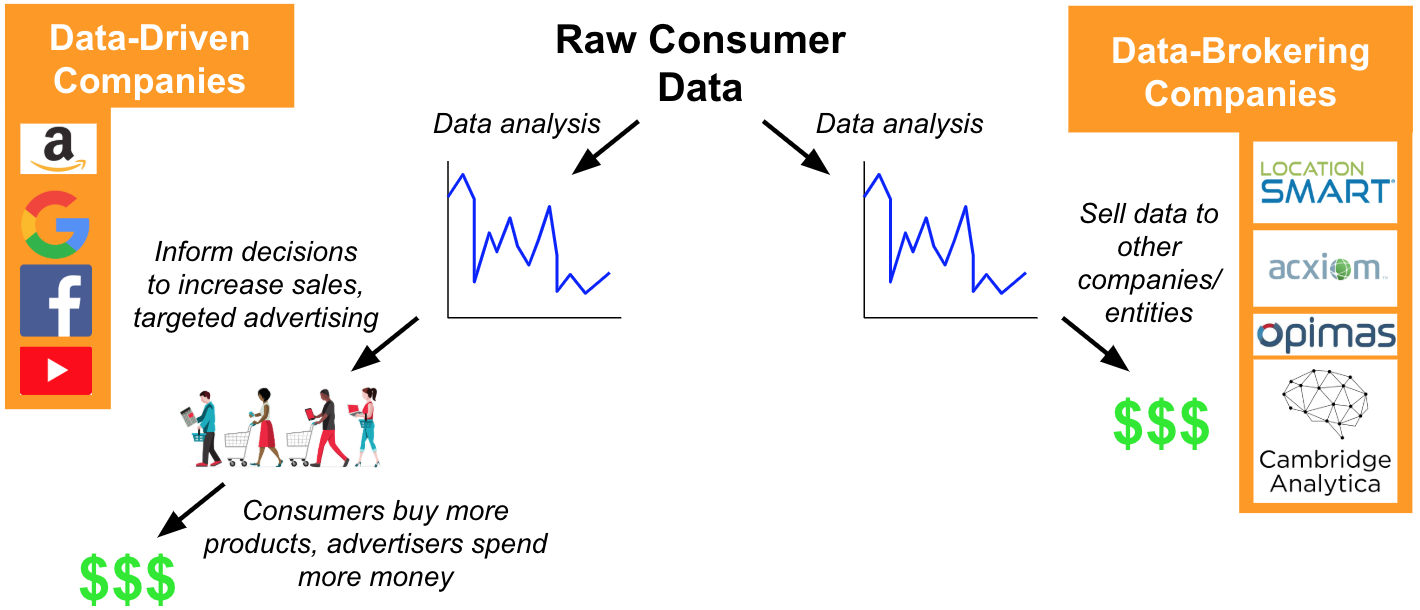
In the gold rush of artificial intelligence, the prevailing mantra has long been “more is better.” Companies have raced to scrape the internet and aggregate massive data lakes, assuming that bigger datasets inevitably lead to smarter models. However, this “collect everything” mentality is becoming a significant liability. As regulatory scrutiny over data privacy intensifies and the risks of data breaches grow, the practice of data minimization has emerged as the gold standard for responsible AI development.
Data minimization is not just a compliance checkbox for GDPR or CCPA; it is a strategic approach to architecture. By intentionally limiting the personal information (PI) ingested by models, organizations can reduce security attack surfaces, improve model interpretability, and build greater trust with users. This article explores how to integrate data minimization into your AI lifecycle without sacrificing model performance.
Key Concepts
At its core, data minimization is the practice of limiting the collection, storage, and processing of personal data to only what is strictly necessary to achieve a specific, stated purpose. In the context of machine learning, this means transitioning from “data hoarding” to “purpose-driven ingestion.”
There are three primary pillars to this concept:
- Purpose Limitation: If you cannot explain exactly why a specific data point is necessary for the model’s prediction, you should not ingest it.
- Proportionality: Ensuring the amount of data captured is proportional to the value the model provides to the user.
- Data Lifecycle Management: Establishing automated processes to delete or anonymize training data once it is no longer required for model refinement.
The misconception is that limiting data leads to “dumber” models. In reality, models often struggle with “noise”—irrelevant data that introduces bias or complicates training. By pruning unnecessary personal identifiers, you often create cleaner, more efficient datasets that converge faster and perform more reliably.
Step-by-Step Guide: Implementing Data Minimization
- Conduct a Data Audit: Map your current data pipeline. Identify which attributes are truly personal identifiers (names, addresses, biometric data, precise location) and separate them from functional variables (behavioral patterns, transaction categories).
- Implement Input Filtering: Build a sanitization layer between your raw data sources and your model training environment. This layer should automatically strip PII (Personally Identifiable Information) before it hits the storage bucket.
- Utilize Synthetic Data: Replace sensitive, real-world user data with statistically equivalent synthetic datasets. This allows you to train and test models without ever exposing raw personal info.
- Deploy Differential Privacy: Use mathematical techniques to inject “noise” into the training set. This ensures that the model learns global patterns without being able to “memorize” the specific data points of any single individual.
- Enforce Retention Policies: Implement automated deletion scripts. If a model has reached a stable training state, ensure the original raw training set is moved to cold storage or destroyed according to a strict timeline.
Examples and Case Studies
Consider a financial services firm building a credit-risk assessment model. Traditionally, this firm might ingest an applicant’s full name, social security number, and precise home address. Under a data minimization framework, the engineers realize the model only requires three data points: debt-to-income ratio, credit history score, and employment duration.
By stripping the name and precise location, the firm effectively eliminates the risk of an identity theft disaster if the training database were ever breached. The model remains just as accurate, but the risk profile of the organization drops significantly.
Another example is found in the healthcare sector. Researchers training diagnostic models on MRI scans often strip metadata containing patient IDs and dates of birth. By training models strictly on the visual information (pixels) and removing the PII headers, they comply with HIPAA regulations while ensuring that the model learns to identify pathology rather than patient demographics, which prevents unintended bias.
Common Mistakes
- Confusing Anonymization with Pseudonymization: Many companies believe that replacing a name with an ID number makes data “anonymous.” However, if the mapping table still exists, that data is still personal info. True minimization requires irreversible destruction of the link to the identity.
- “Just in Case” Storage: The most dangerous phrase in data engineering is “let’s save it, we might need it for a future model.” This creates long-term liability for data that often becomes outdated or redundant.
- Overlooking Proxy Variables: Sometimes, even when you remove names, you leave behind variables that act as proxies for identity (e.g., zip codes or specific hardware IDs). If enough of these proxies are combined, the individual can be “re-identified,” rendering the minimization effort void.
- Neglecting Model Monitoring: Data minimization is not a one-time setup. If the model drifts, you may be tempted to ingest more data to “fix” it. Always re-evaluate whether new data is necessary before adding it to the ingestion pipeline.
Advanced Tips
To truly master data minimization, move beyond simple filtering and embrace Federated Learning. In a federated model, the AI training happens locally on the user’s device. Instead of sending personal data to a central server, the device only sends “model updates” (mathematical weights). The raw data never leaves the user’s possession, providing the ultimate form of data minimization.
Furthermore, invest in Data Lineage Tools. These tools allow you to track the exact journey of a data point from its source to its integration into a model. If you discover a privacy issue, lineage tools allow you to surgically remove that specific data point from your training set without having to retrain the entire model from scratch.
Finally, always perform Privacy Impact Assessments (PIAs) before starting a new model project. Treat privacy like you treat performance: define your “privacy budget” at the start, and ensure your engineering team respects that budget as strictly as they respect your cloud compute costs.
Conclusion
Data minimization is a paradigm shift that turns privacy from a restrictive burden into a competitive advantage. In an era where data leaks can destroy corporate reputations overnight, the decision to ingest less is an act of engineering excellence. By focusing on quality over quantity, using privacy-preserving techniques like differential privacy, and strictly enforcing retention policies, you create more resilient models and more trust-based relationships with your customers.
Start today by reviewing your ingestion pipeline. Ask yourself: “What is the absolute minimum amount of information required for this model to perform its intended task?” You will likely find that your models perform better, your security team sleeps easier, and your commitment to user privacy becomes a defining feature of your brand.





Leave a Reply