Incident response teams must be established to address unexpected model failure or harmful output.
— by
Steven Haynes
Contents
1. Introduction: The reality of AI deployment, the unpredictability of LLMs, and the necessity of reactive human oversight.
2. Key Concepts: Defining an AI Incident Response Team (AIRT), the shift from “static safety” to “operational resilience,” and identifying the “Failure Threshold.”
3. Step-by-Step Guide: How to build, staff, and activate an AIRT.
4. Examples and Case Studies: Hypothetical real-world scenarios (e.g., model drift in financial services, prompt injection in customer service bots).
5. Common Mistakes: Over-reliance on automation, silos between technical/legal teams, and lack of “kill switch” protocols.
6. Advanced Tips: Integrating red-teaming, automated telemetry, and post-mortem continuous learning.
7. Conclusion: Final thoughts on moving from reactive firefighting to proactive governance.
***
The Critical Need for AI Incident Response Teams: Safeguarding Against Model Failure
Introduction
The rapid integration of Large Language Models (LLMs) into business operations has outpaced the development of traditional safety frameworks. Organizations are moving fast, deploying autonomous systems to handle customer interactions, financial data analysis, and technical documentation. However, these models are probabilistic, not deterministic. They can suffer from “hallucinations,” drift, or become targets for sophisticated adversarial attacks.
When a model fails—whether it outputs discriminatory content, leaks proprietary data, or provides dangerous financial advice—the damage is often immediate and reputationally catastrophic. Relying solely on pre-deployment testing is no longer sufficient. To operate AI at scale, organizations must move beyond the “set it and forget it” mindset and establish dedicated Incident Response Teams (AIRTs) equipped to handle the unexpected in real-time.
Key Concepts
An AI Incident Response Team (AIRT) is a cross-functional group responsible for the rapid containment, remediation, and root-cause analysis of AI-related failures. Unlike traditional IT incident response, which focuses on server downtime or security breaches, an AIRT must address the semantic and behavioral failures of a model.
Operational Resilience is the core objective. This assumes that failures are inevitable. Instead of trying to create a “perfect” model that never errs—a mathematical impossibility with current technology—the goal is to build a system that can identify when a failure has occurred, neutralize the impact, and restore trust without compromising long-term innovation.
The Failure Threshold is the defined metric at which the AIRT is triggered. This could be a sudden spike in negative sentiment, a flagged PII (Personally Identifiable Information) leak, or a deviation from expected factual accuracy beyond a specific confidence score.
Step-by-Step Guide: Establishing an AIRT
Building an incident response structure for AI requires a blend of traditional cybersecurity practices and linguistic oversight. Follow these steps to build your defense mechanism:
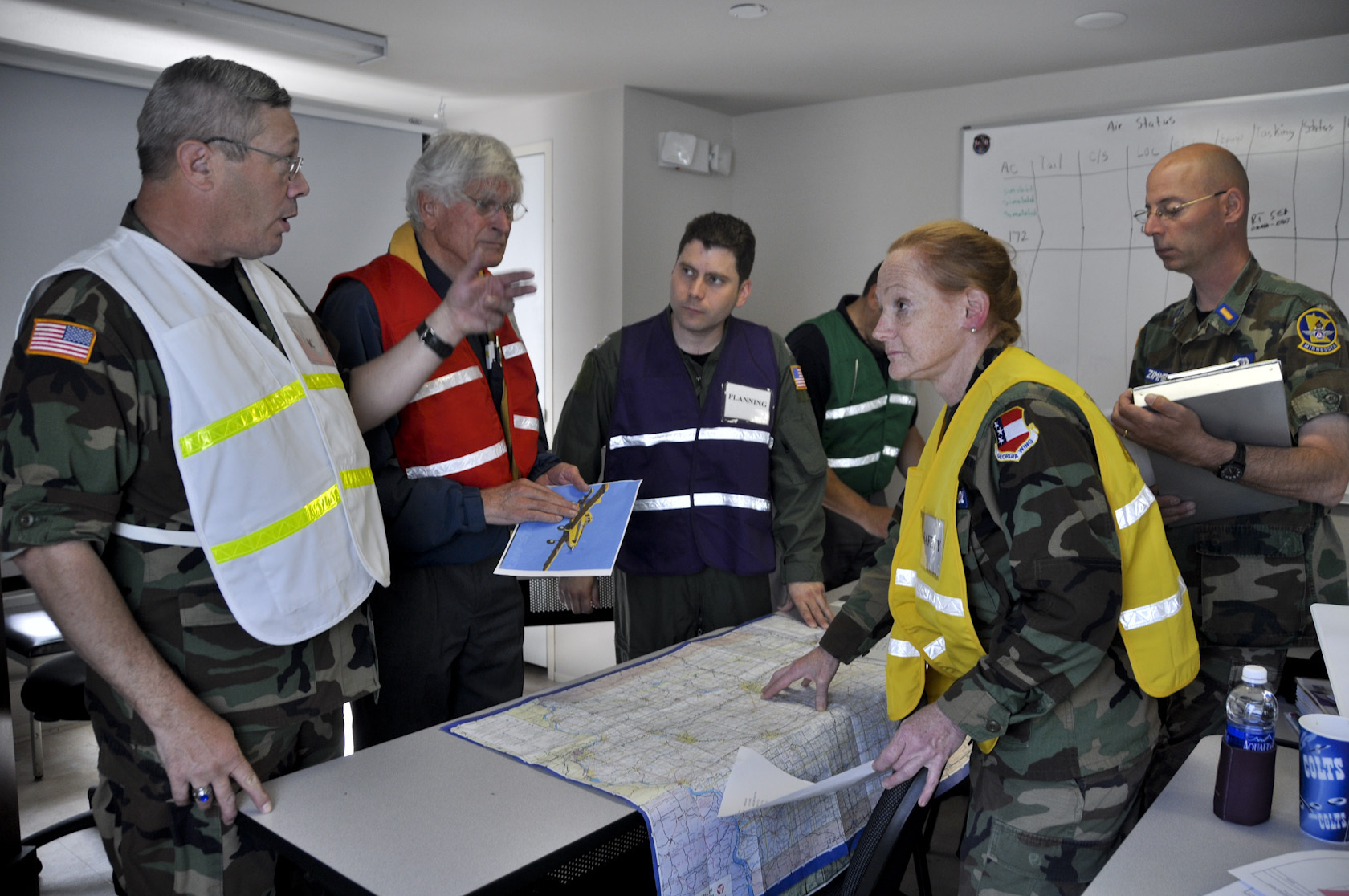
Assemble a Cross-Functional Task Force: Your team must include AI engineers, subject matter experts (SMEs) relevant to the model’s domain (e.g., lawyers for legal bots), communications experts for PR crisis management, and data scientists for forensic analysis.
Define the Escalation Matrix: Not every minor error requires an emergency team. Classify incidents by severity. Severity 1 (S1) might be a systemic bias issue affecting thousands of users; Severity 4 (S4) might be a single, benign hallucination.
Implement Observability Infrastructure: You cannot respond to what you cannot see. Deploy “guardrail” software that monitors inputs and outputs in real-time for toxicity, off-topic requests, and data leakage.
Develop a “Kill Switch” Protocol: In the event of a catastrophic failure (e.g., a chatbot generating harmful medical advice), the AIRT must have the authority and technical capability to trigger a “graceful degradation” state—switching to a static rule-based system or disabling the feature entirely.
Draft Standard Operating Procedures (SOPs): Document specific response workflows. Who is authorized to pull the plug? Who communicates with affected customers? How is the model “rolled back” to a previous stable state?
Examples and Case Studies
Consider a financial services firm using an LLM to provide automated investment summaries. Without an AIRT, a subtle model shift could begin suggesting high-risk assets to risk-averse clients. An effective AIRT would receive an alert when the model’s recommendation distribution drifts beyond a historical baseline. They would then:
Temporarily disable the personalized recommendation engine.
Audit the training data or recent fine-tuning updates that caused the shift.
Issue an automated correction notice to affected users, turning a potential lawsuit into a transparent, proactive customer service moment.
In another instance, an e-commerce company’s customer service bot might be tricked by a “jailbreak” prompt into offering products at 99% discounts. The AIRT’s role here is to identify the pattern of adversarial attacks, update the input validation filters (system prompts), and perform a swift audit of all transactions processed during the window of vulnerability.
Common Mistakes
The Silo Trap: Keeping the AIRT strictly within the engineering department. AI failure is often a business and legal risk; engineers rarely have the training to handle the public relations fallout of a harmful model output.
Over-Reliance on Automation: Many companies believe “automated guardrails” are enough. However, AI often finds clever ways to bypass static filters. Human review is mandatory for high-stakes decisions.
Lacking a Rollback Strategy: If your team updates a model and it fails, do you have a way to revert to the previous version in seconds? Many teams lack version control for the actual model weights or the “vector database” context, leading to extended downtime.
Ignoring Post-Mortems: Organizations often treat an AI incident as a one-off glitch. Without conducting a deep-dive “blame-free” post-mortem, the team fails to learn from the incident, ensuring the same failure recurs six months later.
Advanced Tips
To take your AI incident response to the next level, integrate Continuous Red-Teaming. Don’t wait for a user to find a flaw. Your AIRT should actively “attack” the model every week, simulating potential failure modes and refining the response procedures accordingly.
Furthermore, focus on Explainability Logs. When a model fails, the most common question is “Why did it do that?” Ensure your system logs the chain-of-thought or the specific retrieval context that led to the harmful output. This allows your team to diagnose the source of the hallucination or error in minutes rather than days.
Finally, cultivate AI Literacy across the organization. If a marketing employee notices a weird output, they should know exactly who to report it to. An AIRT is only as effective as the reporting culture that feeds it.
Conclusion
The unpredictability of modern AI systems is a feature, not a bug. It is the price we pay for the incredible utility these models provide. However, treating AI deployment as a standard software rollout is a dangerous gamble.
The true measure of an organization’s maturity in the AI era is not how perfect its models are, but how resilient it is when those models inevitably falter.
By establishing a dedicated Incident Response Team, implementing robust observability, and creating clear SOPs for failure, companies can move from a state of fearful hesitation to one of controlled, scalable innovation. Resilience is the competitive advantage of the next decade; start building your AIRT today to ensure your AI systems remain assets, not liabilities.





Leave a Reply