Economic stability depends on the equitable distribution of the productivity gains from AI.
— by
Steven Haynes
Outline
Introduction: The Paradox of Productivity – why AI growth risks deepening the wealth gap.
Key Concepts: Defining Labor Share of Income and the “Productivity-Pay Gap.”
Step-by-Step Guide: Frameworks for institutional and corporate stakeholders to share gains.
Examples: Case studies on employee-owned AI models and profit-sharing models.
Common Mistakes: The danger of automation-only strategies and “quiet” capital concentration.
Advanced Tips: Reimagining tax policy and social safety nets for an AI-native economy.
Conclusion: The path toward broad-based prosperity.
The AI Dividend: Why Economic Stability Requires Equitable Distribution
Introduction
We are currently witnessing a historic shift in global productivity. Artificial intelligence is not merely a tool for efficiency; it is a fundamental transformation of how value is created. However, history provides a stark warning: technological revolutions do not automatically lead to widespread prosperity. During the Industrial Revolution, it took decades of social upheaval, policy intervention, and labor reform before productivity gains reached the average worker.
Today, the danger is that AI will concentrate wealth within a narrow elite of hardware manufacturers, cloud providers, and data-rich corporations, leaving the broader workforce behind. Economic stability requires more than just high GDP numbers; it requires a consumer base with the purchasing power to sustain demand. If AI productivity gains are not equitably distributed, we risk a stagnation of the middle class and a volatile, hollowed-out economy. This article explores how we can transition from an era of automation-driven displacement to one of shared prosperity.
Key Concepts
To understand the stakes, we must examine two fundamental economic metrics: the Labor Share of Income and the Productivity-Pay Gap.
The Labor Share of Income represents the portion of total economic output that goes to workers in the form of wages and benefits, as opposed to the portion that goes to capital owners in the form of profits, dividends, and interest. Historically, this share remained relatively stable. Since the early 2000s, it has steadily declined in most developed economies. AI threatens to accelerate this trend by making capital (software and algorithms) a near-perfect substitute for human labor.
The Productivity-Pay Gap refers to the growing divergence where productivity continues to rise while median real wages remain stagnant. When machines do the work, the owners of those machines capture the surplus. If workers are replaced or devalued by AI, their ability to participate in the economy as consumers shrinks, leading to a feedback loop of lower demand and economic instability.
Step-by-Step Guide: Strategies for Equitable Distribution
Achieving stability in an AI-driven economy requires deliberate action from business leaders and policymakers. Here is a framework for ensuring gains are shared:
Implement “Human-in-the-Loop” Productivity Bonuses: Companies should adopt profit-sharing models where AI efficiency gains are linked to worker bonuses. If an AI tool reduces the time required for a task by 40%, a portion of the resulting cost savings should be redistributed to the employees using that tool, incentivizing them to integrate the technology rather than fear it.
Upskilling as a Capital Asset: Businesses should treat workforce training not as an operational expense, but as a capital investment. By subsidizing high-level certification in AI management and prompt engineering, firms ensure their existing workforce becomes more valuable alongside their AI tools.
Broad-Based Equity Compensation: As firms generate massive value through AI, they should broaden employee stock ownership plans (ESOPs). When workers are shareholders, they capture the upside of the AI transition, aligning their interests with the company’s long-term profitability.
Policy Advocacy for Portable Benefits: As the gig economy expands due to AI-facilitated freelancing, social safety nets must decouple from traditional full-time employment. Supporting portable benefits—such as health insurance and retirement accounts that follow a worker from project to project—ensures stability for the modern workforce.
Examples and Case Studies
Several real-world models provide a roadmap for how this distribution might look in practice.
The “Worker-Centric AI” Model: Some forward-thinking logistics firms have implemented “AI-augmented performance pay.” Rather than using AI to monitor workers for minor infractions, they use it to suggest process improvements. When a worker accepts these suggestions and meets higher targets, the pay structure automatically adjusts to reflect their increased output. This treats the AI as a collaborator rather than a supervisor.
Employee-Owned Platforms: Certain software collectives are exploring decentralized ownership, where the AI models and the data used to train them are held in a trust. Users and contributors who provide data earn “governance tokens” or dividends. This prevents a “winner-take-all” scenario where a single tech giant extracts all value from the collective labor of thousands of users.
The “Nordic Model” Adaptation: Countries like Denmark and Sweden have historically utilized “flexicurity”—a system of high labor market flexibility combined with extensive social security and retraining support. By investing heavily in worker education, these nations ensure that when technology displaces a job, the worker is immediately ready for a higher-value task, keeping the labor share of income healthy.
Common Mistakes
Organizations and governments often fall into traps that exacerbate inequality. Avoiding these is essential for maintaining a stable economic environment.
The Automation-Only Trap: CEOs often view AI solely as a tool for headcount reduction. This strategy is shortsighted. While it may provide a short-term boost to the balance sheet, it destroys long-term institutional knowledge and suppresses the consumer demand necessary for growth.
Ignoring Data Sovereignty: Companies often train AI on employee-generated work without compensation. This is a form of value extraction that lowers the perceived value of the employee. Failing to recognize the worker’s contribution to the training data is an ethical and economic mistake.
Over-reliance on “AI-First” without Human Agency: Eliminating human oversight in critical decisions (hiring, financing, policy) often leads to biased, suboptimal outcomes. Stability requires human judgment to navigate the edge cases that AI cannot handle.
Advanced Tips for a Sustainable AI Future
To move beyond basic survival and into a new era of stability, we must look at systemic shifts in tax and labor policy.
Taxing Capital Rather than Labor: Currently, most tax codes heavily tax human labor (via payroll taxes) while providing tax breaks for capital investment (software and robots). This creates a structural bias toward replacing humans. Rebalancing these taxes to reflect the true social cost of unemployment—and perhaps even introducing an “automation tax” on high-impact AI implementations—could encourage firms to use AI as a tool to augment humans rather than a tool to replace them.
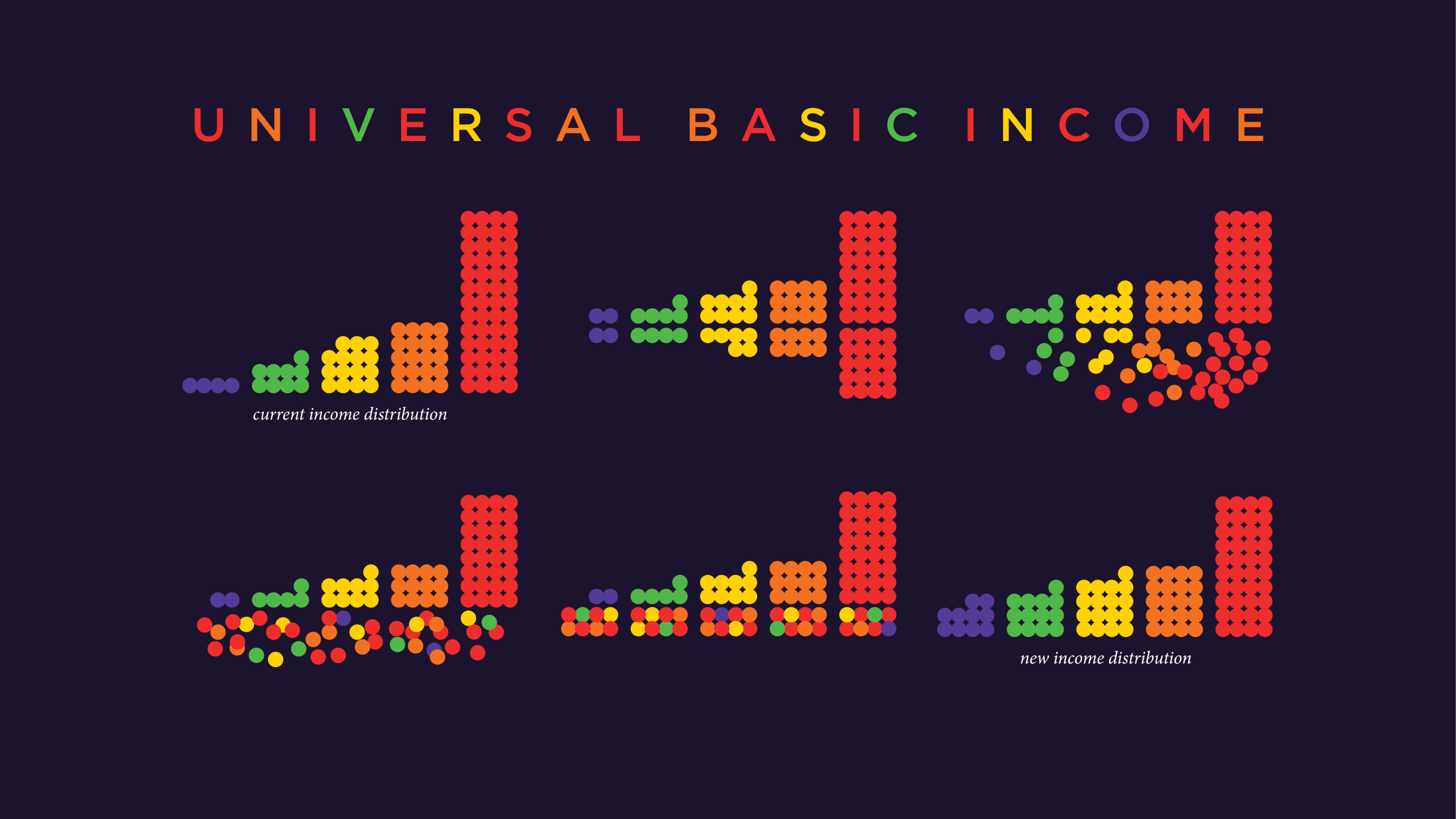
Data Dividends: Some economists propose a “data dividend,” where corporations that profit from the vast datasets generated by the public are taxed to fund a universal basic income or public investment fund. Since AI models are essentially reflections of our collective knowledge, a portion of their value should return to the society that generated that knowledge.
Collective Bargaining in the Digital Age: Unions must evolve. Modern collective bargaining should include provisions for AI integration, ensuring that workers have a seat at the table when AI systems are deployed in the workplace. This prevents the “black box” implementation of technologies that change job descriptions overnight.
Conclusion
The economic stability of the next decade rests on a simple truth: technology does not dictate the distribution of wealth; policy and corporate choices do. If we treat AI as a tool for the elite to extract value from the aggregate, we will face rising inequality and systemic instability. Conversely, if we treat AI as a shared catalyst for productivity, we can create a future where the gains from innovation lift all boats.
The transition requires a shift in mindset. We must move from the narrow focus of reducing costs to the broader goal of expanding capabilities. By implementing profit-sharing, investing in human-centric education, and restructuring our tax systems to favor augmentation over replacement, we can harness AI to build a more equitable, vibrant, and stable economy. The technology is here, but the social infrastructure to make it work for everyone is still under construction—and that is a project we cannot afford to delay.



Leave a Reply