Universal Basic Income is increasingly proposed as a buffer against structural unemployment.
— by
Steven Haynes
The Economics of Survival: Why Universal Basic Income is the New Safety Net for Structural Unemployment
Introduction
For decades, the social contract was simple: if you work hard and upskill, you maintain your place in the economy. However, we are currently witnessing a seismic shift. The rise of generative AI, advanced robotics, and the automation of professional services has ushered in an era of structural unemployment—a condition where the skills of the workforce no longer align with the needs of the market, and where technology potentially replaces human labor faster than new roles can be created.
As traditional unemployment benefits struggle to keep pace with these long-term labor market distortions, Universal Basic Income (UBI) has moved from the fringes of economic theory to the center of policy debate. UBI is not merely a social welfare program; it is increasingly viewed as a necessary economic stabilizer designed to decouple human survival from traditional 40-hour employment models. Understanding how UBI functions is no longer just for policy wonks—it is essential for anyone trying to navigate the future of work.
Key Concepts
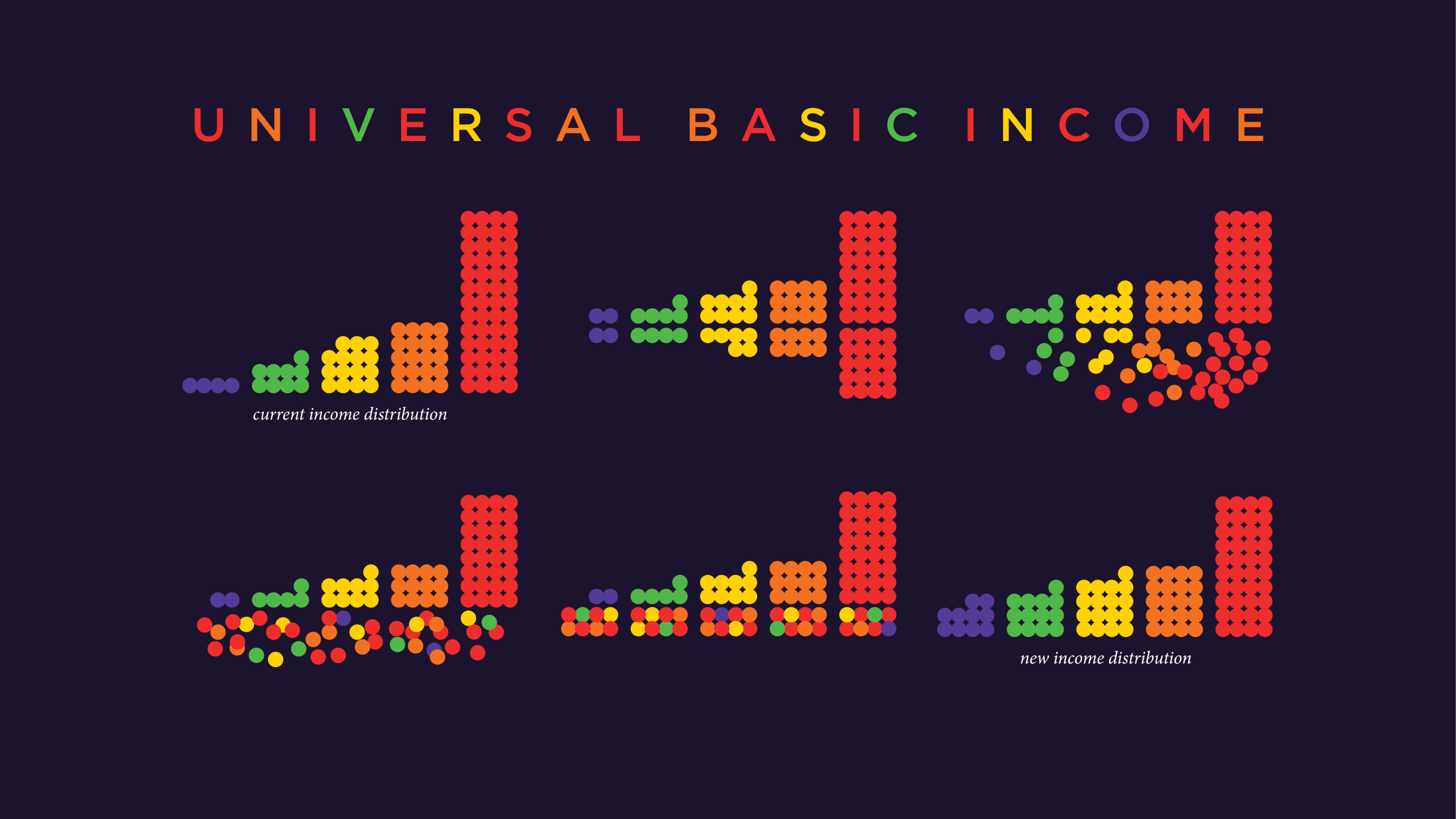
At its core, Universal Basic Income is a periodic cash payment delivered to all on an individual basis, without means test or work requirement. It is defined by three pillars: universality, periodicity, and unconditional access.
To grasp why this matters for structural unemployment, we must distinguish it from frictional unemployment. Frictional unemployment occurs when people move between jobs. Structural unemployment, however, is permanent. It occurs when a textile worker is replaced by an automated loom, or a paralegal is replaced by a Large Language Model. These individuals cannot simply “find another job” in their field, as that job may no longer exist in a capacity that requires a human.
UBI acts as a “floor” rather than a “ceiling.” By providing a guaranteed baseline, it empowers individuals to engage in the “transition economy.” This includes retraining for non-automated sectors, investing in creative ventures, or participating in the care economy—areas of human value that current market mechanisms often fail to price accurately.
Step-by-Step Guide to Understanding the Implementation of UBI
If society were to adopt a UBI model to counter the effects of technological displacement, the transition would likely follow these operational stages:
The Funding Transition: Governments must shift the tax base from taxing human labor (payroll taxes) to taxing the output of automation. This involves “robot taxes,” carbon taxes, or a Value Added Tax (VAT) on automated services, ensuring that the wealth generated by machines is recycled into the hands of consumers.
Defining the “Basic” Threshold: The UBI amount is calculated based on the cost of living index in a specific region. It is designed to cover essential needs: shelter, nutrition, and connectivity. It does not aim to replace luxury income, but to eliminate absolute poverty.
Consolidation of Benefits: To make UBI fiscally viable, many bureaucratic, means-tested welfare programs are consolidated. This reduces administrative overhead and eliminates the “welfare trap,” where individuals are disincentivized from working because they would lose their benefits the moment they earn a small income.
The Psychological Shift: Once the baseline is established, the societal focus shifts from “labor participation” to “value creation.” Education systems pivot toward lifelong learning, allowing the displaced to transition into high-touch industries like mental health, elderly care, and artistic endeavors.
Examples or Case Studies
We are no longer operating in a theoretical vacuum. Several pilot programs have provided concrete data on how unconditional cash impacts displaced populations.
The Stockton Economic Empowerment Demonstration (SEED) in California provided $500 monthly to residents in low-income neighborhoods. The results were telling: recipients were actually more likely to find full-time employment than the control group. The financial floor provided the stability needed to take time off from “survival jobs” to interview for career-focused positions.
In Finland, a two-year government trial gave unemployed citizens a monthly stipend. While employment rates only saw a marginal increase, the health and mental well-being outcomes were significant. Participants reported lower levels of stress, higher levels of trust in social institutions, and, crucially, a greater willingness to take “entrepreneurial risks” that they otherwise would have avoided for fear of losing their social safety net.
Common Mistakes in the UBI Conversation
Discussions regarding UBI are often clouded by misconceptions that derail productive policy. Here are the most common pitfalls:
The “Laziness” Assumption: Critics often argue that UBI would lead to a mass exodus from the workforce. Evidence from multiple global trials shows the opposite; people use the time to upskill, pursue education, or care for family, rather than remaining idle.
Ignoring Inflationary Pressures: A common concern is that if everyone receives extra cash, landlords and corporations will simply raise prices. A robust UBI strategy must be paired with competitive market regulations or housing supply expansion to ensure the value of the stipend isn’t eroded by artificial price gouging.
Confusing UBI with “Universal Services”: Some argue for Universal Basic Services (free transit, internet, housing) instead of cash. These are not mutually exclusive. However, UBI offers the unique benefit of agency—allowing individuals to decide where their money is most needed rather than forcing them into state-provided services.
Advanced Tips: Preparing for an Automated Future
Whether or not your government implements a full-scale UBI, you can personally prepare for the systemic changes brought by structural unemployment by adopting these mindsets:
Focus on “Human-Only” Skills: As AI dominates data synthesis and rote labor, the value of empathy, complex negotiation, ethical judgment, and high-level physical dexterity increases. Invest your time in developing skills that require a human touch—fields that robots cannot replicate without significant moral or social friction.
Diversify Your Income Streams: Structural unemployment thrives on reliance on a single employer. Build a “portfolio career” where you provide value across multiple channels. This not only mitigates the risk of being made redundant by technology but also builds the adaptability required to pivot when industries shift.
Engage in Local Civic Policy: UBI is a massive policy undertaking that requires local and national support. Advocate for pilot programs in your municipality. The more data we have from diverse economic environments, the more feasible federal implementation becomes. Supporting local trials is the most effective way to normalize the conversation.
Conclusion
Structural unemployment is not a temporary hiccup in the market; it is a permanent feature of a world dominated by automation. To pretend that the traditional 20th-century model of full employment will return is to ignore the trajectory of technological progress. Universal Basic Income serves as a critical bridge, preventing the collapse of consumer demand and ensuring that technological progress benefits the many, not just the few.
By implementing a guaranteed income floor, we don’t just provide a buffer against poverty; we provide the foundation for a new kind of creative and human-centric economy. The goal is not to stop the machines, but to ensure that when the machines take over the work, humans retain the dignity, security, and freedom to thrive.



Leave a Reply