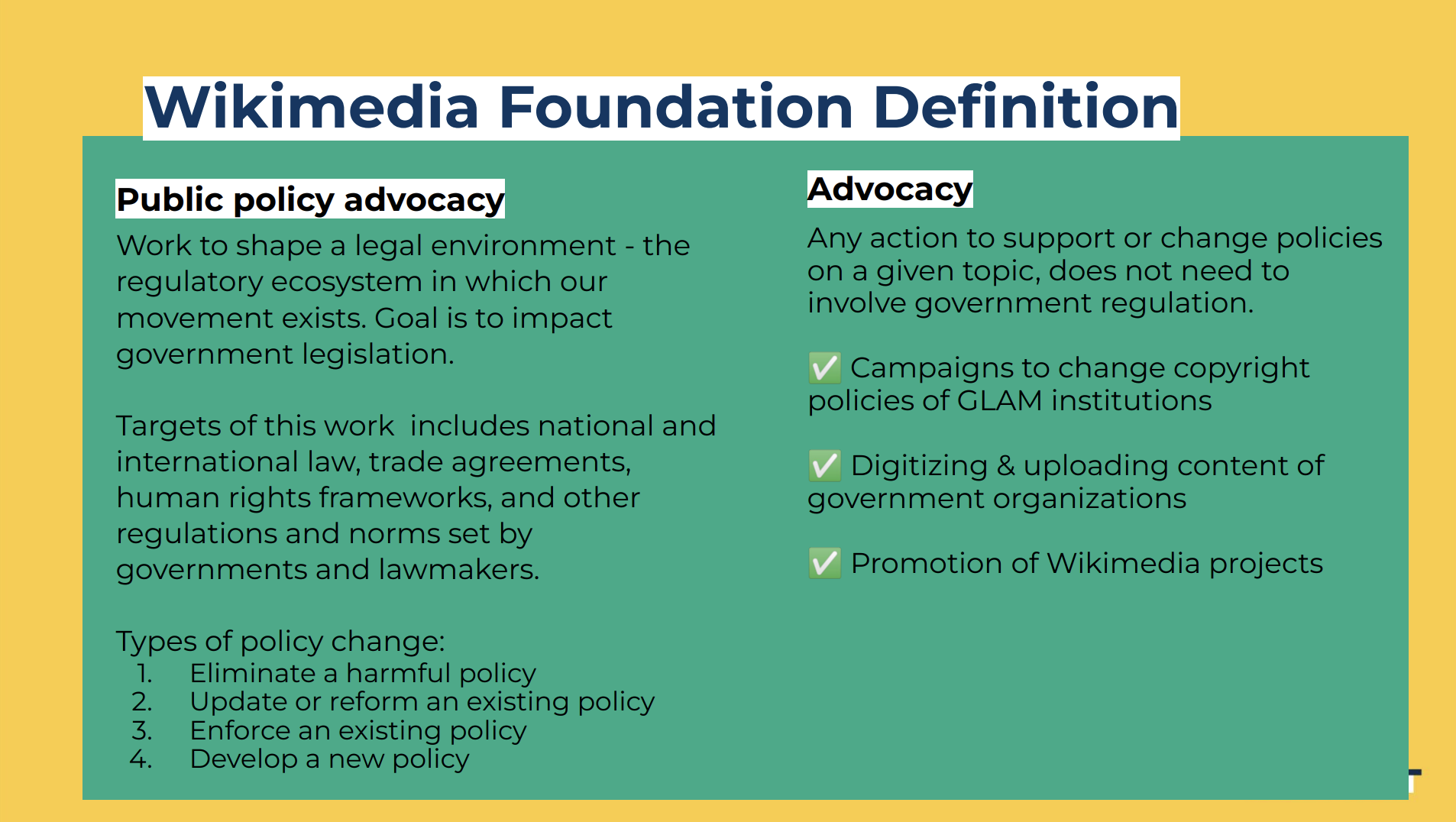
Advocacy for inclusive AI policy ensures that cultural heritage is respected during data training phases.
— by
Steven Haynes
Preserving Identity: Why Inclusive AI Policy is Essential for Cultural Heritage
Introduction
Artificial Intelligence is no longer just a technical tool; it is the new architect of our digital cultural landscape. From the linguistic patterns that define regional dialects to the visual motifs that represent indigenous art forms, AI models are actively learning from the sum of human expression. However, when these models are trained on datasets that prioritize dominant global cultures while sidelining minority or heritage-rich traditions, we risk a phenomenon known as “algorithmic assimilation.”
Advocacy for inclusive AI policy is not merely an ethical consideration; it is a vital safeguard for the survival of human diversity. As AI systems increasingly act as gatekeepers for information, education, and creative output, the policies governing how these systems are trained must evolve to ensure that cultural heritage is not just scraped as raw data, but respected as intellectual property and living history. This article explores how to bridge the gap between aggressive model scaling and the protection of cultural sovereignty.
Key Concepts
To understand the importance of inclusive AI policy, we must first define two foundational concepts: Data Colonialism and Cultural Sovereignty in AI.
Data Colonialism refers to the practice of extracting, processing, and capitalizing on data from marginalized communities without their consent, compensation, or meaningful representation in the final outcome. In AI, this often manifests when massive web-scraped datasets ingest traditional folklore, art, or sacred language, converting them into training tokens that the community can no longer control or accurately represent.
Cultural Sovereignty in AI asserts that communities have the right to govern how their cultural data is used, preserved, and disseminated. It shifts the paradigm from “open-access data” to “stewardship-based data.” Inclusive policy mandates that creators and communities are not passive subjects of AI training but active stakeholders with veto power over how their cultural contributions are synthesized.
Step-by-Step Guide: Implementing Culturally Conscious AI Development
Organizations and developers can move toward more inclusive practices by integrating these steps into their data pipelines:
Conduct a Cultural Impact Assessment: Before initializing a training set, perform an audit to identify if the data includes sensitive cultural, religious, or linguistic material. Consult with domain experts from the source cultures to determine if the data usage complies with local ethical standards.
Adopt Data Sovereignty Licensing: Move beyond standard open-source licenses. Use frameworks like Traditional Knowledge (TK) Labels or Biocultural Labels that attach metadata to datasets, signaling the cultural provenance and usage restrictions to the model training process.
Implement “Opt-In” Data Sourcing: Instead of relying on mass-scraping, build partnerships with cultural institutions, libraries, and indigenous-led organizations. Treat this data as proprietary partnership assets rather than public domain commodities.
Diversify the Annotation Workforce: Ensure that the human-in-the-loop (HITL) workers who label data are not just outsourced labor, but individuals with deep contextual knowledge of the cultural artifacts being processed. This reduces the risk of “misclassification bias.”
Establish Feedback Loops: Create transparent mechanisms for communities to report how their heritage is being represented by an AI. If a model generates culturally insensitive or historically inaccurate content, there must be a clear pathway to remediate that specific segment of the training weight or output fine-tuning.
Examples and Case Studies
Real-world applications are beginning to demonstrate that respecting cultural heritage actually leads to more robust and accurate AI.
The Māori Language Project (Te Hiku Media): In New Zealand, Te Hiku Media chose not to share their proprietary Māori language data with global tech giants. Instead, they built their own AI models to support the language. By maintaining sovereignty, they ensured their data was used to empower their community rather than simply being used to improve a general-purpose language model. This approach proves that communities can, and should, lead the technological development of their own heritage.
UNESCO and AI Ethics: UNESCO’s Recommendation on the Ethics of Artificial Intelligence provides a global framework that explicitly calls for the protection of cultural diversity. Organizations that align their internal policies with these standards are effectively future-proofing their operations against upcoming international regulations regarding cultural data rights.
“True inclusivity in AI is not about fitting everything into a single, massive, homogenized model. It is about allowing diverse, community-held models to flourish and ensuring the global systems respect those distinct boundaries.”
Common Mistakes
Even well-meaning organizations often fall into these traps during the data-training phase:
Assuming “Open” Means “Free to Use”: Just because content is published on the internet does not mean it is ethically available for AI training. Confusing copyright with cultural rights is a major error that leads to backlash and reputational damage.
Homogenizing Global Cultures: Attempting to “standardize” regional language variations into a single, clean training set often results in the erasure of dialectal nuances. This leads to a loss of linguistic diversity in the model’s performance.
Ignoring Historical Context: Training models on historical texts that contain colonial or oppressive rhetoric without sufficient metadata or “bias-mitigation filtering” essentially digitizes and amplifies historical trauma, rather than acknowledging it as a product of its time.
Top-Down Policy Creation: Developing AI policies in a boardroom without including the voices of the people whose culture is being digitized will almost always lead to policies that are technically compliant but culturally offensive.
Advanced Tips for Policymakers and Developers
To move to the next level of maturity in inclusive AI policy, consider these advanced strategies:
Use Synthetic Data to Protect Sensitive Sources: If a specific cultural dataset is too sensitive to include in a massive model, use it to generate “synthetic” variants. These synthetic versions can capture the statistical patterns of the culture without exposing the underlying, potentially sacred, original artifacts.
Incorporate Provenance Metadata: Every model should be able to produce an “AI nutrition label” that includes a provenance summary. If a model utilizes cultural content, it should clearly state the origins and, where applicable, provide attribution or link back to the source community’s digital home.
Decentralized Model Training: Explore technologies like Federated Learning, where models are trained across decentralized devices or repositories. This allows a community to retain their raw data locally while still contributing to the collective intelligence of the AI, effectively keeping their cultural heritage under their own roof.
Conclusion
Advocacy for inclusive AI policy is the bridge between a future of technical advancement and one of cultural degradation. By shifting our perspective to view cultural heritage as a living, sovereign asset rather than an infinite supply of training tokens, we create space for AI that enriches our global identity rather than flattening it.
The path forward requires a deliberate effort from developers, policymakers, and civil society. By implementing data sovereignty protocols, prioritizing ethical sourcing, and engaging in genuine partnership with marginalized communities, we can build AI systems that are not only technologically superior but also humanly responsible. Respecting heritage in the digital age is the hallmark of a truly intelligent civilization.




Leave a Reply